
Change Realm Skip to main content

Gamification in Task Management: How It’s Changing The Way We Work?

Gamification in task management

Experience a paradigm shift in task management with the power of gamification. In this article, we uncover how gamification is revolutionizing the way we work, transforming mundane tasks into engaging and rewarding experiences.

Imagine a work environment where productivity is fueled by excitement and motivation. Gamification infuses elements of game design and mechanics into task management, boosting engagement, collaboration, and overall performance.

Join us as we explore the captivating world of gamification in task management, revealing its impact on employee productivity and satisfaction.

Get ready to level up your work experience as we dive into the exciting realm of gamification. Embrace a new way of working that makes tasks more enjoyable and brings out your team's full potential. Let the games begin!

Gamification in Task Management: An Overview

Do you ever find yourself getting really into a video game or other type of game? Gamification is the use of game elements in non-game contexts. In other words, it's taking something that isn't traditionally seen as a game and making it into one.

Simply put – gamification in task management is the use of game mechanics and game thinking to engage users and motivate them to achieve their goals. 

Some common examples of gamification in task management include awarding points for completed tasks, adding levels or badges to signify progress, and leaderboards to encourage competition. 

Adding these elements to a task management system makes users more likely to stick with it and complete their tasks. In fact, employees experienced a 60% engagement increase when they gamified their work.

Let's dive into some additional benefits and see just why gamification is so useful.

Key Benefits of Gamification in Task Management

Gamification refers to design that seeks to, first, increase the motivation of users or participants to engage in an activity or behavior and, second, to increase or otherwise change a given behavior.

Simply put, to make life more fun and engaging. As a task management tool, gamification can be a great way to complete a piece of work more enjoyable and motivate yourself to get it done.

Let's see what the primary benefits of gamifying your task management system are: 

  • It makes task management more fun
  • Motivates people to get things done
  • Helps with organizing everything
  • Greater productivity
  • Helps people learn new skills
  • Encourages healthy competition
  • Boosts morale
  • Improves communication and collaboration

Now how about we talk about these a bit more thoroughly.
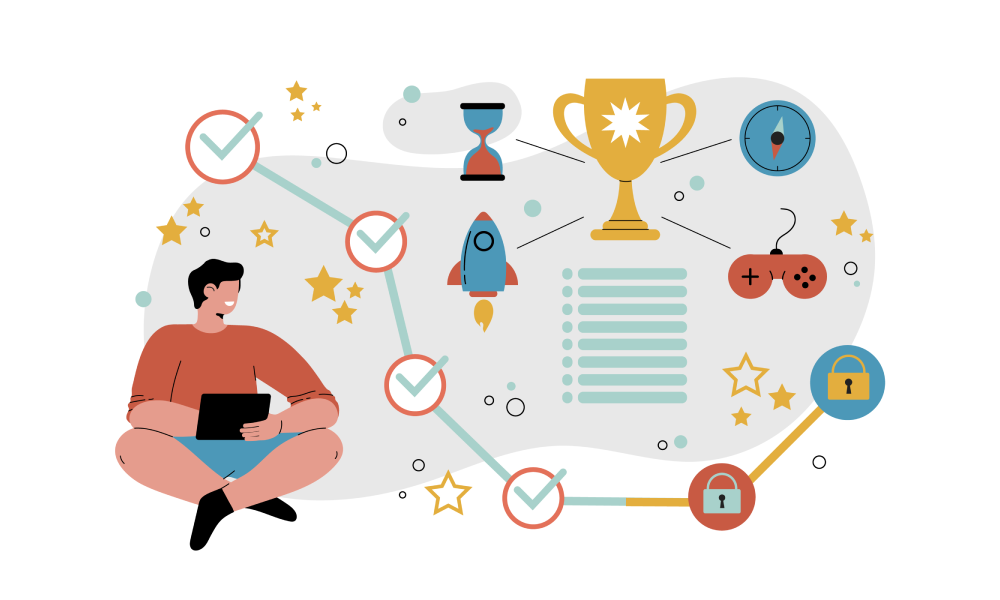
Gamification

Make Task Management More Fun

One of the best things about gamifying your task management is that it can make the whole process more fun.

If you find yourself getting bored or frustrated with your task list, adding some game-like elements can help breathe new life into it.

This is perhaps the most important benefit. In a way, this feature influences every other benefit.

Motivates People to Get Things Done

Another great benefit of gamification is that it can help you motivate yourself to get things done. As mentioned above, this comes from the fact that most gamification applications borrow design patterns from (video) games.

Therefore, it's aimed to give rise to similar experiences as games commonly do. For instance, feelings of supremacy, independence, flow, or uncertainty. When you make task management more fun, you're more likely to stick with it and see it through to the end.

Stay Organized and on Track

Gamification can also help you stay organized and on track with your task management. By adding elements like points, leaderboards, and achievements, you can keep yourself accountable and motivated to stay organized.

Enhance Productivity

Productivity is often enhanced when people are able to have some fun while working. By adding game-like elements to your task management system, you can find that you work more quickly and efficiently overall.

This can lead to better results in a shorter time frame. Gamification can also help reduce stress levels, as having some fun can take the edge off of difficult tasks. In this way, gamification can assist with creating a positive work/life balance. 

Help People Learn New Skills

One of the most interesting benefits of gamification is that it can help people learn new skills. When people are engaged in activities that are enjoyable, they often don't even realize that they're learning.

However, by adding game-like elements to task management, you can create an environment where people are actively encouraged to learn new things. It can serve as a great way to improve your team's overall skill set.

Encourage Healthy Competition

If you have a team working on a project, gamification can be a great way to encourage healthy competition.

By adding leaderboards and other competitive elements, you can foster a sense of friendly competition that can push everyone to do their best work. It can lead to better results and a more cohesive team.

Boost Morale

Another great benefit of gamification is that it can boost morale. When people are having fun and feel like they're making progress, they're more likely to be engaged and motivated. This can lead to increased productivity and a better work/life balance for everyone involved.

Improved Communication and Collaboration

Finally, gamification can also improve communication and collaboration. When people are working together towards a common goal, it's important to have good communication in order to stay on track.

By adding game-like elements to task management, you can encourage people to communicate more often and work together more effectively. You can then expect better results and a stronger team overall.

Why Traditional Task and Project Management Systems Don't Work?

We've elaborated on the advantages of gamified systems. But why are they gaining popularity over traditional systems? While personal preference plays a part, let's explore reasons why many are leaning towards gamified systems.

Traditional Systems Lack the Fun Factor

Traditional task management systems are often labeled boring. On the contrary, gamified systems transform tasks into games, making the process exciting.

Engagement is Higher in Gamified Systems

The fun element in gamified systems keeps you more engaged. This lowers the likelihood of distraction or procrastination, increasing the chances of task completion.

Gamified Systems Enhance Efficiency

The increased focus and engagement in gamified systems promote efficiency. As you're more absorbed, you're less likely to waste time on irrelevant activities.

Gamified Systems Offer Flexibility

Contrary to the rigidness of most traditional systems, gamified systems are adaptable. You can customize the game according to your preferences and goals, adjusting it as needed.

Gamified Systems Boost Motivation

The motivating nature of gamified systems sets them apart. Where traditional systems might lead to demotivation and task abandonment, gamified systems keep you hooked, spurred by the game's challenge.

Gamified Systems Promote Social Interaction

Traditional systems often isolate the user. Gamified systems, however, can incorporate friends and family, making the process more enjoyable and meaningful. Some even allow competition with others, enhancing fun and competitiveness.

Gamified Systems Provide Rewards

The motivating and challenging aspects of gamified systems make them rewarding. The sense of accomplishment upon task completion boosts morale, enhancing the overall experience.

Transforming Work with MagicTask: A Gamified Task Management System
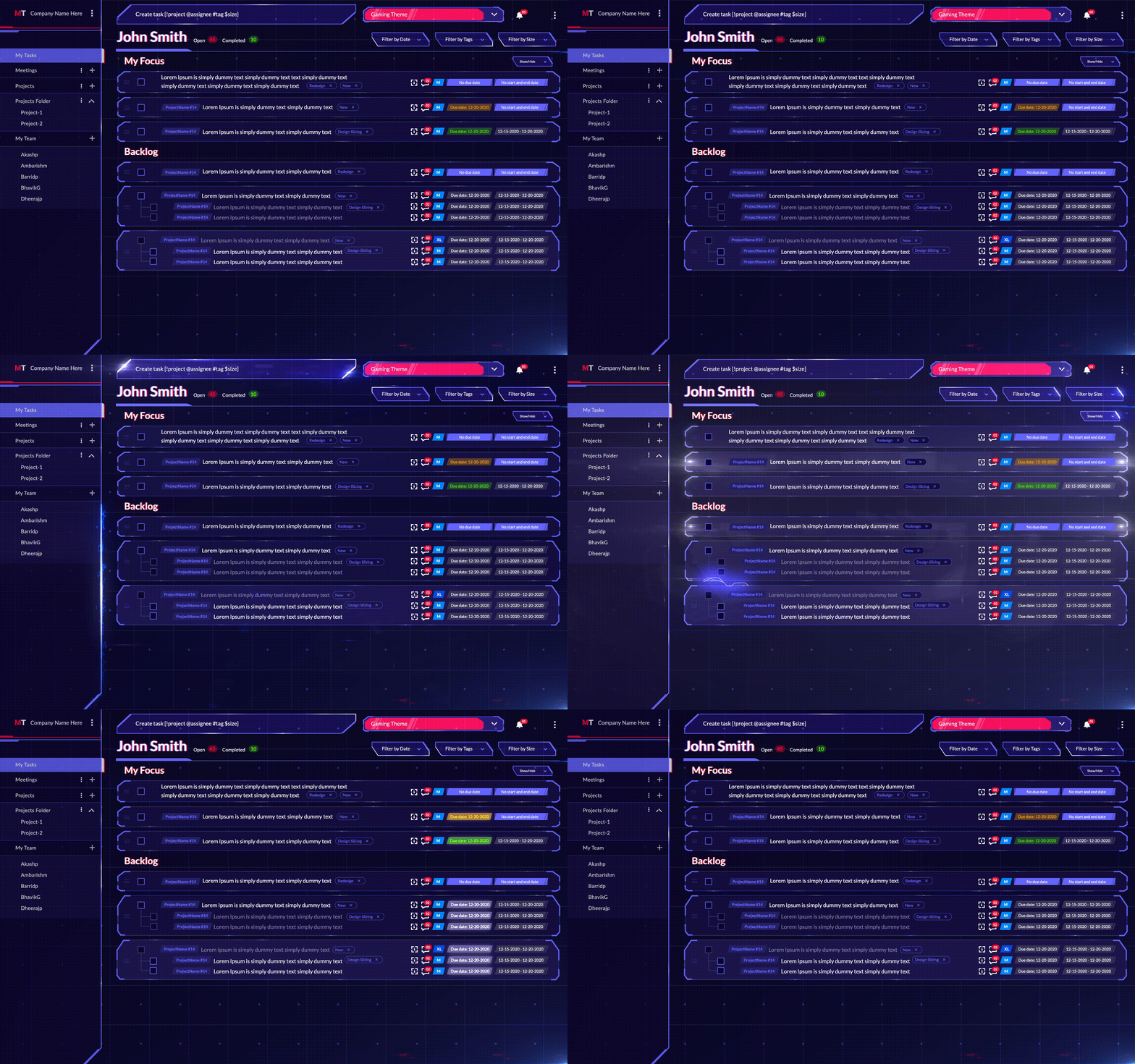
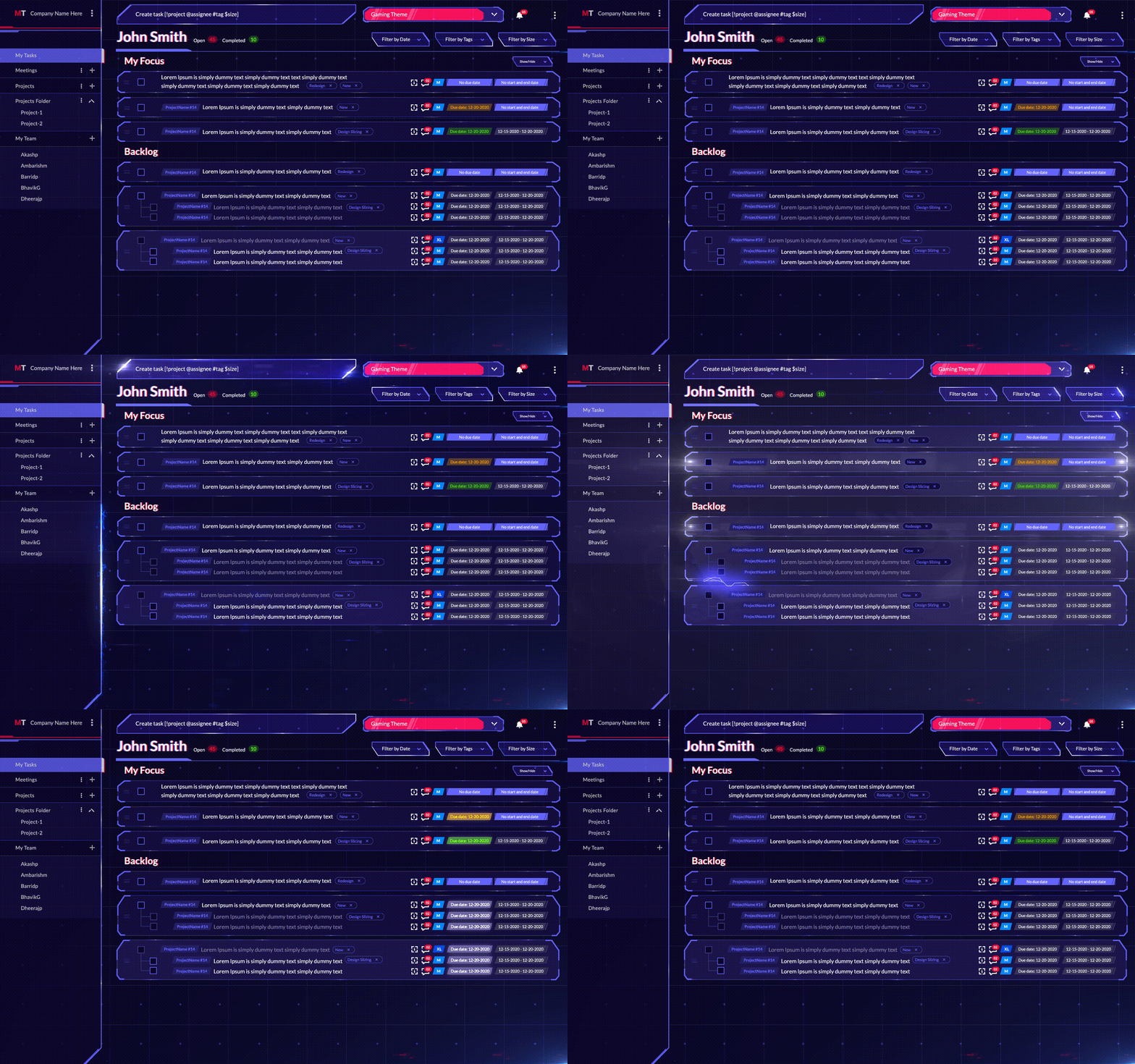
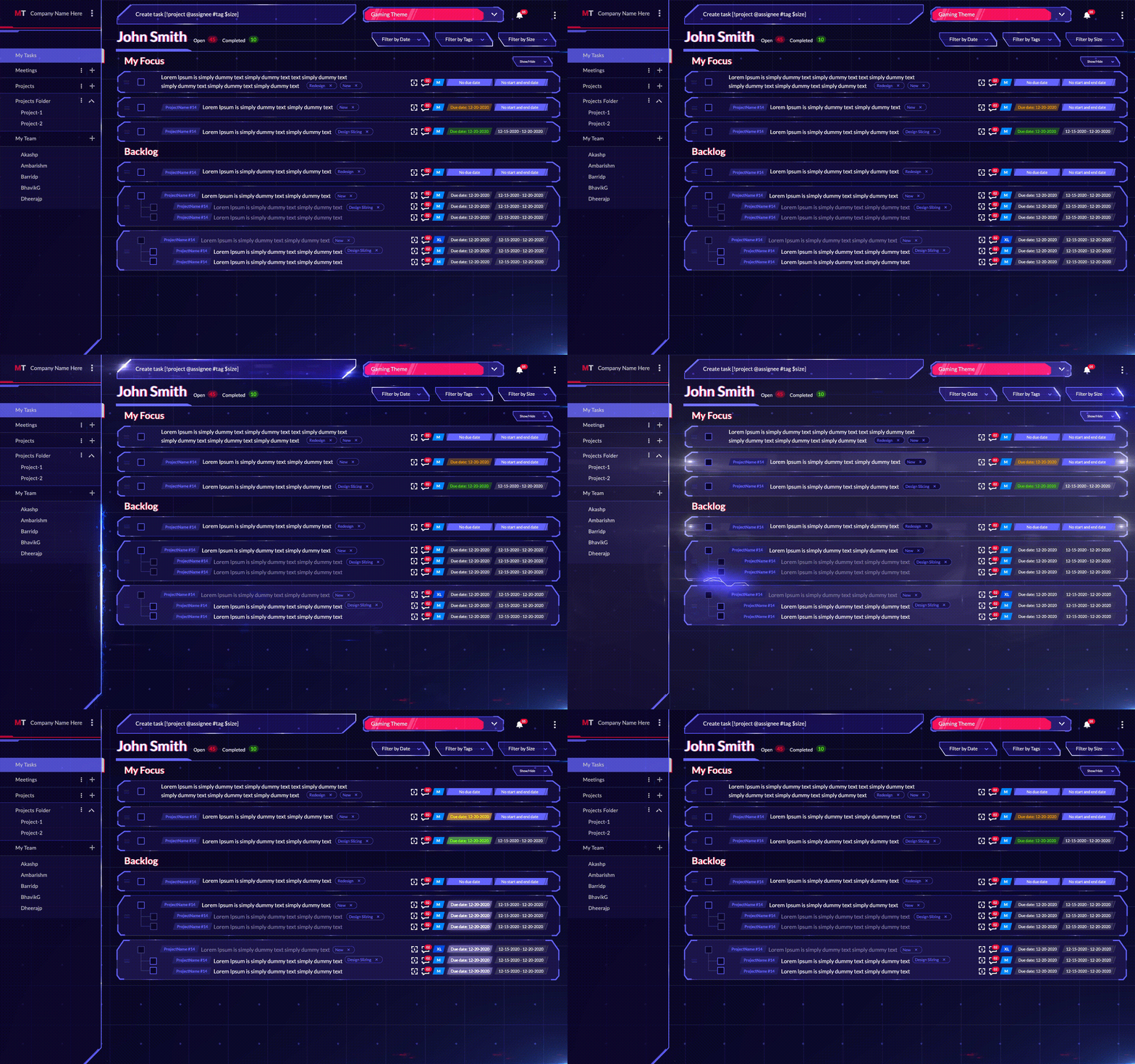
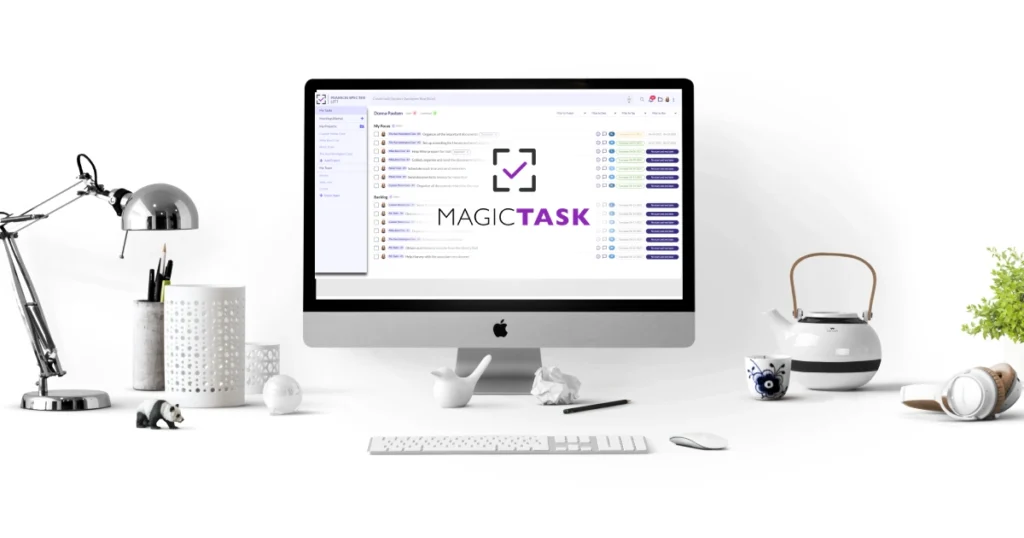
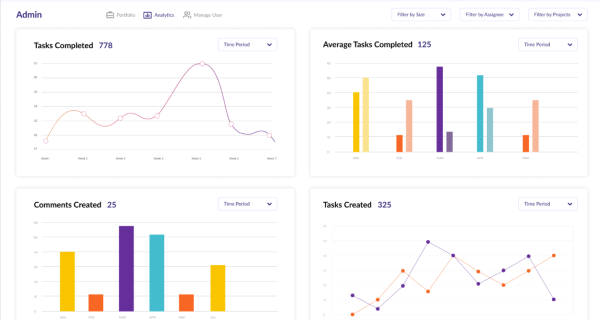
MagicTask Dashboard

We've discussed gamification in theory, now let's delve into a tangible example.

MagicTask embodies a fully gamified task management system, packed with an array of features and benefits. It revolutionizes our work style by encapsulating all the gamified elements we've discussed so far.

"Created by gamers, built for gamers and entrepreneurs" is the mantra that echoes on their website, reflected through their design.

Primarily, MagicTask offers a clean, user-friendly interface. Even those without a technical background can effortlessly set up a workspace, assign tasks and subtasks, and manage them within projects.

Moreover, MagicTask provides real-time workspace updates, giving you a clear picture of project progress.

Now, let's shift to the fun part – gamification.

Remember the satisfying sensation of completing quests in a game and leveling up? Or seeing the XP bar fill up slowly but surely? MagicTask brings this sense of achievement to your work life.

With MagicTask, task completion leads to gradual leveling up, and your themes evolve too. This introduces new animations and sounds, much like acquiring gear and loot in a game. Considering you interact with your task management system daily, keeping it engaging, dynamic, and interactive can significantly boost productivity.

Fundamentally, MagicTask offers immediate gratification upon task completion. It even includes a leaderboard system, allowing you to measure your performance against other teams.

Conclusion

And there you have it, folks, a thorough guide on why gamification is going to be the new paradigm in task management. Long gone are the days of stuffy, lifeless systems.

Now it's time for something more fun, something that can motivate yourself and your employees to maximize their time at work. We suggest you try this out, start with the MagicTask system, and then decide for yourself.

Click here to sign up for MagicTask: https://app.magictask.io/
The Benefits of a Productive Morning Routine: How to Start Your Day Off Right

Benefits of Productive Morning Routine

A journey of a thousand miles begins with a single step; a productive day starts with a well-executed morning routine. The internet is filled with the daily routines of founders and CEOs and how they begin their days.

Managers, business owners, parents, or people who wear multiple hats in their personal and professional lives have well-planned and defined daily morning routines designed to launch their bodies and minds into action.

But there are also people who struggle to build a solid morning routine. They often depend on ad-hoc planning and patterns to get through their day. If you're one of them, this article is for you.

In this blog post, we'll be discussing the benefits of a productive morning routine and how you can build one.

6 Key Benefits of a Productive Morning Routine

Here's why you should invest in building a morning routine

1. Increases productivity throughout the Day

A solid morning routine will give you more energy to go through your day. The moment you wake up, you know exactly what you should do. Building a detailed morning routine prepares your body and mind to get into your day. By planning ahead, you're also reducing your cognitive load, which will help you avoid distractions throughout your workday and get your tasks done.

Without a proper routine, you'll be scrambling to decide what you need to do. In the early morning rush, you may miss important tasks or not have the time to do that.

A morning routine will help you complete more daily tasks and ensure these tasks are aligned with your goals.

2. More time for yourself

Time for Yourself

A productive morning routine means you're not rushing to fix things. You know precisely what you're waiting for and when you need to start. It will help you plan breaks for yourself and take time for yourself.

With an efficient morning routine, you can also manage your energy levels more efficiently so that you're not exhausted by the time you've finished your immediate tasks. You get more time to pursue hobbies and activities that make you happy. A productive morning routine ensures that your life is not just about client meetings or replying to emails. It gives you time for yourself.

3. Improves your mood and mental health

Mood and Mental Health

A productive morning routine gives you mental clarity and a sense of stability as you go through your day. You'll get a sense of stability; you won't be stressed out thinking you forgot to do something or won't have time to finish your tasks for the day.

Productive morning routines give you a better picture of what awaits you, and when you have a detailed plan, you'll be less stressed about what can happen. You'll feel more in control of your time and energy. It will also improve your sleep cycle and more energy throughout the day.

4. Improves your physical health

A good morning routine gives us time to focus on ourselves and our health. It will allow us time to work out, meditate, and prioritize our bodies. A morning routine can, therefore, significantly improve our physical health.

A well-planned routine will also ensure that we have enough time for our meals and that we get all of them. We won't have to postpone our meals because we are in a rush or because deadlines are approaching.

Reduced stress and an improved sleep cycle will help our bodies manage our energy levels and allow us to heal better.

5. It makes you more focused and organized

Focused and Organized

A steady morning routine will help us become more disciplined. It will help us build better habits and enable us to look at the big picture. We can make long-term plans and stick to them when we know we are in control. A morning routine helps us reduce distractions and focus our energy on what we want to achieve.

We won't be in control if we wake up every morning and just take on things as they come. We will also find it challenging to manage and finish our tasks on time.

A morning routine helps us stay on top of our tasks and always have the big picture in our sight.

6. More time to plan and prioritize your goals

Plan and Prioritize Your Goals

Without a healthy morning routine, odds are we'll be running around trying to put out fires the entire day. We won't have time to think about our goals or plan how to achieve them when we are trying to keep our heads out of the water.

But by building a solid morning routine, we won't be choosing our tasks haphazardly as they come to our minds or based on deadlines. Effective morning routines will ensure that we have the time and energy to plan and choose tasks based on how they will help us in the long run. It will help us reach our goals more quickly.

8 Steps to Build a Productive Morning Routine

Here's how you can build a morning routine that helps you become your most productive self.

1. Be consistent

One of the most important aspects of a successful morning routine is consistency. Once you've figured out a good routine, you should stick to it even on weekends and during holidays. Most of the benefits of a routine come from consistency; your body learns to alert you to its needs at specific times. For instance, when you have your meals every day at specific times, you'll feel hungry when the time comes.

By training your body, it will know when it can recharge and recuperate. You'll feel sleepy when your bedtime approaches, but you'll have the energy and mental focus to work on your projects or activities during the rest of the time.

For this, you need to be very consistent in your routine.

2. Have an early bedtime

You must start taking action the night before for a productive morning routine. You must develop an early bedtime and get used to waking up early. Early morning hours are usually quiet and will help you relax and focus before you jump into your day. You'll also have more time to plan your day and figure out what to do before being swept up in the day's chaos. But you can't do this if you're sleepy or exhausted the day before.

By taking control of your sleep schedule, you'll have more energy throughout the day.

3. Get enough sleep

Get Enough Sleep

It's not enough to just go to bed and wake up early; it's also essential to get enough good quality sleep. If we don't get enough REM sleep or are constantly disturbed by noises or lights, we will still be exhausted when we wake up. Even if we are too hot or the bed is uncomfortable, it will affect our sleep.

To build a productive morning routine, getting good quality sleep must be one of your goals. When you go to sleep, ensure that you're properly hydrated, have had enough food, and have a comfortable place to sleep. If possible, keep your blinds open and wake up with natural sunlight.

4. Eat a healthy breakfast

A healthy breakfast is crucial for a good day. Without a nutritious breakfast, you'll be tired throughout the day and will have to rely on continuous snacking.

Make a healthy breakfast part of your morning routine. Ideally, you should have a set time for breakfast every day and make sure you never skip that.

Ensure you have all the essential nutrients and enough calories in your breakfast. You shouldn't be relying on snacks or other mid-day meals to get you to lunch. But at the same time, don't make your breakfast monotonous; ensure sufficient variety in your food.

5. Exercise

If you go to the gym daily or not, it's a good idea to burn some calories early in the morning. Exercise will refresh your body from early morning drowsiness and give you the energy to push you through the day. It will also release many endorphins that will keep you motivated.

Regular exercise is also good for remaining fit and improving your physical health. Exercise can help improve cardiovascular health and reduce the risk of stroke and diabetes. It will also reduce the possibility of many other lifestyle diseases.

6. Meditate or do yoga

Meditate

Once you wake up, try to meditate for a while or practice yoga. You don't have to invest in lessons or learn complex yoga poses; meditating for just a couple of minutes daily will have enormous benefits. If you want more detailed lessons, plenty of apps and youtube lessons can help you. If you're unfamiliar with meditation techniques, you can also use guided meditation videos to help you learn.

Techniques like Yoga and mindfulness can help reduce stress and improve your mental health. It can help you gain more control over your lives and improve your focus.

7. Check your inbox and clear the messages

Before you start your day, even before you look at your pending tasks, check your inboxes. This includes email inboxes, Slack or Teams messages, WhatsApp messages, and other platforms.

Make sure you respond to all messages. If the messages require any action and can be done in less than two minutes, finish it off. If not, add a task to your task management tool. If you can't do it, assign someone else to do it. (These steps are, of course, derived from the Eisenhower Matrix). If you need more information, send a detailed list of what you require. And make sure you set reminders to follow up on all of these messages.

8. Make a to-do list

Once you have gone through your inboxes, the next step is to look at your pending tasks. You can simplify this step significantly if you have a task management tool.

First, check on all the tasks you're expecting responses from. For example, if you have assigned someone to design a poster and expect it soon, follow up. If you have requested more information from someone, follow up on those.

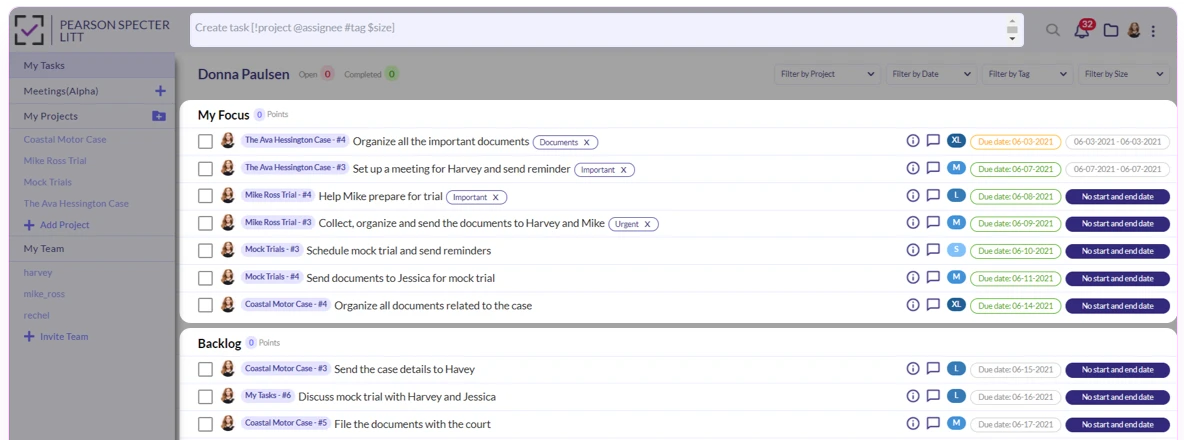
Next, check your pending tasks, and evaluate the deadlines and priorities. Make a to-do list for the day from these tasks. If you're using MagicTask, you can just drag these items to the "My Focus" section. Once you have added all the tasks to your to-do list, check if you can take on them in one day. If not, evaluate the list once again and see what you can set aside for the next day and what you can delegate to someone else.

Once you've done this, you've got a plan for the day. Make sure you set aside enough time to relax, have your meals, and take a break throughout your day.

Build a Productive Morning Routine With MagicTask

MagicTask is a task management solution that can help you keep your energy levels up throughout the day. The platform is highly gamified and rewards you for completing your tasks on time and without delay.

MagicTask can be a powerful companion as you take on your daily tasks. It can help you design and implement effective morning routines with many features.

Check out MagicTask, and watch your productivity soar.

The Impact of Stress on Productivity and How to Avoid It

Effect of Stress On Productivity

Stress is one of the biggest roadblocks to productivity.

Many studies have shown how stress makes tackling our tasks and reaching our goals difficult. It can significantly slow down our daily habits and impact our careers and business.

In fact, not being able to get our tasks done can further increase our stress and create a vicious cycle.

But how do we overcome this stress? How do we get back to our tasks and get them done when dealing with a lot of pressure?

This blog post explores how stress affects our productivity and how we can avoid it. Read on to learn more.

How Does Stress Affect Productivity

Stress is a natural part of life and can sometimes be a good thing, as it can motivate us to perform better or meet deadlines. However, when stress becomes chronic or overwhelming, it can have a negative impact on productivity.

Here are some of the signs which show how stress is impacting productivity.

Stress makes it difficult to focus.

When we're under a lot of stress, we tend to focus on the stress and not on what we are doing or trying to achieve. Our minds will constantly be going through everything stressing us out; it could be about our jobs, our mortgages, our kids' education, or whatever is bothering us.

Stress also increases our cognitive load; we'll have little space to focus on one more task. We'll also be easily distracted by the slightest stimulus sending us off and forcing us to think about our worst nightmares. Because of this, we'll struggle to complete our tasks even if we sit down to do them.

It can impact your physical health.

Stress can significantly increase our blood pressure and the risk of coronary heart disease and other lifestyle problems. Several studies have shown strong correlations between workplace stress and events like heart attack and stroke.

Over time stress can also contribute to high cholesterol levels, gastrointestinal problems, eating disorders, and joint pain. There's strong evidence that long-term stress can trigger diabetes.

When stress starts affecting our physical health, we'll find it difficult to complete our tasks on time and reach our goals.

High-stress environments can also cause mental health issues like anxiety, depression, burnout, and other issues. Many professionals often turn to substance abuse, alcoholism, smoking, and other unhealthy coping mechanisms.

These can hamper an individual's ability to stay on top of their tasks, bring down their productivity, and create other problems in their lives.

It impacts workplace relationships and can hamper communication.

Workplace Communication

High-stress environments will inevitably take a toll on our workplace relationships. When faced with a lot of pressure, it makes us irritable and short-tempered. A casual 'Hi' or 'How are you?' from a colleague can trigger an unwarranted hostile response. We may not have the time to chat with our colleagues during lunch or make casual conversation during breaks.

This will put a lot of strain on our workplace relationships and make it difficult to communicate well. Communication may become purely transactional or limited to business, and everyone will hesitate before they ask questions.

The unfortunate aspect is that this will further increase our stress. Casual conversations and chitchats usually help relieve our stress, but without that, it can compound it. And, of course, difficult communication will slow our lives and affect productivity.

It makes it difficult to see the bigger picture.

When you've got a lot of tasks to handle in little time, or you're being asked to do something you're unfamiliar with, we'll try to put all of our energy into them. We'll view them through a small lens and not see how it relates to our lives and long-term goals.

This makes it difficult to prioritize our tasks and decide which ones to tackle first. For example, when we have an inbox full of emails to reply to, we would just want to get them over with it. We'll probably take on the tasks that first come to our mind or were assigned to us.

When we don't have the time or energy to take a step back and look at the bigger picture, we'll inevitably make mistakes that will hamper our productivity further.

It's challenging to be creative when you're under stress.

Creativity is not a switch you can turn on and off. Good ideas come out of calm, low-pressure environments when our minds are clear and have the energy. This is often why it's challenging to overcome writer's block; when we cannot write, we become more stressed, making it harder to come up with good ideas.

The lack of creativity impacts our productivity, even if we are not artists or writers. We still need a lot of creative energy to do even the most mundane tasks.

Stress makes it challenging to stick to schedules or plans.

Plan

When we are stressed, we find even the simplest tasks intimidating. Even something as simple as doing the dishes or taking out the garbage becomes difficult. Instead, we would sleep through our day or watch a couple of movies.

This is our brains attempting to reduce stress by forcing us not to think about it. Even just thinking about our pending tasks or whatever is triggering us would make us exhausted. This makes us procrastinate our tasks, put them off for another day and make us miss our schedules.

Stress makes it difficult to find joy and find satisfaction in work.

When faced with a lot of pressure, we find it difficult to enjoy even the most fun aspects of our work. Even tasks like planning a party or throwing a baby shower feel like a chore; we just want to do the bare minimum and check it off our list.

Even if the stress is unrelated to our tasks, our mind tries to free up our cognitive space. The result is that we'll try to do our tasks as fast as possible by taking shortcuts and finishing them off. This can affect our quality of work; we may have to undo a lot of it and start from scratch.

How to Avoid Stress and Boost Productivity

Here are a couple of tips that can help you reduce stress in your life and improve your productivity

1. Schedule breaks into your schedule

A well-defined schedule can reduce your stress significantly. One of the most common causes of stress is that you have too many tasks to handle and don't know where to start. When we begin to take on these tasks, we inevitably dive deep into them and forget to take sufficient breaks, which stresses us out further.

When you set your schedules, set realistic goals for yourself. Don't take on more than what you can handle in a day, but don't fill in all of your available time with tasks, either. Make sure you include tasks in your schedule and plan your day, considering your energy levels.

2. Use the Getting Things Done method

Getting Things Done is a productivity method designed to reduce our cognitive load and manage our tasks effectively. The technique encourages practitioners to use alarms, reminders, calendars, to-do lists, and task management tools to avoid storing unnecessary information in their heads. Instead, whenever we get a task, we add all the information related to it to a notepad or a task management tool.

Instead of taking on tasks haphazardly, the GTD method encourages us to create detailed plans based on their importance and whether they will help us reach our long-term goals.

With the GTD methods, we create a second brain to store all our task-related information. The idea is that once we add something to our' second brain,' we forget about it until we have to consider them again.

3. Make sure you're physically well

If we're not physically well, that will contribute to our stress and distract us from our tasks. For instance, if we haven't had lunch or if we didn't get enough sleep, it will stress us out and keep us from being productive.

To reduce our stress or avoid it, we must take care of our bodies. We have to ensure we're having proper nutrition, staying hydrated, and getting enough sleep. Physical fitness will significantly improve our mental health and give us more energy throughout the day. It will help us better cope with stress and seize the day.

4. Try a task management tool

MagicTask Dashboard

Task management tools can significantly make your lives easier. These tools can give you better visibility and help you prioritize tasks easily.

Tools like MagicTask lets you add your tasks to different projects and collaborate easily with your colleagues or teammates. You can set due dates and priorities for these tasks and quickly decide what you want to take on for the day. It will ensure you're constantly on top of your tasks and avoid stress as deadlines come closer.

In the case of MagicTask, it also comes with many gamification features that let's have a little bit of fun as you go through your day.

5. Invest in your mental health

This may seem obvious, but many professionals often give little importance to their mental health. We must actively invest our time and resources to avoid or reduce stress.

Even if you don't face mental health problems, it may be a good idea to see a therapist to talk about what makes you stressed out. Maybe you're falling into stressful patterns or cannot maintain a proper work/life balance. A therapist can help you offer more clarity and reach your goals better.

There are also plenty of apps and solutions that can help you meditate, relax, and calm down.

6. Build a culture of asynchronous communication at your workplace

Communication with Office Team

Asynchronous communication is a powerful tool that can help you avoid distractions and stay focused. It can help you manage your stress and be more productive.

The technique is relatively straightforward; stick to modes of communication that don't demand the presence of everyone involved simultaneously.

For example, a zoom meeting or a conference call requires that everyone be available at the same time. But with emails, everyone can read the messages at their own pace and contribute when available.

This will help you avoid disturbance when you're working and avoid stressing out and getting stuck in a meeting when you have much work to do. It also allows more flexibility for everyone on your team regarding their schedules.

Reduce Your Stress and Improve Your Productivity With Magictask

As discussed above, MagicTask is a powerful task management tool that can help you plan your tasks better. The platform can give you complete visibility over your tasks and ensure you finish them on time. MagicTask will also help you stay motivated and manage stress through fun and exciting themes and animation.

Check out MagicTask and watch your stress disappear.

How to Build a Simple Productivity System: Essentials Steps and Tools

Build Simple Productivity System

If your career is at least six months old, or even if you're a student working on your degree, you must have realized that there are more efficient ways of doing your tasks than taking them one after another.

We can't rely on a list to manage our tasks effectively. We need a flexible system to accommodate sudden changes while keeping us on track to achieve our long-term goals.

We need a system that helps us quickly decide which task needs to be done next. At the same time, we need something that gives us enough space to avoid making hard choices on our priorities.

This is where a productivity system becomes valuable.

What is a Productivity System?

A productivity system is a process that lets users complete their tasks on time. It helps them perform at their peak productivity level consistently. It helps users plan their tasks and ensure they have enough time and energy to complete them before the deadlines.

Productivity systems are designed to help overcome some of the common hurdles to efficiency. It could be procrastination, inefficient time management, unpredictable delays, and other issues. Most systems are designed to overcome one or more of these pain points.

A sound productivity system is about more than just pushing people to work until they're exhausted. It should understand and appreciate how the human brain works – what holds it back, what drives it, how it can work best, and other aspects. It understands the strengths and weakness of human brains in general and how it varies between individuals. A well-designed productivity system (and productivity tools) should be able to adapt to different styles of work.

Productivity System

Over the years, many productivity experts and consultants have developed their own productivity systems. Each of these systems has its pros and cons, but they generally help individuals overcome different struggles. For instance, the 'Eat The Frog' approach helps users overcome procrastination. On the other hand, the Pomodoro Technique helps practitioners stay in the 'flow' state.

Studies and anecdotes have proven that productivity systems help practitioners in many ways.

Why Do You Need a Productivity System?

Here are some of the key reasons why you need a productivity system

It will help you execute your tasks effectively and efficiently.

This is one of the main reasons why you design a productivity system in the first place. When you have too many tasks, it becomes difficult to figure out which ones to tackle first and which you can put down for later. Even if you decide once, you may still have to keep making changes on the fly. It becomes challenging to keep track of these without a productivity system.

With a well-defined system, you can be on top of your tasks and complete them with minimal effort.

It will help you achieve your goals.

A productivity system is about more than just completing as many tasks as possible in the shortest time. It's also about helping you prioritize these tasks based on how they will help you with your long-term goals.

When there are too many tasks for you to take care of — both in your personal and professional life — it may become difficult to figure out which tasks you need to give more energy to and which you can handle later. And you may lose sight of your long-term goals when you're occupied with your daily tasks.

A productivity system can help you reach your long-term goals through your daily schedule.

It will help you understand yourself better.

You can better understand yourself when you plan your daily tasks regularly and track how you execute them. A productivity system forces you to think about what you value the most, your priorities, and your long-term goals.

And when you execute your plans and track your progress, you can understand what works for you and what doesn't. Maybe you work better at night, or perhaps you focus better on a full stomach. You can also figure out what is holding you back — be it your processes or your skills — and then decide how to close that gap.

It will help you take care of your mental health.

Mental Health

An effective productivity system doesn't just keep track of your time or the tasks you complete. It also takes your mental health and energy levels into account. It will ensure you have enough breaks and time to relax and decompress. It recognizes that a relaxed and calm mind is key to productivity.

A personal productivity system will also help you complete your tasks quickly. It will help you stay on top of tasks and avoid last-minute stress. A productivity system allows you to handle your tasks at your own pace instead of being rushed through to avoid delays.

It will offer you a better work/life balance and more control over your time.

Many professionals struggle to find a proper work/life balance due to commitments at work. While they may have too many things to do in some instances, a little planning can give them more space in others.

A productivity system can help employees switch off from work at reasonable times by ensuring that their tasks are completed on time. Even if you have a business or are freelancing, a productivity system can help them find more time for your personal life.

Step-by-Step Guide to Building an Effective Productivity System

While there are many productivity systems, not all of them or all aspects will work for you. You need a productivity system that works for you and your style to get the best results. Here's a step-by-step guide to building an effective productivity system.

1. Identify your pain points

First, understand yourself and your struggles to build an effective productivity system. Before you make one, you need to think about why you need one – and let these pain points drive your system. Once you have understood why you're not able to be productive, you can then devise a plan that can solve this issue.

For instance, if you struggle to get started or procrastinate a lot, you can take elements from the 'Eat The Frog' method. If you wear many hats and struggle to keep track of everything, you can try creating a 'second brain.'

While the goal is to create your own productivity method, it doesn't mean you have to reinvent the wheel or start from absolute scratch. There are many productivity methods and techniques people have found to be helpful. Many of these are designed to overcome particular challenges, as we discussed above.

Even if none of these productivity methods work perfectly well for you, you'll get general ideas or rules of thumb. You can then use different bits and pieces that work for you from these techniques while building your own productivity method.

3. List the approaches that fit you well and solve your pain points.

From these methods, list out the techniques that solve your problems. They don't have to be complete methods, just the parts or aspects that worked for you.

For instance, if you find yourself distracted or unable to sit through a task, setting a 25-minute timer may work for you. If you feel as if you forget the different tasks you do, you can write down the quick capture system from the Getting Things Done method. And if you are procrastinating on large tasks, you can take the 'doing the hardest tasks first' approach from the 'Eat The Frog Method.'

In the end, you may throw away some of these ideas or tweak them to fit your style better. But these would give you a point to jump from.

4. Design a simple productivity system and stick to it

MagicTask Dashboard

Once you know what may work for you, plan it out and design the process. You can use MagicTask to put this into a system. For instance, you can use labels if you want a system that classifies different tasks based on their status or progress. Or imagine your productivity system needs you to quickly identify your most demanding or essential tasks. In this case, you can set priorities or sizes for them.

This is not yet your final productivity system, but you must stick to it for a while.

5. Track your productivity

As you use your initial design for a productivity system, see if you can improve your productivity. If you struggled to get started early or complete tasks on time, check how much you have improved. There may be some difficulty in establishing your system and getting yourself on track, so an initial dip in productivity may be expected. It may appear as if you're wasting time trying to be more productive.

But keep noting down any difficulties you face and see if that changes over time. And see if you can perform more tasks in a given time or be more productive.

6. Check your metrics and iterate your system.

Once you've tracked your productivity, you'll be able to understand what has to change. Maybe you're productive in the mornings so that you can set your most important tasks first thing in the day. If you find out you're the least productive after your lunch, you can set up your breaks then and take a power nap.

If elements or aspects of your system are not working, see if you can tweak and improve them or throw them out and use whatever is working. Iterate constantly until you're able to reach the goals you've set.

But at the same time, don't become too obsessed with productivity instead of getting your work done. High productivity is the way, not the destination.

Whatever system you end up with, MagicTask will work right for you.

MagicTask is not designed to force you into a productivity method or workflow but to assist you in doing what you do best. You are free to use it however it works, whatever makes you the most efficient.

The platform is highly flexible, and the team developed it over years of research and internal testing. Even if you work by yourself or if you work with a group, the platform will work for you.

Check it out now and let us know how your productivity system fits with MagicTask.

10 Experts Share Their Productivity Tips to Get More Work Done

Productivity Tips to Get More Work Done

If you google productivity tips, you’ll easily find a ton of articles and techniques. The last two decades have seen the rise of a lot of productivity techniques, apps, and even gadgets that promise to make you more productive.

CEOs and founders have often made the headlines talking about their techniques and lifestyle habits that help them be more productive.

We’ve also seen a rise in life coaches and productivity experts who help boost your productivity to a whole other level.

In this article, we explore 10 productivity tips from experts who’ve mastered the art and science of making the most of their workday.

1. Liz Sumner

Liz Sumner

Ask yourself what is it I need to Find Out, Decide, or Do

says Liz Sumner, a productivity coach specializing in helping women with transitions in their careers. According to her, most of our roadblocks to productivity are associated with these three steps: Find out, Decide, or Do. We either need more information to proceed, or we need to make a decision, or we have to do it.

Often when faced with a large amount of work, we don’t know how to get started and often end up procrastinating on them. We often don’t know how to just get started. According to Liz, we can overcome this by approaching the tasks with these actions.

First, find out what we need to know to finish the task. It’s not the best idea to get started without all the information since we may have to constantly stop and search for it.

Once you have all the information, make your decisions. In some situations, the task itself may be making a decision; if so, make the decision. If not, decide if you want to work on the task, or if you want to delegate it to someone, or do it at a later time.

Once you’ve made the decision, carry out the task, or move on to the next one on your list.

2. Lori Cheek

Lori Cheek

After running a small business for nearly five years, I've learned that the best way to get things done efficiently is to schedule everything

says Lori Cheek, founder and CEO of Cheekd, an online dating platform that wants to make missed connections a thing of the past.

If you’re someone who has worn way too many hats or is wearing them, you’ll know that it's very easy to simply forget what to do. You may miss deadlines, meetings and appointments, and other tasks that have to be done at or within a time. Even simply having too many things in your head can distract you and slow you down. This is the essence of the Getting Things Done or the GTD method.

But by using a schedule or a project management tool, you can reduce your cognitive load. You won’t have to worry about everything else and just focus on what you’re doing. With this, you’ll notice that you’re quicker at what you do, and as a bonus, you won’t miss out on or forget any tasks.

3. Jeff Stoller

Jeff Stoller

Focus on one thing at a time

According to Jeff Stoller, business executive, entrepreneur, and author, it's best to focus on one thing at a time even when you have a lot to do. He compares it to going to the gym; you may have a whole routine, but you do it one exercise or one workout at a time.

While many people may put multi-tasking on their resumes, the fact is that the human brain can’t handle many different things at the same time. We won’t have any focus at all, all the tasks will be trying to get our attention at the same time and essentially serve as a distraction.

Instead, try to approach one task at a time. Put all your energy and focus into it. Once that’s done, move on to the task and check off your entire list one after another.

4. Adam Daily

Write down one or two things that you absolutely need to get done.

And “make sure that at least one of them revolves around something that will put more money in your pocket,” says Adam Dailey, CEO of Funly Events.

When there are too many things for you to do, it may not be easy to prioritize all of them. You may have to move around a couple of things throughout the day, and it may be tough to choose which. By writing them down, you ensure that your two most important things are done by the end of the day. At the same time, you'll have the flexibility for other things that may come along.

Another aspect of this is that you’re forced to make choices that matter most to you every day. Instead of your day deciding it for you, you’re actively deciding which path you want to go down. This helps you decide where you want to reach and what you’re trying to achieve. Adam Dailey suggests you keep the piece of paper inside your pocket so that you are reminded of these tasks throughout the day.

5. Greg Rudolph

Greg Rudolph

Keep an "easy work" file

According to Greg Rudolph, CEO of Board Blazers, keeping an ‘easy work’ file ensures “you have a simple task ready to go whenever you find yourself with a few free minutes in your day. The idea is simple; every day you’ll have a list of large tasks. Once you start these tasks, it's best to complete them in a go as it will take time for you to focus back if you get disturbed.

But you’ll also have a lot of smaller often repetitive tasks as well. These tasks usually won't take too much time to complete or to focus back on even if you’re disturbed. When you start the day, have a list of these small tasks by your side. Every time you have to wait for something or you’re not able to carry out other tasks, tackle these small tasks. These tasks could be typing in paper records or paying your utility bills or any other task that won’t need much cognitive space.

6. Bill Fish

My biggest tip for productivity is to stay off of instant messaging platforms as much as possible.

says Bill Fish, founder and president of ReputationManagement.com. According to him, instant messaging platforms are like “someone standing behind you tapping you on the shoulder every five minutes, but you don't know when the next tap is going to be.”

Instant messaging platforms offer the convenience of reaching out to your colleagues the moment you need them. But it also places a responsibility or obligation for you to respond the moment you receive a message. This prevents you from reaching your peak productivity as you may be disturbed at any moment.

So it's best to use emails as much as possible. If not, treat instant communication platforms like emails – with no obligation to respond instantly. Build a culture among your teammates, so they know that you’ll respond when you’re free. Train your teammates to share all the details of the problem they want you to respond to, to reduce unnecessary back and forth.

7. Ann Herrmann-Nehdi

Ann Herrmann-Nehdi

Manage your brain instead of letting it manage you

This is what Ann Herrmann-Nehdi, CEO of Herrmann International and author of The Whole Brain Business Book has to say about being productive. The idea is to avoid creating distractions for yourself in the form of multitasking. Our brain can do one thing well at a time, but as we add more things, either they all take way too long, or the output quality suffers.

If there’s anything in your mind that’s not letting you focus, just add a reminder for it and then put all of your energy into the task at hand. It may be a good idea to do a brain dump before you sit down for work daily or at the end of the week. Add all the tasks or information in your head into a calendar or a project management system. Avoid at all costs the nagging feeling inside your head that tells you that you’ve forgotten to do something.

8. Laura MacLeod

Laura MacLeod

Be direct and clear with co-workers and supervisors.

According to Laura MacLeod, HR expert and founder of From the Inside Out Project, this can help you be more productive at your workplace. Clear communication is often an underrated aspect of peak productivity. When you know exactly what’s expected of you and you have all the information necessary to make that happen, it's easy for you to charge through your tasks.

The opposite is also true; when you are not sure about the outputs or are unable to access the necessary resources, you will be held back from your tasks.

To be your most productive self, make sure you have all the information you need for the tasks you’re doing that day. Build a culture of effective communication with your teammates. When you do receive the information, organize them together. Try to ensure you don’t have to look for information when you’re in the middle of something.

9. Nellie Akalp

Nellie Akalp

When I'm in the office and feeling drained or unmotivated, what helps me the most is to get outside of the building and take a short and brisk walk

Nellie Akalp, CEO of CorpNet.com says this is a “sort of a re-boot” that helps them ready to work again. Being at your best physical and mental health is crucial to get you to peak productivity. If you’re not feeling well, or if you’re burned out, you won’t be able to reach there.

Sitting all day in front of your PC is not the best way to be productive. Make sure you take a break every once in a while and step away from your work. Take a walk, drink some water, and if you’re hungry, have some food.

When you do step away from the table, make sure you’re still not thinking about it. Take a complete break, and then come back to your desk fully recharged.

10. Helene Segura

Helene Segura

Avoid "reminder dismiss syndrome," which is when those pesky reminders pop up while you're working on something else and you end up dismissing those nudges until that task has become another fire to put out.

This is what Helene Segura, author and speaker have to say about productivity. Many times we make the effort to set up reminders and alarms to make sure we get our tasks done. But when the alarm rings, we procrastinate.

While we cannot avoid this every time, it's going to take a serious hit on your productivity if you make it a habit. You’ll pile up your tasks until it becomes too big to handle. You’re also likely to miss deadlines and maybe even forget some of the tasks.

If you’re setting a reminder, use it as a tool to push yourself through to complete the tasks. Don’t push it off to another day.

Be More Productive With MagicTask

MagicTask is a state-of-the-art task management solution for individuals and organizations. The tool helps you collaborate efficiently and make sure that your tasks are completed on time.

Its gamified approach and exciting themes are designed to make you more productive. Check it out now; it's free to use.

7 Habits That Are Killing Your Productivity (and How to Fix Them)

Habits Killing Productivity and How to Fix Them

There’s nothing better than the satisfaction of a productive day. The dopamine rush is just pure bliss when you’ve finished all the tasks for the day, and all the deliverables are exactly how you imagined them to be. But many things in our day-to-day lives can prevent us from achieving the goals we set for ourselves.

Among these, the most common, and quite probably the biggest challenge is probably ourselves. Some of the habits that we’ve developed over the years can prevent us from achieving our true potential and hold us back from peak productivity.

Let’s have a look at a few of them and how we can overcome them.

1. Micromanaging

Micromanaging your team kills your productivity and your entire team’s. If you’re a micromanager, you know it's not easy to just let go and let your team do their job.

This habit often stems from perfectionism – you want things to be done in a certain way and to a certain standard. Or maybe you just don’t want to let go of your duties or don’t trust others to do your job as well as you did.

Micromanaging and not delegating your tasks can affect your team morale. It’s also likely that your team will develop a culture of relying on you to make every single decision. This will hamper your productivity even further.

How to stop micromanaging?

It’s not easy to unlearn micromanaging. One way to approach this would be to see delegating as one of your tasks. Picture training your team as one of your duties. When you delegate tasks, your team will learn more skills, and their confidence will grow. And by considering team building as one of your tasks or jobs, you’ll be able to let go.

2. Always using synchronous communication

Avoid team meetings

We’ve all heard this at least once “this meeting could have been an email.” But the fact is most people are used to just creating a meeting or calling someone any time they need to discuss something. While we cannot completely avoid meetings or calls, too many of them can kill your productivity.

Meetings and phone calls demand our complete attention. And it requires everyone to be available at the same time even if they’re busy with something else.

In general, we’re at our peak productivity when we’re in “the zone” – when our mind is occupied with the task at hand, and all our attention is on it. But if we get disturbed, it will take close to 30 minutes for us to reach this state.

How to handle this?

The solution? Switch to async communication. The idea is simple: if it can be an email, make it an email. Don’t expect the other person to respond to your messages earlier. Don’t just send a “hi” and wait for the other person to reply before asking your queries. Send all the information you wish to convey and let the other person reply on their own time.

And if you have to call or need a meeting, try to schedule it in advance.

3. Not spending enough time on yourself

While it may seem counter-intuitive, spending all your time working is not the best way to be productive. You need to spend time on yourself.

Often when you’re in the zone, you may find yourself doing hours of work without thinking about anything else. You may not notice that you’re getting hungry and forget to have your lunch or dinner on time. But while it may appear as if you’re powering through a lot of work, the quality of the end product will be affected soon enough.

The same applies even if you’re not getting enough sleep or rest throughout the day. You need to take a break when you’re not in your best mental or physical state. But if you don’t take a break when you’re not feeling great, you’re looking at possible burnout, and you may not be able to work for a few days.

Another aspect of this is that many people often find it difficult to say no to more work or responsibilities. With this approach, they’re setting themselves up for too much pressure, which will slow them down.

How to solve this?

To solve this, you have to listen to your body. If you have these habits, it may not be easy to get out of this, and you’ll have to actively work towards it. If you’re feeling hungry, don’t wait, just go have some food. If you’re too tired, take a power nap. And if you’re feeling too overwhelmed with work, take a day off. Soon, you’ll be able to tell what your body and mind need and ensure you’re constantly at peak energy levels.

4. Keeping your phone too close to your workspace

This is way too familiar for most people. Few people can resist the temptation of a notification tone. For most working professionals, their phones are attached to them almost 24/7. And every time our notifications go off, rarely can we resist checking it out and taking a stroll through all of our social media apps.

But we cannot completely switch off our phones or avoid them fully either. For most people, phones are part of their work life.

Distracted by phone while working

So how do we find a balance to this?

A possible solution stems from the principles of UI/UX design. When app designers don’t want us to do something — for example, cancel a subscription or close a pop-up ad — they make it difficult for us to do it. Maybe they may add a couple of additional steps to the process, or in the case of a pop-up ad, make the close button hard to hit with our fingers.

We can apply this same idea to detach ourselves from our phones. The easiest way to do this is to keep your phone a couple of feet away. Just make sure you can hear the phone’s notification sounds, but it's away enough that you'll have to walk towards it to pick it up. The additional few steps ensure we will only pick up the phone when necessary.

Android users can also use Focus Mode on their phones. In this mode, the phone will remind us how long we’ve been at work using a countdown timer. Every time we pick up the phone, it will essentially remind us to get back to work. And, of course, you won’t get any notifications. In iOS, a similar feature simply called ‘Focus’ is available.

5. Trying to multi-task

Once again, this may seem counterintuitive, but multitasking kills your productivity. In this case, multi-tasking is not handling four different tasks one after the other in four hours but rather trying to do four different tasks at the same time. For instance, trying to design a social media post while taking part in a meeting or trying to listen to a webinar while working on your budget.

It’s not impossible to multitask, but we’ll either be compromising on the quality of the work or the productivity. If we’re working on social media in the middle of a meeting, you'll zone out from the meeting. Or you'll find yourself staring at the screen without getting any work done.

multitasking

The best approach is to list tasks, prioritize them, and tackle them one after another.

You can also try the Pomodoro technique if you have too many tasks to handle. The technique is pretty straightforward – work for 25 minutes and then take a 5-minute break. Once you’ve done this four times, take a longer break for around 25 to 30 minutes.

With this technique, you’ll always be in your peak productive phase. Your mind will have enough rest, and you’ll be able to power through your tasks easily.

6. Using the wrong tools

Maybe you can cut down a tree with a pocket knife, but should you?

In many situations, people are unwilling to shift to a different tool, even when better tools are available. It may be the comfort of what they’re used to or not wanting to spend time learning a new tool when the existing one just works. In some cases, they just may not know that a better alternative is available to them.

Using the right tool can help you become more productive and get more tasks done in less time. It can also reduce your cognitive overload and make your tasks easier. With the advances in AI, many software solutions offer advanced automation. Automation can reduce the user’s workload significantly. And it does this without compromising the quality and offering consistent output.

Besides using the right tools for doing your tasks, you can also improve your productivity by using task management tools. Tools like MagicTask can help you organize and prioritize your tasks and make sure they are finished on time. You can get a bird’s eye view of your workflow and improve on any inefficiencies.

MagicTask dashboard

7. Spending too much time trying to optimize your productivity

There are way too many apps out there promising to keep track of your productivity and help you get more tasks done in a short time. You’ll also find YouTube tutorials, articles, research papers, and advice from life coaches on how you can be more productive. While these solutions work to a large extent, you don’t need all of them.

Too often, we get trapped in metrics and numbers while we try to become productive. And this means we may end up spending way too much time worrying about being productive and less time being productive.

To be productive, you don't have to invest in learning new techniques or setting up new apps and solutions. Just keep these ideas in your mind:

  • You work best when not disturbed.
  • You get more tasks done when you’re in the zone.
  • It’s easy to do tasks one after another instead of all at once.
  • Before sitting down to work, make sure you’re not hungry, are well rested, and feel good about the day.
  • Stick to asynchronous communication as much as possible.
  • You can also use a task management tool like MagicTask to keep track of everything.

If you’re spending time learning a new technique or tool, see if using it is helping you be more productive. Otherwise, just let it go.

Use a Task Management Tool, and Build Better Habits

Task management tools can help you power through your work efficiently. They help you easily get rid of habits that are holding you back. 

Check out MagicTask, a gamified task management tool for web and mobile that helps users boost productivity while maintaining a work-life balance through the use of gamification and hyper-simplicity, Try it out now for free.

25+ Amazing Productivity Statistics and Trends for 2022

Productivity Statistics and Trends

From an employer's perspective, employee productivity is one of the biggest contributors to company profits. Every minute an employee is not working at their peak productivity, it costs the organization.

Because of this, most organizations make significant investments to improve employee productivity. Many organizations offer their employees mental health programs and the latest productivity tools and invest in creating the most productive environments for them.

Improved productivity results in faster deliveries, higher profits, and improved customer retention. and improved employee morale.

Here are 25+ productivity statistics that reiterate why employers should care about it and the key challenges to improving it. Some of these statistics also showcase employee perspectives on productivity and how organizations can work with it.

State of Employee Productivity

The last two years have seen a lot of changes in how and where employees work. The COVID-19 pandemic has brought about a dramatic shift in many companies’ operational styles. And as the pandemic appears to be over in many countries around the globe, organizations are building new modes of operation.

  • 75% of global organizations are planning to invest in technology to improve productivity.
  • 86% of employees prefer to work alone to be most productive compared to 27% that preferred an open office environment. (Source)
  • Six out of ten workers felt more productive working from home than they expected it to be. (Source)

Many are considering new models of work, such as a 4-day work week and easing back into the office. Many organizations are also considering a hybrid model of work, hoping to gap the bridge between employees when working remotely. And to cope with these changes, organizations are investing in tools for improved communication and productivity.

  • Productivity has improved by more than 61.8% from 1979 to 2020. (Source)
  • The top-performing professionals are almost 8 times more productive than the average professional. (Source)
  • The average worker works at the office for around 8 hours but is only productive for around 3 hours. (Source)
  • Employees spend 32% of their time at work on social media. (Source)

Employee Productivity

Over the years, we have seen the average employee becoming more productive. But there’s still a huge gap between the top-performing workers and the average employee.

This showcases that there is room for improvement and that the average employee still spends a lot of time not being productive.

In fact, the average employee spends close to 60% of the time at the office not working. Social media continues to be a major contributor to employee distractions at the workplace.

  • Being physically unwell or under stress can reduce employee productivity by around 77%. (Source)

Employers have understood the correlation between employee well-being and productivity. Many organizations invest in mental health programs and gym packages for their employees. They encourage their teams to take time off as required and be their most productive selves at the workplace.

Many employers offer subscriptions to apps for meditation and workouts and even buy fitness trackers for their employees.

When shifting to remote work, some organizations offered packages for employees to build a home office. They encouraged employees to get the best hardware for their workspaces and asked them to get comfortable desks and chairs to build a productive environment in their homes.

Employee Engagement Statistics

The last year has seen the emergence of the Great Resignation and ‘quite quitting.’ Employees are actively disengaging from their workplaces and often being just present.

Many employees felt they were not being adequately compensated or that they were not being valued. And this made them do just the bare minimum at work, instead of the traditionally seen “going over and beyond for the company” attitude.

  • 15% of employees are actively disengaged at work, up from 14% in 2020. (Source)
  • Only 21% of employees are actively engaged at work (Source)

And employers are losing out on profits because of this. Disengaged employees are costing employers to the tune of hundreds of billions of dollars globally every year. Globally only a very small portion of workers is actively engaged at work.

  • A disengaged employee costs the company annually around 34% of its salary. (Source)
  • Disengaged employees cost companies close to $500bn a year. (Source)

When an employee is actively pursuing organizational goals and putting their energy towards them, it helps the company reach its goals easily. Engaged employees are more productive and make the organization more profitable. Businesses with highly engaged employees are more likely to succeed than those without. They’re also proven to improve customer ratings and sales.

  • A highly engaged workforce improves company profits by 21% and employee productivity by 17%. (Source)
  • The businesses with the highest employee engagement are 2 to 5 times more likely to succeed than those with the lowest engagement rates. (Source)
  • According to Harvard Business Review, 71% of business executives considered employee engagement as an important factor for business success. (Source)
  • Employee engagement improves sales by around 18% and customer ratings by around 10%. (Source)
  • An engaged force is 41% less likely to be absent from work and improves profitability by 23%. (Source)

Organizations need to invest more in solutions and initiatives that improve employee engagement. And researches and surveys have shown that instead of pizza parties or happy hours, employees value organizations that provide more regular benefits and better working conditions.

They value organizations that help them learn more and where they could best utilize their talents. Organizations can look into better benefits, improved communication within the organization, and other initiatives to empower and motivate employees.

When employees put more into their work, they demand more from their organizations – be that in the form of promotions or raises. Companies that recognize this and actively motivate their employees showcase high engagement and productivity.

Productivity Challenges and Its Solutions

Productivity Challenges

Often the biggest challenge to productivity is often the environment. In many organizations, employees don’t have the right tools to do their jobs. Inefficient tools and lack of information slow down the employees and reduce their productivity.

  • Employees spend almost 1.8 hours every day looking for information. (Source)
  • Employees spend a total of 321 minutes at work looking at both their personal and work email. (Source)

In fact, an average employee spends a significant part of their day looking for information. This can be information related to the task at hand, or it could be information about the organization. Simply by making this information available, organizations can improve employee productivity.

For example, if you’re using a project management tool to assign tasks, ensure that every you include all the information they may need to perform that. This includes details regarding the deliverables, due dates, who they can work with, and other information.

  • Executives often spend 23 hours a week in meetings. (Source)
  • 34% of professionals in the US felt that poorly organized meetings are the biggest cost to their organization. (Source)
  • Being interrupted at work costs workers up to 6 hours a day. (Source)

In a survey conducted by Slack, 69% of respondents said they were more productive when working asynchronously.

A common refrain that we hear in almost all organizations is, “this meeting could have been an email.” While meetings are necessary, we can all agree that we’ve all been in one too many unnecessary meetings. They take up time and energy and require everyone to be available at the same time. And it seriously brings down productivity.

  • A 2022 study showed that 81% of employees felt more productive when they had flexibility over their working hours. (Source)

With a lot of organizations working remotely, the number of meetings has gone up significantly. And many organizations and productivity experts have been promoting async communication. The general idea of async communication is that if a meeting can be an email, make sure that it is. This allows employees and organizations more control over their time.

  • According to McKinsey, automation solutions improve productivity by 0.8% to 1.4% annually. (Source)

Companies can also explore automation tools to improve employee productivity. Particularly in software development, IT, and project management, there are plenty of tools that can automate various tasks.

This will let employees focus on more important tasks without affecting the quality of the deliverables.

WFH and Remote Work Statistics

Work from Home

While there were companies that were completely remote even before the pandemic, COVID-19 made it absolutely necessary in many industries. And it completely changed the working environment for many professionals, quite possibly for years to come.

Changes during the pandemic revealed opportunities for improvement – some necessary, some for convenience – for both employees and employers. Many organizations are planning to extend these changes or completely rebuild their organizational culture around them.

  • 16% of companies in the world are currently completely remote.
  • 25% of all workers in the US are expected to be remote by end of 2023. (Source)
  • 90% of employees claimed they were as productive from their homes as they were from the office, if not more. (Source)
  • 55% of workers felt they spend more hours at work when remote. (Source)

Most studies and surveys show that employees were more productive working from home than they were at the office. There were fewer distractions, fewer people interrupting your work, fewer impromptu meetings, and therefore more time to focus on the task at hand. It also meant you could plan your breaks. But this is also often correlated with poor work-life balance when working remotely. Employees often reported being unable to disconnect from work.

  • 70% of remote workers said it was difficult to be a part of the conversation during meetings. (Source)

The most commonly heard difficulty with the shift to remote work was the difficulty in communication. Team members often found it difficult to be on the same page when remote. Many organizations invested in better communication tools to improve this situation. And as mentioned earlier, many trained themselves in async communication.

  • Almost 50% of the workforce would take a 5% pay cut to work part-time. (Source)
  • At least 55% of the workforce wants to work from home at least three days a week. (Source)
  • 70% of the workforce would consider forfeiting benefits like health insurance or PTO to maintain a remote work model. (Source)

This may be why most companies offer a hybrid work model for their employees. Employees get the benefits of working from home and can sync up with their teammates when they’re at the office. That said, a significant number of roles in the US are expected to be completely remote by the end of 2023.

As long as organizations invest in the right tech and empower their employees, productivity should remain at its peak, even when working in a remote or hybrid model.

Productivity is Profitable, but We Have to Work for It

Better productivity delivers better results in better time. From an organization’s perspective, improved productivity leads to better profits, better sales, and improved customer satisfaction. For an individual, it means they can focus on more important tasks and can find more value in their time.

But to be at their most productive selves, organizations must create the best environment for their employees. They must create an environment that motivates and encourages employees to engage more. And individuals have to invest in themselves; they have to figure out what works for them, what empowers them to focus more and use those techniques.

10 Common Productivity Mistakes & How to Avoid Them At All Costs

Productivity Mistakes to Avoid

To be successful, it's important to be productive. But what if you're not very good at being productive? Don't worry; you’re not alone. A study shows that the average office worker is productive, at maximum, 3 hours per day.

The good news is that you can do plenty of things to make yourself more productive. This blog post will discuss 10 common mistakes people make that lead to decreased productivity. We'll also provide tips on avoiding these mistakes and becoming more productive. So let's get started!

1. Not Knowing Your Priorities

Getting caught up daily is easy, and losing sight of what's important. Make sure you take the time to identify your top priorities and focus on those first. 

Task list

For example, you can write a schedule for the following day. This schedule doesn't necessarily have to include every single moment of your day. Instead, it can have a list of tasks you need to do and an estimated amount of time you need to complete them, all listed according to importance.

Another way you can tackle this issue is by having a time or task management app. Using MagicTask as an example, you will have a clear list of your priorities, the tasks you need to do, and which subtasks are necessary to complete a project.

2. Trying To Do Too Much

One of the biggest productivity killers is trying to do too much. When you try to take on too many tasks at once, you're less likely to complete any of them effectively. This is because you'll be spreading yourself too thin and won't have enough time or energy to devote to any one task.

To avoid this, it's essential to learn to prioritize your tasks. Once you've identified your priorities, focus on those first, and don't try to take on anything else until you've completed the most critical tasks.

To not feel pressured to do too much, it's significant to set realistic goals for yourself. Don't try to accomplish more than you know you can. 

Finally, don't be afraid to delegate. If you have too much on your plate, ask for help from others. This will take some pressure off you and allow you to focus on what's essential.

3. Being Disorganized

A messy desk or cluttered workspace can lead to a decrease in productivity. Spend some time each day organizing your space so that you can work more efficiently.

The same goes for your computer and your tasks. Clean up your desktop, clear out your downloads, and run antivirus from time to time. As far as your tasks are concerned, clear the air with your clients, employees, and managers. Always be aware of what you are supposed to do, at what times, and how it relates to a larger project.

Using apps like MagicTask, which help you organize tasks and activities, is a great way to keep your work under control.

4. Procrastination

Putting off tasks will only make them take longer and increase your stress levels. If you're having trouble getting started, set a timer for a specific time and work on the task until the timer goes off.

One cause of procrastination is the uncertainty of not knowing what you're supposed to do. A task management app like MagicTask can help you organize your work and show how your task relates to a larger project (thanks to its subtask options).

A common cause is boredom. Gamifiying your work (MagicTask can help with that, too) can do wonders for your motivation. 

Another trick is using a timer. Set a timer for a specific amount of time and work on the task until the timer goes off. This will help you to get started and avoid putting off the job.

One more common cause of procrastination is fear of failure. This can be overcome by setting small goals and celebrating your accomplishments, no matter how small they may be.

5. Multitasking

Multitasking

Although it may seem like you're getting more done by multitasking, research has shown that it can decrease just how productive you can be– one of the more annoying productivity mistakes. When focusing on multiple tasks at once, you're likely to make more mistakes and have a more challenging time retaining information.

One way to combat this is to break up your tasks into smaller chunks. This will make it easier to focus on one task at a time and avoid becoming overwhelmed. 

People often make the mistake of trying to do too many things at once, which can make you less productive. This can be avoided by focusing on one task at a time and giving it your full attention. You can also try to prioritize your tasks according to importance so that you're not trying to do everything simultaneously.

6. Negative Self-talk

The way you talk to yourself can have a significant impact on your work, as well as the way you work. If you're constantly putting yourself down, getting motivated and staying focused will be more challenging. Make an effort to speak kindly to yourself and credit yourself for your accomplishments.

How to control negative self-talk:

  • Recognize when you're being negative towards yourself.
  • Remind yourself that you are capable and deserving of success.
  • Replace negative thoughts with positive ones.
  • Seek out support from friends and family members.
  • Meditation and mindfulness can also help to quiet negative self-talk.

Some examples of positive mantras you can use as a little boost are:

  • I am capable of doing anything I set my mind to.
  • I am in control of my destiny.
  • I am doing the best that I can.
  • Every day, in every way, I am getting better and better.

7. Not Taking Break

It's essential to take breaks throughout the day to rejuvenate yourself. Go for a walk, stretch, or grab a quick snack to help you stay focused and avoid burnout.

Although taking breaks throughout the day is important, many people don't realize its importance. Not taking breaks can lead to burnout and decreased productivity. It's significant to take a break to rejuvenate yourself and give your mind a chance to rest. Go for a walk, stretch, or grab a quick snack to help you get a bit more energy.

8. Working Long Hours

Working Long Hours

One of the more common mistakes is working too much. Working long hours can hurt every aspect of your work. When you're tired, it's harder to focus, and you're more likely to make mistakes. It's also harder to retain information when you're exhausted.

In addition to decreasing efficiency and productivity, working long hours can lead to health problems. You're more likely to get sick if you're not getting enough sleep and at risk of developing anxiety and depression.

If you're finding that you're working long hours regularly, it's essential to take a step back and reevaluate your work schedule. See if there are any ways you can cut back on your hours or if there are any tasks that can be delegated to someone else.

9. Distractions

Email, social media, and phone calls make it easy to get sidetracked. When focusing on a task, one of the more common productivity mistakes is forgetting to minimize distractions. 

This can be done by turning off notifications and setting specific times to check messages. You can also try to work in a quiet environment if possible. If you need to, you can set up a distraction-free workspace using an app like Freedom. Apps like that block other apps, and even websites, under certain conditions and for specific periods.

Another way to minimize distractions is to batch similar tasks together. For example, if you need to make a few phone calls, do them all at once instead of spreading them throughout the day. This will help you focus on one task at a time and avoid getting sidetracked.

10. Not Setting Goals

One of the biggest mistakes people make is not setting goals. When you don't have any plans, it's challenging to stay focused and motivated.

There are a few things you can do to set practical goals. First, make sure your goals are specific and measurable. This will make it easier to track your progress and stay on track. Second, set a deadline for your plan so that you have a timeline to work with. Finally, share your goals with someone else so that you're accountable and have someone help keep you motivated.

What you want when it comes to staying on track with your goals is to create a plan of action. This will outline the steps you need to take to achieve your goal. It's also essential to make sure your goals are realistic. When you're setting your goals, be sure to factor in things like available time and resources.

Conclusion

Productivity is key to a successful and efficient workday. By avoiding these common mistakes, you can increase it and get more done in less time. Implementing some of these tips may take a little practice, but soon you'll be on your way to becoming a business powerhouse.

Remember to use the tools you have at your disposal, such as MagicTask. It is the best tool to manage your daily task; it focuses on key productivity issues and ensures that the tasks are done smoothly while decluttering your mind.

If you're interested in turning work into a fun sign up here – https://app.magictask.io

How MagicTask Improved Productivity at Imaginovation

MagicTask improved productivity at Imaginovation

How do I get my team more productive without micromanaging? It is probably one of the most common concerns of managers and executives out there. 

At times, you are left wondering – Why do certain teams seem to effortlessly stay productive while others often struggle to meet their deadlines?

It is quite exasperating to see your projects struggle and lag– especially when you know your team can be more productive. And, who knows this better than us. 

In this blog, we’re going to share a true story of how our team at Imaginovation was able to ramp up productivity with a simple tool called MagicTask.

So, let’s begin.

How Imaginovation Team Improved Productivity with MagicTask?

Imaginovation team improved productivity with MagicTask

Although the Imaginovation team has a proven record of successfully delivering innovative digital products to its clients, the team was internally striving to organize work.

With 20+ employees and a pool of 10+ vendors to manage, organizing the work with project management tools such as JIRA was becoming too complex and time-consuming. 

The team also explored various other project management tools for better management.

Not thoroughly satisfied with any of the tools, Imaginovation started building its own product MagicTask, in mid-2019. The idea was to create a platform that'll remove all the complexity of project management and provide a perfect solution for everyone on the team.

MagicTask is minimalistic without being overly simplistic. And, that’s exactly what empowers the team to work smarter and stay productive. 

So, how did MagicTask help the Imaginovation team stay on top of work? Here’s how.

1. Complete visibility across the teams with MagicTask

When project managers have a clear picture of what’s currently happening in a project, they can manage the team and tasks more efficiently. 

Using MagicTask, different teams were able to collaborate effectively while keeping track of the progress of individual projects. 

The team uses searching and filtering features to check if the task or team member is behind schedule and needs assistance. This gives a bird's eye view of task progression across the organization – who's doing what? Who has too much going on for them? 

Admins can have complete visibility over the entire team, all at once, to find time-slots when team members are free for tasks. Isn’t that cool?

MagicTask has helped the team leads and project managers improve team efficiency with a better idea of how to delegate without overloading and overmanaging. 

When relevant information is made available efficiently, it enhances transparency and trust across the company.

2. Never Losing Track

Before using MagicTask, teams at Imaginovation tried their hands at many different traditional project management systems. But the projects would fall through the cracks simply because the systems were too complicated and too saturated.

MagicTask helps all the Imaginovation team members track project processes in real-time to see if they are on schedule or falling behind schedule. Each member can add their own tasks, and track them from beginning to end, set deadlines, and delegate to other team members.

MagicTask makes it super simple to add in tasks and check them off, which encourages users to utilize the tool more often for even small and simple tasks. 

When it comes to working, nothing can beat the feeling that you get when tasks in your to-do lists are done and behind you, it’s actually fulfilling mentally. The team members feel rewarded when they check off a task and it disappears from the list.

MagicTask has given more control to each team member so they never lose track. The team is happy to have a single platform for end-to-end task management where they can discuss and collaborate on projects allowing them to achieve their weekly goals more effectively and in a streamlined approach.

Michael Georgiou, Co-Founder – of Imaginovation, says, "Owning a business is a full-time job. With more than 40 work hours a week, we are constantly thinking about business. Sometimes new ideas come my way, even outside of business hours. MagicTask solves the problem of accessing the solution whenever and wherever by allowing me to input things through my phone quickly". 

3. Clears Your Mind for Maximum Efficiency

Have you noticed how easily one gets overwhelmed when they are assigned an enormous project or tons of tasks, all at once? Yea, it can get kind of crazy and stressful, which also can be counter-productive.

Having pending items looming in the back of our minds causes a lot of stress. With too much to handle, we may forget things or do them out of order without prioritizing them.

So, what’s the solution?

The solution is to get it out of your head and put it into an organized system with a top-down approach. This is precisely what teams at Imaginovation did. 

Studies have shown that an organized system of task management is crucial. 

Understanding that 90 percent of work is really trying to remember everything you have to do, especially when you have 5-6 different projects and tasks related to your personal life. The use of MagicTask brings in efficiency, organization, prioritization, and fulfillment all while decluttering your mental space.

With MagicTask, team members at Imaginovation have stopped being obsessed with work tasks. They no longer worry that they will forget something. All they do is use the system consistently. 

4. A User-Driven System that works well

While other project management systems force you to work in the way they are designed, MagicTask is unique. It is highly customizable and is designed to be user-driven.

One can literally make the system work the way one wants it to. Team members at Imaginovation use this tool to track their personal tasks as well.

“MagicTask forced us to conform to a systematic and enjoyable approach. It impacted our productivity because we didn’t have a system. This allowed us to “rule the tool” and use it in ways that helped us.

You can use this tool to improve your workflow and work smarter. You can set up and organize your own space, in a way you want, rather than trying to mold it into how the tool has designed it. 

Imagine having a system that’s robust, easy, simple, and has all those essential features you often use, but without the clutter  – That’s basically MagicTask.

Check out this link to sign-up for MagicTask now: https://app.magictask.io/sign-up We have weekly meetings where everyone plans what they will do, and assign tasks in the order of priority, and assign new tasks. MagicTask took care of all that and helped us improve our own productivity. MagicTask cuts away all the unnecessary clutter. It is truly agile in its simplest form”, says the team. 

Work Smarter with MagicTask

Choosing the right task management solution is key to achieving higher productivity. MagicTask is one such solution that works well for any team and project size.

10 Reasons to Use MagicTask Over Other Task Management Tools

MagicTask vs other task management tools

What’s the best tool to manage your tasks and projects? If you simply Google “task management tools,” you’ll find yourself drowning in the vast sea of options.

But, if you’re looking for a simplistic task management solution, MagicTask is hard to beat. It is a simple yet robust task management system that is designed for individuals and teams. 

One cool thing about MagicTask is that it does not boast of offering an overdose of features. After all, having too many features doesn’t make a task management tool any better. On the other hand, too many features just make things more complicated.

MagicTask focuses on providing a simple platform that’s as effective as most of the complex project management tools out there. But, it is not the only reason why you should try this tool.

In this article, we will discuss 10 reasons to choose MagicTask over other task management tools out there in the market.

Let us get started!

Why Choose MagicTask over Others?

We all know just how important it is to efficiently manage tasks and projects while working in an organization.

You wouldn’t want your teams to spend their time doing low-priority tasks or missing deadlines and feeling overwhelmed.

Therefore, MagicTask focuses on key productivity issues and ensures that the tasks are done smoothly while decluttering your mind.

Here’s how MagicTask will help you manage your to-dos, internal conversations, and all project deadlines. 

1. A single-window overview for the managers

MagicTask admin view

As a manager, it’s quite frustrating when you have no clear idea of the tasks or projects your team is working on at the moment. In addition, you will also want to see a quick overview of how efficiently your team is working to ensure that the project is on track.

After all, what can you expect when a lot of task conversation has happened over multiple emails, scraps of paper have been used to note important information, and there is no track of verbal requests raised by many.

It is practically impossible for the management to get any clear insight into the project. 

MagicTask provides a solution here. It gives you a high-level overview of all the projects going on at a time. It also gives you valuable data such as:

  • The number of open and closed tasks
  • The due date of each task
  • Team members allocated for different projects


MagicTask presents information in a way that is easily understandable by managers. Once you get a clear insight into a project's productivity, it'll become easier to take steps to ensure everything gets done.

This can help you efficiently track the progress of your project. MagicTask notifies you whenever a task or project needs your attention and action.

The faster you find your project workflow’s bottlenecks and overloads, the easier it’ll be to take corrective action and make your processes more efficient. 

2. Remote access from anywhere

MagicTask remote access

Distributed teams and remote working has become the new normal. With the challenges of getting your teams on the same page, it can be easy to lose sight of essential business targets and deadlines.   

Another issue with some programs, such as a text editor tool, is that your information stays accessible at only one location. It does not automatically get updated if you access it from a new device (new location).

There can be many issues with remote team management. And, I’m sure you might have already experienced some of them by now.

MagicTask can help you manage your remote teams efficiently. Its in-built features help you ensure your team stays productive.

It is a perfect tool that unifies your entire team. It allows real-time collaboration and shows any changes made in real time. You can use it anywhere, anytime, and from any location where you have an internet connection.

Use MagicTask and easily coordinate work remotely.

3. Declutter your mind

MagicTask declutter your mind

I often forget what I need to do and even get caught up on a specific task. When at home, I was never home. Sometimes, I am so mentally engrossed thinking about pending things at work.

Sounds familiar?

When you feel mentally crammed with a list of to-dos, it gets difficult to stay organized.

You can use MagicTask to declutter your mind and stay focused. Once you’ve organized all your professional (and even personal) tasks in the tool, you don’t have to think of them again.  

It is designed to support productivity in every way possible. It allows you to dump out anything that comes to your mind quickly – an idea or an action item into an organized list and get started immediately.

Brain dumping is helpful to clear up your mind and experience better creativity.

How?

Well, it relieves all the stress of remembering your to-do lists and the anxiety that you will forget something. It lets you plan as soon as you think about it. It enables you to accommodate the due dates and deadlines.

4. High Percentage of Employee Adoption

MagicTask employee adoption

You see, any great tool is worthless if your team is reluctant to use it.

Check how comfortable your team is using it. Does your team find it too complex?  

More complex tools have lower adoption rates because users take more time to get in handy with the tool. Take, for example, JIRA. We have used JIRA to manage our projects, but the tool is so complex and confusing, our team found that it doesn’t have a practical use for every little thing.

Somehow these project management tools in the market weren’t hitting the mark.

While all these programs were great and got the job done, the team at Imaginovation was skeptical – they found these solutions too complex. Most employees at Imaginovation complained that these solutions' workflow was too complicated. It takes them too long to figure out how to use the tools and enter relevant data.

After struggling to adopt different tools to streamline their work for over 10 years, the company decided to build their own task management solution as per the employees’ feedback.

MagicTask’s greatest strength is its simplicity. The tool requires almost no instruction, and it is so easy to use that even the most technically challenged employee can use it. Ever since MagicTask came, there's been no looking back. Employees are happy to get an ideal project management solution.

5. Fun to Use with Gamification Features

Keeping employees engaged is one of the biggest tasks for organizations around the world.

MagicTask is built keeping in mind the importance of employee satisfaction and engagement. It is fun to use. It provides an environment that makes them want to work more with the tool and succeed.

Once your team adopts MagicTask, there is less chance for them to go back to organizing work through sticky notes, emails, and other such methods. The platform makes it enormously satisfying to see all of your action items disappear as you check them off, one by one. This encourages you to keep using it and add in more items to check them off.

MagicTask also comes with a gamification feature with task management and cool themes.

It is well known that people like recognition and being rewarded. The gamification aspect of MagicTask is based on the same concept. Users get points with each new activity on the MagicTask platform. As users climb up to new levels, new themes are unlocked. 

These themes are limited in numbers and users can trade them on the marketplace. 

6. Simplistic in Nature

MagicTask simple UI

As mentioned earlier, most teams look for a simplistic solution rather than tons of features in a task management system.

Besides, a major concern with other task management systems is that it can be challenging to find information at a glance. For instance, in Basecamp, you have to scroll through long threads to find shared documents and comments.

MagicTask, on the other hand, provides a simple layout for its users. The simple layout allows you to see everything clearly and find precisely what you need.

Imagine tracking the key performance indicators (KPIs), trends, and other information critical to your company at a glance.

The simple layout will ensure you are neither overwhelmed with too many options nor will you be confused with too much complexity.

7. Saves Time

The purpose of using a task management system is to make project management more efficient and less time-consuming.

But not when it burdens your team members with additional work and additional time. It can then slow down and hamper productivity.

MagicTask is designed to save time.

It makes your tasks easier to manage, rather than making task management a task in itself.

Whether it's about creating tasks or assigning tasks, it is done with just a few clicks.

Magic Task saves time over other, more complicated tools because, with MagicTask, you type in your item and drag and drop it into place.

Isn’t that quick?

However, other tools like Trello require you to make cards, add details, and add the task. It makes everything far more complicated and time-consuming than it needs to be.

8. Real-Time Collaboration

Any feature that promotes real-time collaboration is beneficial. It makes it easy to make decisions and be more productive. 

Magic Task operates similar to Google Docs so that you can see items being added in real-time. This leaves no room for confusion because everyone can see the updates done by each other in real-time.

MagicTask facilitates sharing documents, ideas, and other such information with your teammates so that everyone can tap into the same pool of information and resources whenever they need it.

Trust me, this feature will help you

  • Become a lot more organized
  • Increase team productivity
  • Foster teamwork and collaboration (needed in all projects)
  • Reduce unnecessary storage costs of files and documents.

MagicTask ensures that team members never miss a new notification or additional item. Isn’t that great!

9. Singular Interface

The singular interface is one of the key benefits of using MagicTask. It’ll make your life easy.

There are very few pages to MagicTask, and all of your most important data is in a single interface on the home page itself.

It means you won’t be required to go searching through multiple menu items and subfolders to find the page you need – everything is right there – right in front of you.

10. Reporting for Upper Management

Another useful feature for project managers. With MagicTask, project managers can get crucial data about each project, such as – the average number of tasks completed, the time required for pending tasks, missing deadlines, project status, and so on. 

Project managers can gather this data and report to upper management as and when needed, right from the tool itself.

Sign-Up To MagicTask

So, here is a tool that’s minimalistic without being overly simplistic – a perfect platform for everyone in the organization to cover all their task management needs.

MagicTask offers you all the wonderful features you need without any extra fluff – a quick and straightforward way to make task management effective and fun for your team.

Check out this link to sign-up to MagicTask now: https://app.magictask.io/