
Change Realm Skip to main content

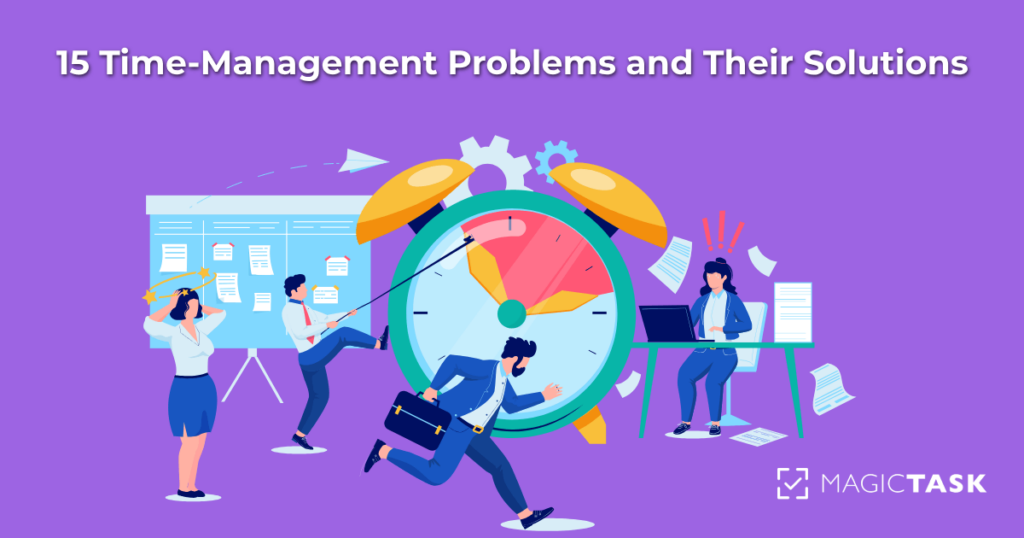
15 Time-Management Problems and Their Solutions

time management problems and solutions

Managing time can feel like an uphill battle. Did you know 82% of people don’t use a time management system? It’s no wonder so many of us feel overwhelmed by endless to-do lists and never-ending demands.

But here’s the thing: good time management isn’t about cramming more into your day. It’s about working smarter, creating balance, and focusing on what truly matters.

In this blog, we’ll break down 15 common time-management struggles and share practical, easy-to-apply solutions. Whether you’re trying to keep up with deadlines or carve out time for yourself, these tips will help you take back control of your time—and your life.

Time-Management Problems and Solutions

If you’re struggling with time management, you’re not alone! From endless task lists to procrastination, time management problems can leave you feeling stuck.

Now, let’s take a closer look at what’s holding you back—and how to fix it.

Problem 1: Overwhelming To-Do Lists

Ever looked at your to-do list and felt completely paralyzed? When tasks pile up, it’s easy to lose focus and stress more than getting things done.

Solution?

The key is to simplify. Start by breaking your list into manageable priorities using a system like the Eisenhower Matrix. This approach helps you sort tasks into four categories: urgent and important, important but not urgent, urgent but not necessary, and neither urgent nor essential. You'll feel more in control by tackling the most critical tasks first.

Another tip? Limit yourself to three to five must-do tasks each day. Keeping your list short not only makes it more achievable but also gives you a sense of accomplishment as you check things off. Remember, it’s not about doing everything—it’s about doing the right things.

Problem 2: Procrastination

We’ve all experienced that lingering pull to delay tasks until the last possible moment. Whether it’s because the task feels daunting or you’re distracted by less important activities, procrastination has a sneaky way of derailing your day.

Solution

To combat procrastination, start by breaking large tasks into smaller, manageable pieces. For example, instead of thinking, “I need to finish this entire project,” focus on one specific step, like “Create an outline.” Tackling smaller portions feels less intimidating and helps build momentum.

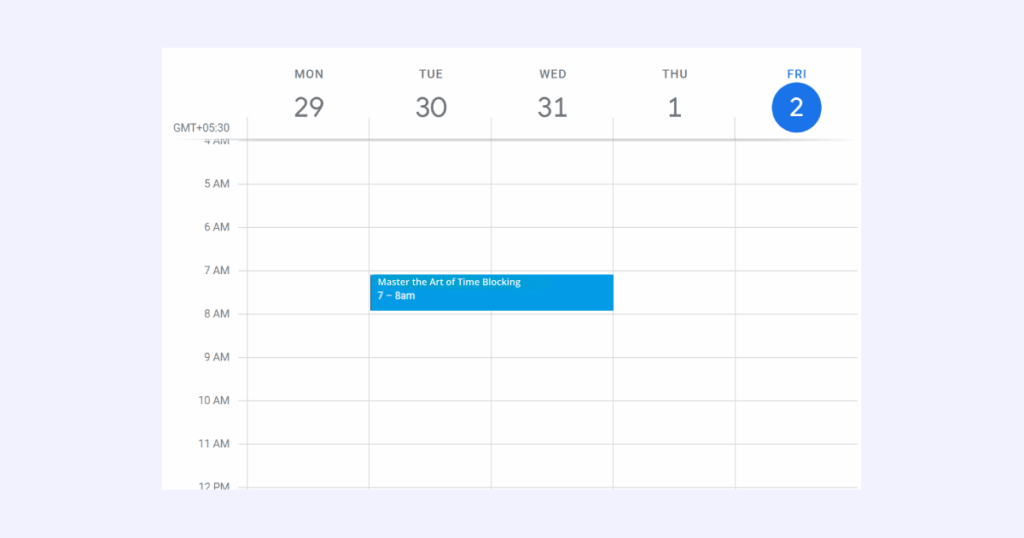
Pair this with **time-blocking**—schedule uninterrupted chunks of time for focused work, and stick to those slots. Procrastination loses its grip when you take control of how and when you work.

Problem 3: Constant Interruptions

Interruptions can feel relentless—emails, texts, notifications, or even coworkers dropping by for a “quick question.” These constant distractions disrupt your flow and leave you struggling to refocus, stretching simple tasks into drawn-out marathons.

Solution

Establish boundaries to protect your focus time. Let others know when you’re unavailable, or try using visual cues like a “do not disturb” sign or a status indicator on workplace chat apps.

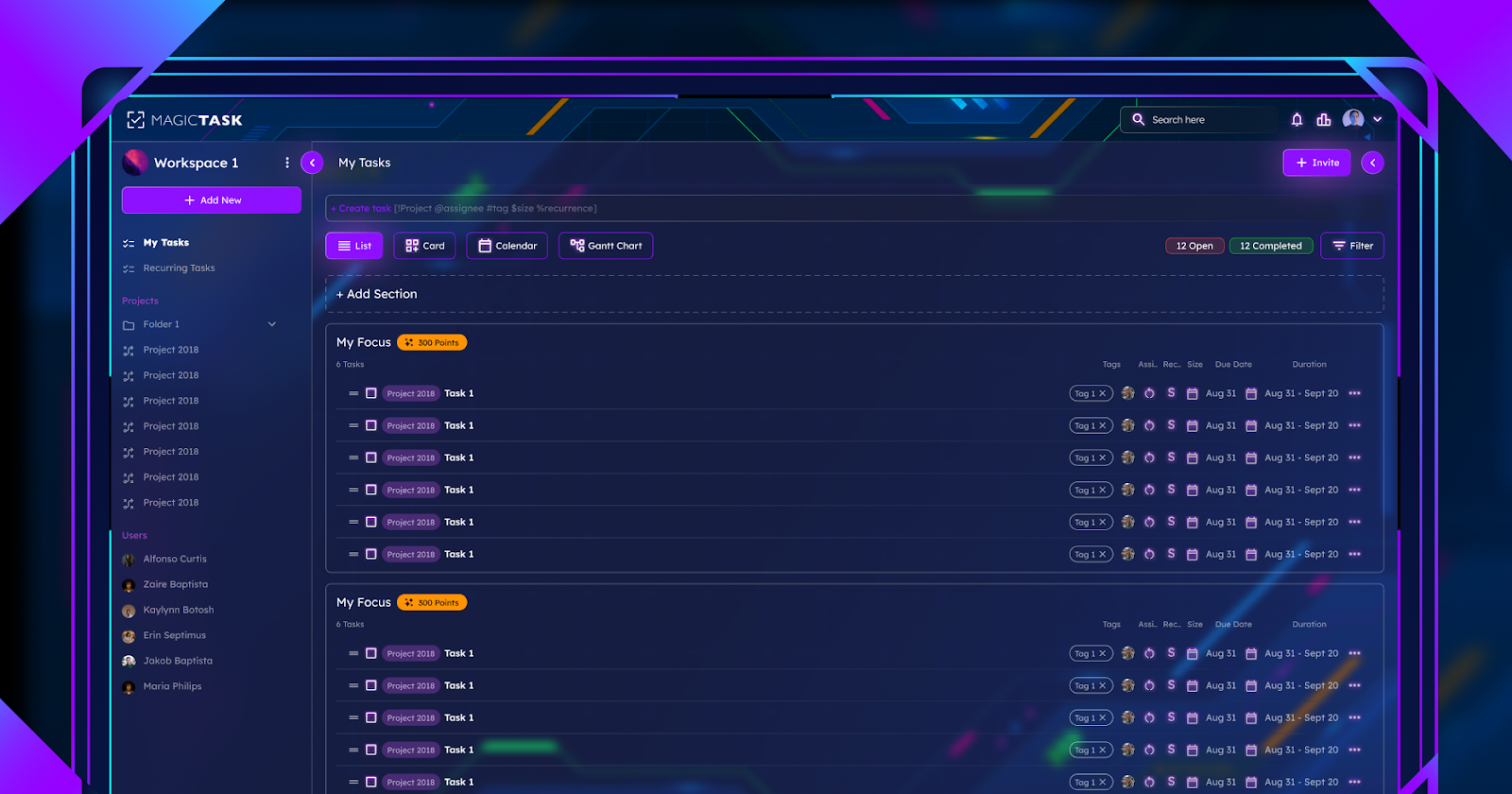
For personal focus, silence notifications, use productivity tools like MagicTask, and also use website blockers or noise-canceling headphones. Scheduling uninterrupted work blocks during your most productive hours can also make a huge difference. This helps you regain control and preserve your mental energy.

Problem 4: Poor Planning

Without a clear plan, it’s easy to spend more time deciding what to do than actually getting things done. Days that start without direction often end with the frustrating feeling of wasted time.

Solution

The key to better planning is preparation. Before the day begins, spend a few minutes the night before organizing your priorities. Identify the most important tasks and slot them into your schedule. Tools like task managers or digital calendars can simplify this process, giving you a clear roadmap.

Approaching your day with a plan improves productivity and reduces the stress of constantly making decisions on the fly.

Problem 5: Multitasking

Multitasking might seem like the ultimate productivity hack, but it’s often the opposite. Splitting your attention between tasks decreases focus and increases the likelihood of mistakes, making everything take longer.

Solution

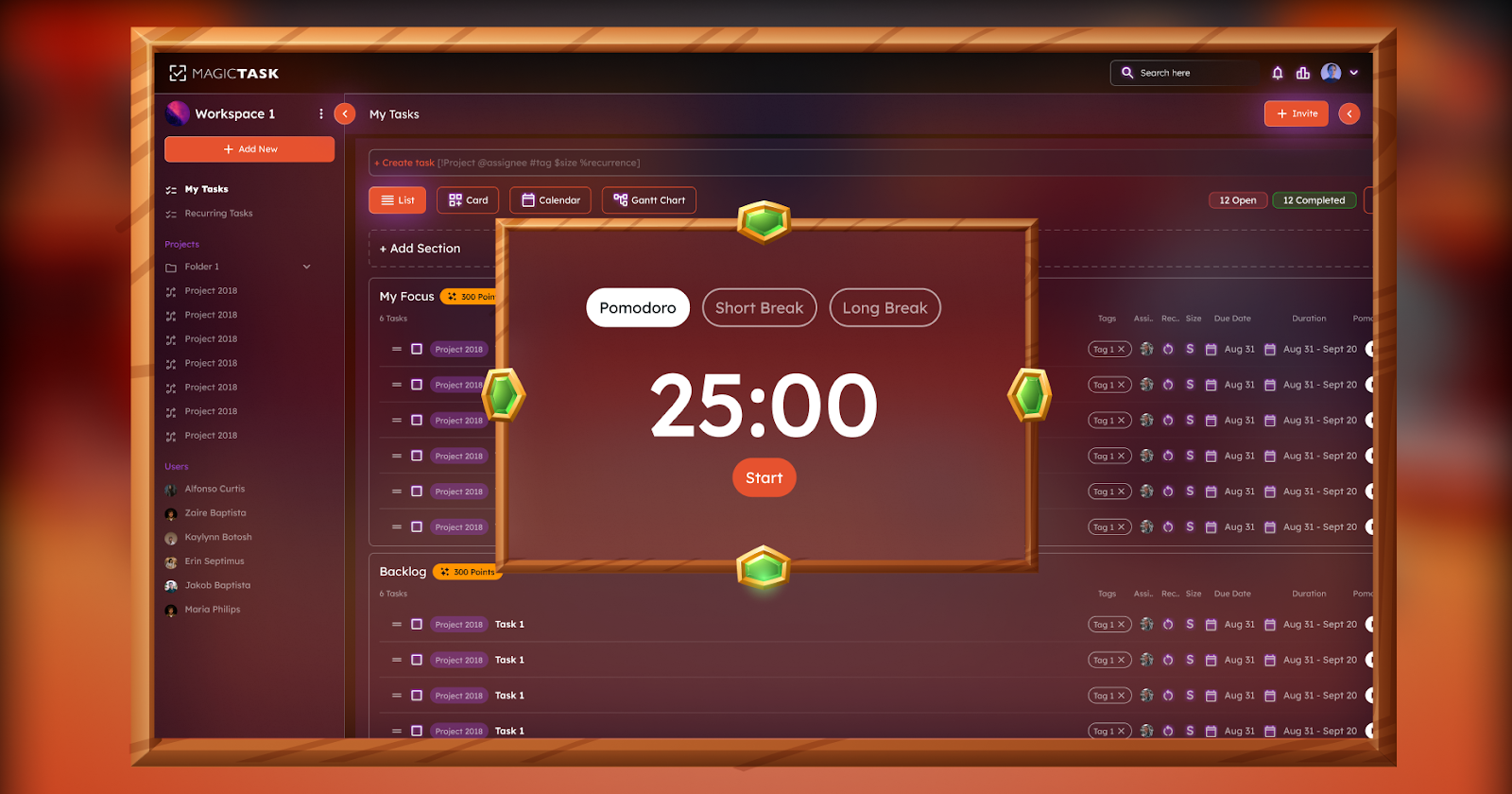
Switch to single-tasking. Use the Pomodoro Technique, where you work on one task for 25 minutes without interruption, followed by a short break. This approach keeps your attention laser-focused and helps you work more efficiently.

Another strategy is to group similar tasks to avoid context switching. For example, handle all your emails in one go instead of constantly checking throughout the day. This way, you stay in the zone and maintain momentum.

Problem 6: Lack of Clear Goals

It’s hard to feel productive when you’re unsure what you’re working toward. Without clear goals, you risk spending time on tasks that don’t align with your priorities or long-term plans.

Solution

Set clear, actionable goals using the SMART framework—Specific, Measurable, Achievable, Relevant, and Time-bound. This helps ensure your daily tasks are purposeful and aligned with larger objectives.

For example, instead of saying, “I need to work on my presentation,” reframe it as, “Complete the introduction slides by noon today.” When you’re clear about what success looks like, it’s easier to stay focused and motivated.

Problem 7: Underestimating Time Needed for Tasks

Ever start a task thinking it’ll take just 15 minutes, only to find yourself working on it hours later? Underestimating how long tasks are required can throw off your schedule and lead to rushed, incomplete work.

Solution

The best way to fix this is by practicing time-blocking. Allocate specific blocks of time for each task, being realistic about how long they’ll take. Add a 15–20% extra time buffer for unexpected hiccups or delays.

Over time, you’ll better estimate task durations and can plan your days more accurately, leaving less room for frustration and last-minute scrambles.

Problem 8: Not Delegating

Trying to do everything yourself can feel noble, but it’s a fast track to burnout. When you refuse to delegate, you overload yourself and risk slowing down progress for everyone involved.

Solution

Start by identifying tasks that don’t require your specific expertise or attention. Delegate these to team members who are capable of handling them. Use tools like task managers or shared platforms to track progress and ensure accountability.

Delegation isn’t about relinquishing control but working smarter by focusing your energy where it’s needed most.

Problem 9: Ineffective Prioritization

When everything feels equally important, it’s easy to waste time on low-impact tasks while neglecting what truly matters. Ineffective prioritization can leave you busy but not productive.

Solution

Learn to differentiate between genuinely critical tasks and those that can wait. One practical approach is the 80/20 rule (Pareto Principle), which suggests focusing on the 20% of tasks that deliver 80% of your results.

Another helpful strategy is to review your to-do list at the start of each day and highlight your top three priorities. Tackling these first ensures that the most important work gets done even if your day is interrupted.

Problem 10: Perfectionism

Perfectionism might seem like a strength, but it often leads to endless revisions, missed deadlines, and unnecessary stress. The pursuit of perfection can paralyze progress and make simple tasks take far longer than they should.

Solution

Adopt the mindset that “done is better than perfect.” Set realistic standards for your work and stick to them. If you find yourself overanalyzing or constantly tweaking, ask: “Is this additional effort truly adding value?”

Focusing on progress over perfection can help you complete tasks more efficiently without sacrificing quality.

Problem 11: Lack of Energy Management

Even the best time-management strategies won’t work if you’re trying to push through tasks when your energy is low. Many people overlook the importance of managing their energy, not just their time.

Solution

Pay attention to your natural energy patterns throughout the day. Are you more alert in the morning, or does your focus peak in the afternoon? Schedule high-priority or demanding tasks during these peak energy periods.

For lower-energy times, tackle simpler tasks like responding to emails or organizing files. Pair this with healthy habits—staying hydrated, eating nutritious meals, and taking regular breaks—to maintain steady energy levels.

Problem 12: Forgetting Tasks or Deadlines

Few things are more stressful than realizing you’ve forgotten an important task or deadline. It not only disrupts your workflow but can also damage trust with colleagues or clients.

Solution

Stay on top of your schedule by using digital tools like task management apps or calendar integrations. Set reminders for deadlines and recurring tasks to ensure nothing slips through the cracks.

For larger projects, break them into smaller milestones and set alerts for each step. This keeps you on track and helps prevent last-minute surprises.

Problem 13: Overcommitting

Saying “yes” to too many responsibilities can lead to an overwhelming workload, poor results, and a constant feeling of being stretched too thin. Overcommitting often stems from a fear of disappointing others, which ultimately harms your productivity.

Solution

Learn to say “no” politely but firmly. Before committing to something, take a moment to evaluate whether it aligns with your priorities and if you can handle it.

When you can’t decline, negotiate deadlines or delegate parts of the task to make it more manageable. Protecting your time isn’t selfish—it’s essential for maintaining focus and delivering quality results.

Problem 14: Poor Meeting Management

Unproductive or unnecessary meetings are notorious time-wasters. Without clear objectives, they can drag on, leaving participants feeling frustrated and behind on their work.

Solution

Limit meetings to only what’s essential. Before scheduling one, ask: “Could this be handled through an email or a quick message?” For meetings that are truly necessary, set clear agendas and share them in advance so participants come prepared.

Keep meetings short and focused, with specific outcomes. Consider ending them with a quick recap to ensure everyone leaves with clarity on the next steps.

Problem 15: Burnout and Lack of Breaks

When you’re constantly working without pausing, burnout can sneak up on you. It drains your energy, diminishes focus, and makes you less productive.

Solution

Prioritize regular breaks to recharge both mentally and physically. Use techniques like the Pomodoro Technique to schedule short breaks during work sessions.

Don’t underestimate the value of self-care—whether it’s taking a walk, meditating, or simply stepping away from your desk for a few minutes. Regular downtime helps you maintain your energy and stay productive in the long run.

So, How MagicTask Can Help Solve Time-Management Problems?

While strategies and frameworks are invaluable, the right tools can make all the difference in streamlining your time management. That’s where MagicTask steps in. Designed to tackle common productivity challenges, MagicTask simplifies your workflow, boosts efficiency, and helps you stay on top of your game.

Here’s how MagicTask can transform the way you manage your time:

1. Effortless Task Management

MagicTask streamlines the way you handle tasks, making it easy to create, organize, and prioritize your workload. Its clean, intuitive interface removes unnecessary complexity, so you can focus on what matters most.

  • Add tasks quickly and categorize them for better organization.
  • Assign deadlines and priorities without feeling bogged down by complicated options.

This simplicity ensures that managing your to-do list doesn’t feel like yet another task on your plate.

2. Gamified Productivity

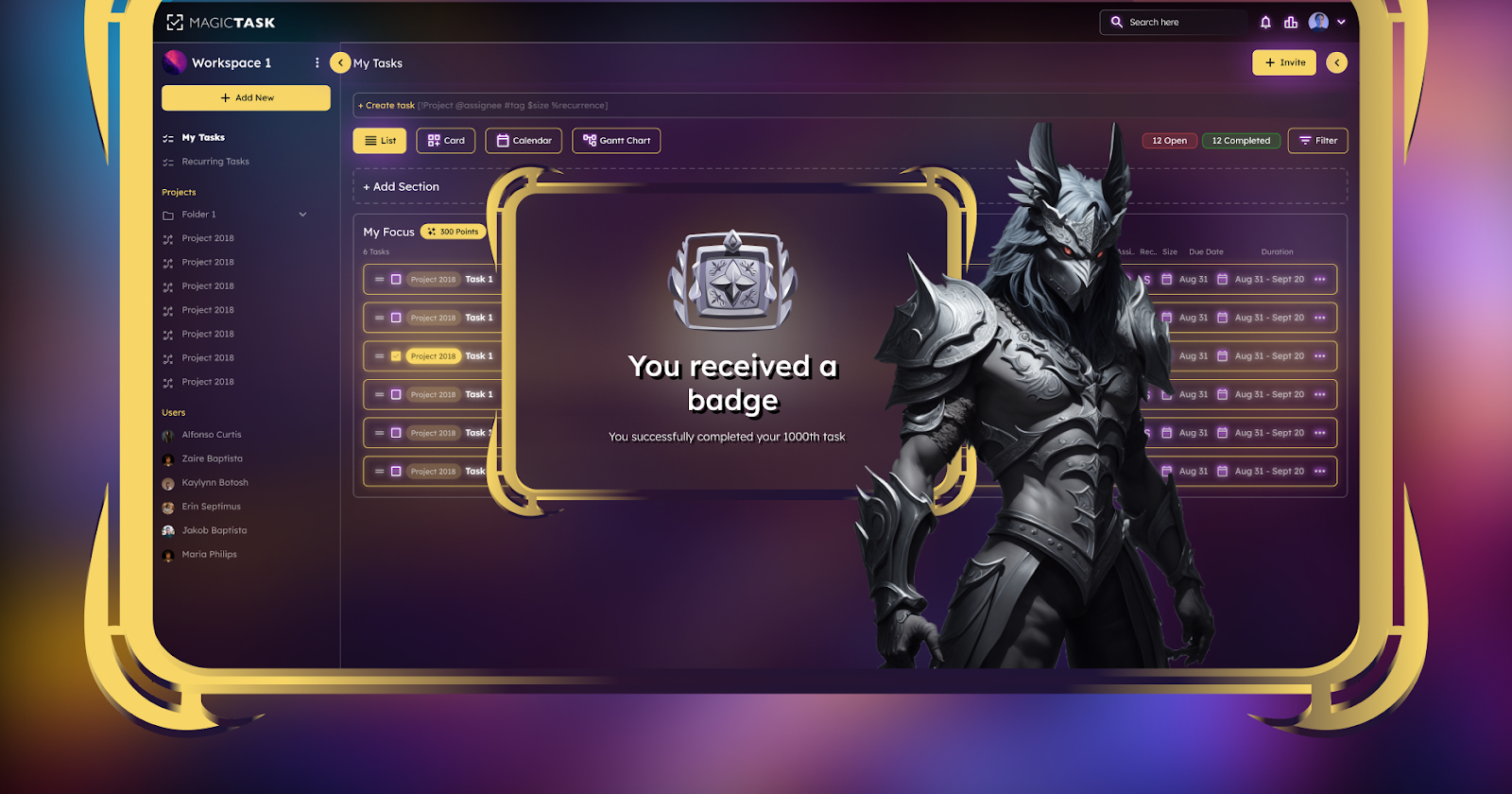
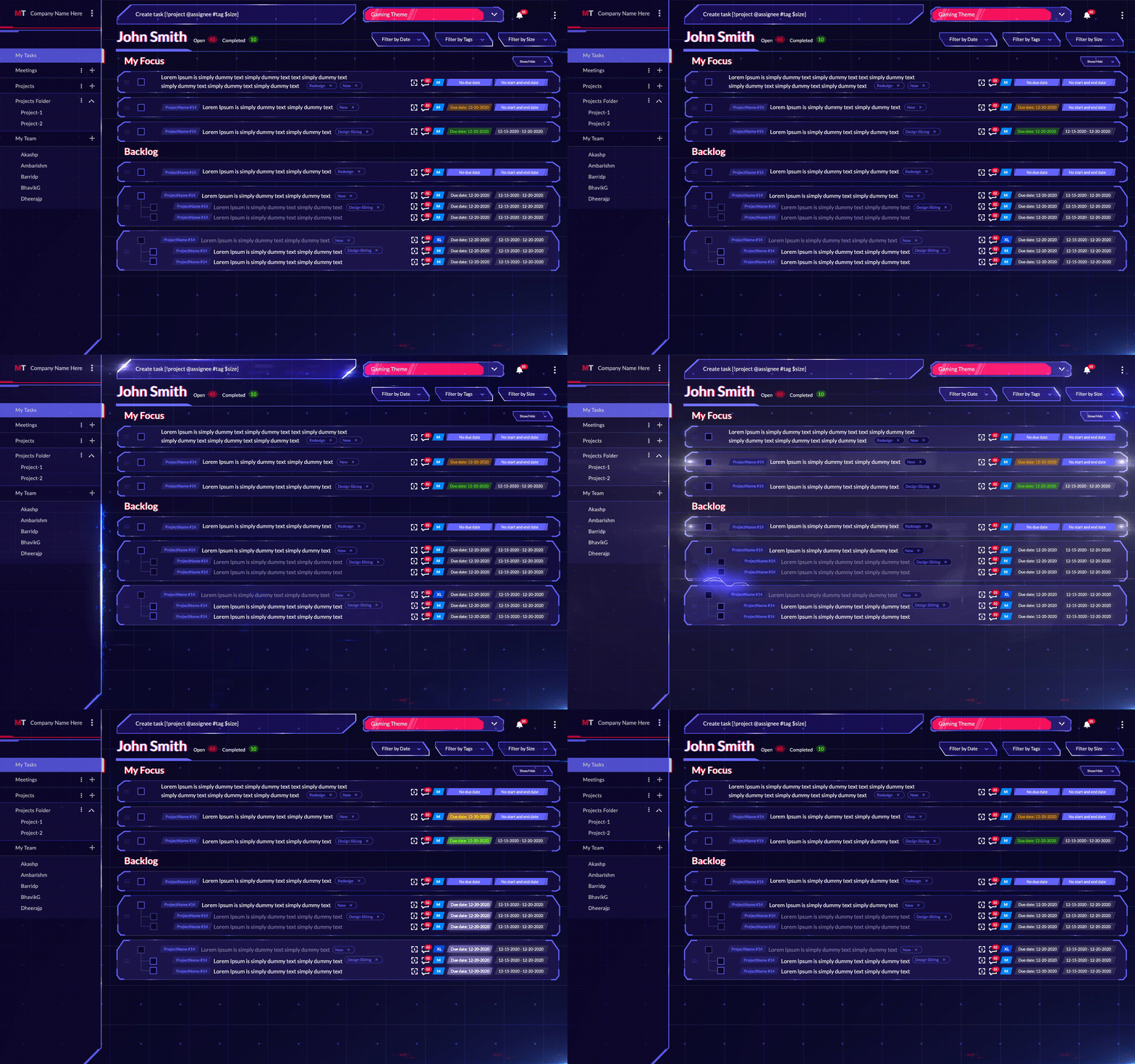
One of MagicTask’s standout features is its gamification system, designed to make task management engaging and fun. Completing tasks unlocks themes, animations, and sound effects, turning your daily routine into a rewarding experience.

  • Level up as you complete tasks and unlock new visual elements.
  • Personalize your workspace with dynamic themes, keeping things fresh and motivating.

By adding an element of play, MagicTask transforms mundane chores into opportunities for achievement.

3. Collaborative Capabilities for Teams

For those working in teams, MagicTask offers real-time collaboration features that make group projects seamless. Everyone stays in sync, with updates and changes reflected instantly.

  • Assign tasks to team members with clear priorities and deadlines.
  • Monitor progress to ensure accountability and keep the project moving forward.

This makes it easier to delegate effectively and ensures everyone knows their role.

4. Customization and Personalization

MagicTask lets you adapt your workspace to fit your style and needs. Its customizable features ensure that your task management process feels uniquely yours.

  • Organize projects into separate workspaces to maintain clarity.
  • Use themes to create a workspace that inspires and energizes you.

This level of personalization makes MagicTask more than a tool—it becomes an extension of how you work best.

Ready to experience the future of task management? Sign up now and transform the way you work.

Conclusion

Managing time effectively can feel overwhelming, but the right strategies and tools can simplify it. By addressing common challenges—like procrastination, poor planning, and burnout—you can reclaim control over your day and focus on what truly matters.

MagicTask offers a fresh, innovative approach to task management, turning daily responsibilities into an engaging, streamlined experience. It’s not just about getting things done—it’s about enjoying the process along the way.
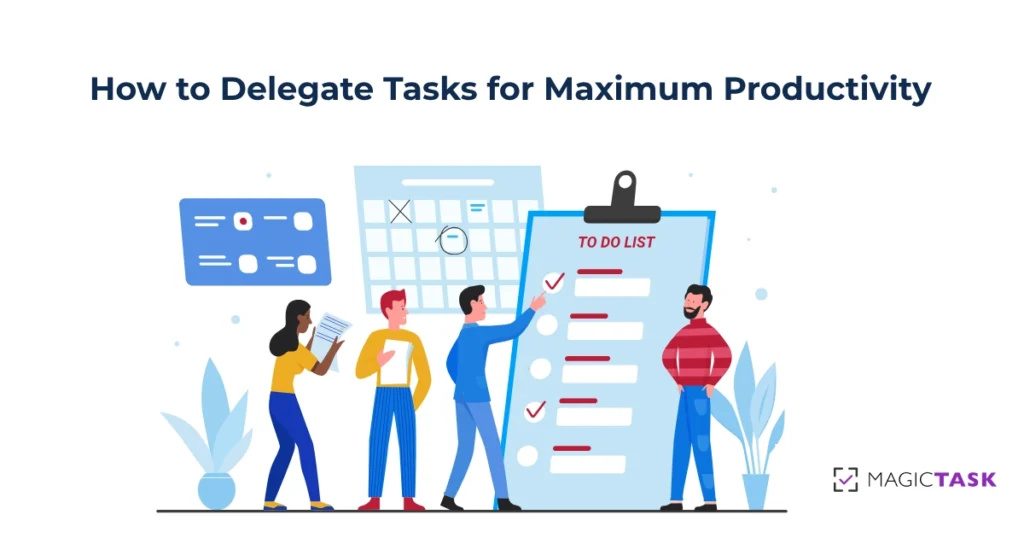
How to Delegate Tasks for Maximum Productivity

how to delegate tasks effectively

Have you ever felt so bogged down by small tasks that you barely had time for the bigger picture? You’re not alone—75% of managers face the same challenge daily.

Mastering the art of task delegation can free up your valuable time and help you focus on high-priority tasks while empowering others to take ownership of responsibilities.

But, effective delegation isn’t just about handing off work—it’s about strategically assigning tasks to the right people, ensuring alignment with their skills and expertise. When done correctly, delegation enhances overall productivity and fosters collaboration and growth within a team.

In this guide, we’ll talk about the benefits of delegation, share easy steps to do it right, and explore tools to make task management a breeze.

Let’s get started!

Why Delegation Matters?

Delegation is a cornerstone of effective leadership. It offers numerous benefits, such as:

  • Reduces workload and prevents burnout: By sharing responsibilities, leaders can focus on strategic tasks, reducing stress and avoiding burnout.
  • Empowers team members and builds trust: Assigning tasks to others fosters a sense of ownership and confidence, strengthening trust within the team.
  • Improves team efficiency and productivity: Delegation allows tasks to be handled by those best suited for them, enhancing overall team performance.

Conversely, poor delegation can lead to micromanagement, missed deadlines, and decreased morale, underscoring the importance of mastering this skill.

Challenges in Delegating Tasks

Delegating tasks often come with a set of fears and reservations, which can hold back even the most efficient professionals. Common concerns include:

  • “What if it’s not done correctly?”
    This fear stems from a lack of trust or confidence in others’ abilities. The solution lies in providing clear instructions and ensuring expectations are well-communicated. When team members know exactly what’s required, they’re more likely to deliver quality results.
  • “I can do it faster myself.”
    While this may be true in the short term, consistently handling every task yourself can lead to burnout and limit productivity. Delegating tasks to others may take initial effort, but it ultimately frees up time for more critical responsibilities.
  • “It’s hard to let go of control.”
    For many, letting go of tasks feels risky. Using tools to monitor progress, like task management platforms, can provide peace of mind. By tracking milestones and outcomes, you retain oversight without micromanaging.

Addressing these fears with practical solutions makes delegation easier and strengthens team collaboration and efficiency.

Steps to Delegate Tasks Effectively

Delegation isn’t just about assigning tasks—it’s about creating a system where work is distributed strategically, aligning responsibilities with the strengths and capacities of your team. When approached thoughtfully, it can transform how you and your team operate, leading to greater productivity and growth. Here’s how to delegate effectively:

Step 1: Identify What to Delegate

The first step in delegation is deciding which tasks can and should be handed off. Think about the work consuming too much of your time or requiring a skill set that others in your team might already excel at. Consider these categories:

  • Time-intensive tasks that pull you away from strategic responsibilities.
  • Repetitive activities that can be streamlined by someone else.
  • Lower-priority items that don’t require your direct attention but still need completion.

By being selective and intentional, you’ll ensure your focus remains on high-value work.

Step 2: Choose the Right Person

Once you know what needs delegating, the next step is finding the best person to take it on. This involves matching the task to someone whose skills, interests, and workload make them the ideal fit.

Consider who can take on additional responsibilities and who might benefit from a growth opportunity. Delegating thoughtfully strengthens your team’s engagement and ensures tasks are completed efficiently.

Step 3: Communicate Clearly

To set your team up for success, it’s essential to provide clarity about what needs to be done and how. Explain the task’s objectives, its importance, and your expectations. Be specific about deadlines and priorities, but avoid micromanaging how the work gets done.

For instance, instead of saying, “Write a report,” be clear about the scope: “Draft a one-page summary of quarterly sales, highlighting key trends and insights.”

Clear communication empowers your team to meet or exceed expectations.

Step 4: Set Deadlines and Priorities

Effective delegation requires a clear timeline. Establish realistic and meaningful deadlines, ensuring the task aligns with your team’s broader goals.

Prioritizing tasks also helps avoid confusion, especially when juggling multiple responsibilities. Leveraging task management tools can make organizing and communicating these priorities seamless.

Step 5: Monitor Progress Without Micromanaging

While it’s essential to stay informed about progress, hovering over every detail can be counterproductive. Use tools like dashboards or check-ins to track milestones and address any roadblocks.

This approach balances trust and accountability, creating a sense of ownership while keeping projects on course.

Step 6: Provide Feedback

Delegation is also an opportunity for development. Offering constructive feedback helps your team refine their skills while recognizing good work boosts motivation and morale.

Celebrate their contributions and provide insights for improvement—it’s a win-win that fosters growth and trust.

Bonus Tips for Effective Delegation

As you refine your delegation approach, consider these advanced strategies:

  • Trust your team and avoid the urge to micromanage. Instead, guide them when needed and focus on outcomes, not processes.
  • When delegating tasks, share the bigger picture—what’s the end goal? This empowers your team to take ownership and make informed decisions.
  • Save time with templates for recurring tasks. These standardized frameworks make delegation faster and more consistent.

By following these steps and strategies, you’ll lighten your workload and create a more engaged and capable team, setting everyone up for long-term success.

Common Mistakes to Avoid When Delegating Tasks

Delegation can seem deceptively simple, but subtle missteps can derail even the best-intentioned efforts. Here are some lesser-discussed mistakes that can undermine your delegation strategy:

1. Delegating Without Considering Team Dynamics

Leaders often overlook how interpersonal relationships and team dynamics affect task execution. Assigning a task to someone who struggles to collaborate with others or pairing conflicting personalities can create unnecessary friction, delaying progress.

Avoid it by: Pairing tasks with individuals or teams that work well together, fostering a collaborative and positive work environment.

2. Delegating Based on Availability Instead of Capability

It’s easy to hand off tasks to whoever appears least busy, but availability doesn’t always align with skill or interest. Delegating this way can result in subpar results and missed opportunities for personal growth.

Avoid it by: Assessing who has the right skill set and passion for the task, even if it takes longer to distribute work.

3. Relying Solely on Verbal Instructions

Verbal communication alone can lead to misunderstandings, especially for complex tasks. Without a written reference or checklist, team members may forget critical details, leading to rework and wasted effort.

Avoid it by: Documenting tasks clearly in writing, using tools to track responsibilities, and providing accessible resources for clarification.

4. Not Delegating “Upward” When Necessary

Delegation isn’t just about passing tasks down the chain—it also involves knowing when to escalate responsibilities. Failing to delegate upward to your own leadership when facing resource constraints or needing strategic direction can leave you overburdened and the task at risk.

Avoid it by: Recognizing when tasks or decisions require higher-level input and communicating these needs effectively to your leaders.

5. Assuming Delegation Ends With Task Completion

Delegating tasks is often treated as a one-and-done process, but it’s also an ongoing opportunity to evaluate and optimize workflows. Leaders who fail to review and learn from the delegation process miss out on ways to improve efficiency and strengthen their team.

Avoid it by: Conducting post-task reviews to identify what worked well and what could be done better next time, ensuring continuous improvement.

How MagicTask Can Help Delegate Tasks Effectively

Delegating tasks is only as effective as the tools you use to manage and monitor progress. MagicTask streamlines the delegation process, enabling leaders and teams to work smarter, not harder.

With its user-friendly interface and powerful features, MagicTask makes assigning, tracking, and completing tasks a seamless experience. Here’s how it can help you delegate more effectively:

1. Simplified Task Assignment

MagicTask allows you to assign tasks in just a few clicks. You can match tasks to the right people by detailing the skills required and setting clear priorities. Customizable fields ensure that your team has all the necessary information upfront, reducing the chance of misunderstandings or delays.

2. Clear Communication of Goals and Expectations

With MagicTask, you can attach detailed instructions, set deadlines, and outline desired outcomes for every task. This ensures that your team understands what needs to be done and why it matters. Features like comments and file sharing enable ongoing collaboration, keeping communication centralized and efficient.

3. Prioritization Made Easy

MagicTask’s intuitive prioritization tools let you label tasks by urgency and importance. Whether you’re dealing with high-stakes projects or routine responsibilities, the platform ensures that everyone knows what to tackle first, avoiding bottlenecks and confusion.

4. Progress Tracking at a Glance

Monitoring progress is key to successful delegation, and MagicTask excels in providing real-time updates. Visual dashboards, progress bars, and customizable reports make it easy to see what’s on track and where additional support might be needed—all without micromanaging.

5. Recurring Task Automation

For tasks that repeat regularly, MagicTask offers templates and automation features. This saves time and ensures consistency across recurring workflows, making delegation faster and more reliable.

Why Choose MagicTask?

MagicTask isn’t just a task management tool—it’s a solution designed to make delegation stress-free and highly effective. By centralizing task information, fostering communication, and providing robust tracking, MagicTask empowers you to delegate confidently. Whether you’re leading a small team or managing a large-scale project, MagicTask adapts to your needs, ensuring that every task is handled efficiently.

Start delegating smarter with MagicTask, and see how it transforms your work. Sign up today and experience the difference!

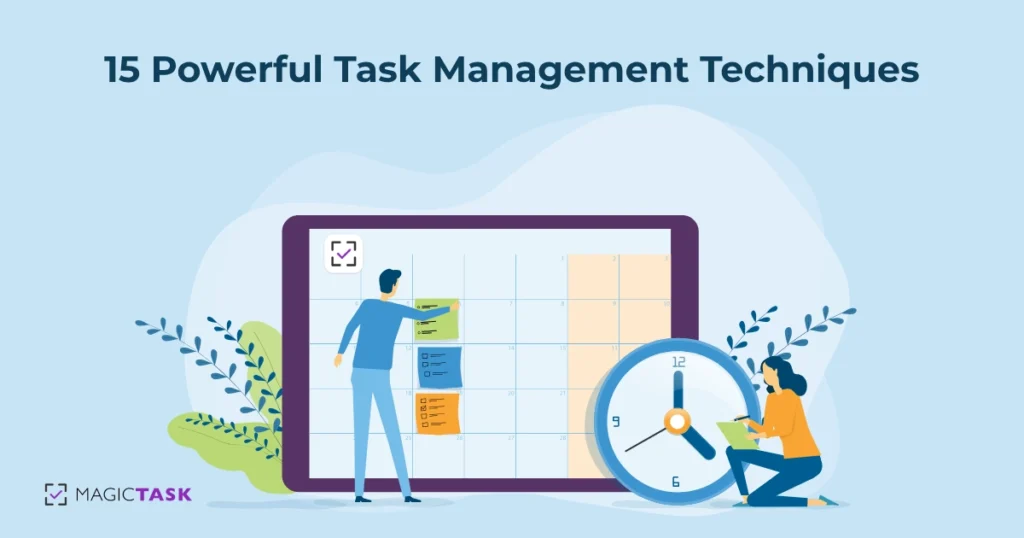
15 Powerful Task Management Techniques

task management techniques

Effective task management techniques are essential for anyone aiming to stay organized and productive, whether in personal projects or professional pursuits.

Task management, at its core, is about structuring, prioritizing, and tracking tasks in a way that aligns with specific goals, helping reduce stress and enhance efficiency. Different task management techniques are proven to manage tasks efficiently based on their unique workflow needs.

In this guide, we will explore 15 powerful techniques that can transform how you approach daily tasks and manage complex projects. From prioritizing urgent tasks to breaking down larger goals, these strategies are designed to help you optimize both time and focus, making it easier to achieve more without feeling overwhelmed.

Let's begin!

1. Prioritize Tasks with the Eisenhower Matrix

The Eisenhower Matrix is an effective task management technique. In this method, we prioritize tasks based on urgency and importance. The tasks are organized into four distinct quadrants:

  • Urgent and Important: These tasks demand immediate attention and usually have pressing deadlines or significant consequences if delayed. Examples include project delivery deadlines, critical client issues, or health-related emergencies.
  • Important but Not Urgent: These tasks are essential for long-term success but can be scheduled for later. Examples might include strategic planning, professional development, or setting personal goals.
  • Urgent but Not Important: Tasks in this quadrant are often interruptions that don’t necessarily contribute to long-term goals. For instance, answering non-essential emails, handling minor requests, or attending non-critical meetings.
  • Neither Urgent nor Important: These tasks don’t require immediate action and typically don’t impact overall objectives. Examples include unnecessary administrative work, excessive social media scrolling, or sorting through unimportant emails.

By regularly assessing tasks using this matrix, you can maintain focus on what matters most while minimizing time spent on less impactful activities.

2. Break Down Goals Using the SMART Method

The SMART method is a well-established approach for setting clear, actionable goals by focusing on five key attributes:

  1. Specific: Goals should be precise and clearly defined. For example, instead of a broad aim like “get healthier,” a specific goal would be “exercise three times a week.”
  2. Measurable: A goal needs to be trackable to assess progress. “Read 12 books this year” is measurable, allowing you to check your pace over time.
  3. Achievable: Goals should be realistic, given the time and resources available. If you’re new to running, aiming for a marathon next month may not be achievable, but training for a 5K might be.
  4. Relevant: Each goal should align with your broader ambitions or values. If your focus is career development, a relevant goal might be to “complete a professional certification this quarter.”
  5. Time-bound: Assigning a timeframe creates urgency and helps prevent procrastination. A time-bound goal could be “finish drafting my article by Friday.”

Breaking down large objectives into SMART goals allows you to take manageable steps, keeping motivation high and progress consistent. 

3. Master Time Blocking for Structured Days

Time blocking is a productivity method that involves scheduling specific blocks of time for particular tasks or activities throughout the day.

By dedicating distinct periods to focused work, meetings, and even breaks, time blocking helps eliminate distractions and maintain a structured workflow. This approach allows for a clear day overview, making it easier to stay on track and avoid multitasking.

The advantages of time blocking are numerous. It encourages a deep focus on one task at a time, reducing the mental fatigue of constantly switching between activities. It also makes it easier to set boundaries, allowing for more intentional breaks and preventing work from spilling into personal time.

Modern task management tools integrate with calendars, enabling seamless time blocking. By syncing tasks with your schedule, these tools can streamline time allocation, helping to reinforce boundaries and keep each day well-organized and productive.

4. Embrace the "Two-Minute Rule"

The "Two-Minute Rule" is a simple yet impactful technique designed to handle small tasks immediately rather than letting them pile up.

The rule suggests that if a task takes two minutes or less to complete—whether it’s replying to a quick email, organizing a file, or making a brief call—it’s best to do it immediately. You can prevent these minor tasks from accumulating into a daunting backlog by addressing them as they arise.

Applying the Two-Minute Rule leads to quick wins that can create positive daily momentum. No matter how small, each completed task reduces the mental load and frees up mental space. This makes concentrating on larger, more complex projects easier without the lingering stress of unfinished minor tasks hanging in the background.

5. Apply the Pomodoro Technique for Focus

pomodoro technique

The Pomodoro Technique is a time management method that breaks work into intervals, traditionally 25 minutes long, followed by a 5-minute break. Developed by Francesco Cirillo in the 1980s, this technique aims to maintain focus and prevent burnout by working in short, focused bursts. After completing four "Pomodoros," or work intervals, a longer break of 15–30 minutes is taken to recharge.

To get the most out of the Pomodoro Technique, try these tips:

  • Choose a single task to focus on for each Pomodoro to avoid the distraction of multitasking.
  • Set a timer for the 25-minute interval, and commit to working on that one task without interruptions.
  • Use the short breaks between intervals to step away from your workspace, stretch, or refresh with a quick walk.
  • Evaluate and adjust your tasks at the end of each more extended break, ensuring that your remaining tasks align with your goals for the day.

This technique is effective for those who struggle with focus or feel overwhelmed by large tasks, making it easier to make consistent progress without feeling exhausted.

6. Delegate Tasks Wisely

Delegating tasks is essential for effective time management, especially when managing multiple responsibilities or working within a team.

Knowing when to delegate is vital; tasks that are routine, time-consuming, or can be handled by someone with the right skills are ideal candidates for delegation. This approach lets you focus on higher-priority responsibilities requiring direct involvement or specialized expertise.

When delegating, it’s essential to communicate clearly. Provide a clear brief, outline expectations, and set deadlines. This ensures the person taking on the task has all they need to complete it successfully.

Additionally, regularly check in on progress without micromanaging. Use collaborative tools that make it easy to assign tasks, set deadlines, and monitor progress, helping the delegator and the person taking on the task stay aligned and productive.

By delegating wisely, you can free up time for critical tasks, reduce burnout, and create an environment of shared responsibility.

7. Use Task Batching to Reduce Context Switching

Task batching is a productivity technique in which similar tasks are grouped and completed, minimizing the mental energy wasted switching between unrelated activities. By focusing on one type of task at a time, you can maintain a steady rhythm, improve efficiency, and reduce the stress of multitasking.

For example, designate a specific time block for addressing all emails simultaneously instead of responding to emails sporadically throughout the day. Similarly, if you’re working on content creation, allocate a batch of time to focus solely on writing or editing multiple pieces. This way, your mind remains engaged with similar tasks, allowing you to work more smoothly without the constant disruption of shifting gears.

Task batching is particularly useful for reducing context switching, making it easier to stay focused and accomplish more in less time.

8. Build a Realistic To-Do List

Creating a realistic to-do list is key to managing your workload without feeling overwhelmed. One practical approach is focusing on 3-5 main daily tasks. By narrowing down your daily priorities, you can concentrate on what truly matters without getting bogged down by an overly ambitious list. This approach helps prevent the discouragement that often comes from leaving tasks unfinished.

When building your list, prioritize tasks based on urgency and importance, and be mindful of your time constraints. Choose tasks that align with your main goals for the day, and avoid adding unnecessary items just to fill space. This practice fosters a sense of accomplishment, allowing you to finish each day with tangible progress on essential tasks.

9. Conduct Regular Progress Reviews

Regular progress reviews are essential for aligning your tasks with your long-term goals. Setting aside time each week and month to assess your progress can help you identify what’s working, what needs adjustment, and how to prioritize your upcoming tasks.

Weekly reviews allow you to track short-term achievements and address any obstacles before they become larger issues. On the other hand, monthly reviews give a broader perspective, helping you evaluate whether you’re on track with your goals and whether adjustments are needed in your overall strategy. By consistently checking in on your progress, you can maintain focus, stay accountable to your goals, and make informed decisions that drive you forward.

This habit boosts productivity and ensures that your daily efforts contribute meaningfully to the bigger picture.

10. Minimize Distractions

Creating a distraction-free workspace is key to maintaining focus and productivity. Here are some practical tips to help minimize interruptions:

  • Declutter your workspace: A clean, organized space reduces visual distractions and makes it easier to focus on tasks.
  • Set boundaries: Communicate with those around you, whether at home or in the office, to let them know your focus hours. Wearing headphones can also signal that you're in a work mode.
  • Limit digital distractions: Turn off non-essential notifications on your devices, and consider using apps or browser extensions that block distracting sites while you work.
  • Schedule breaks: Allow for short, intentional breaks throughout your day to step away from work and recharge, making it easier to return with renewed focus.

Reducing distractions helps you stay on task and accomplish more in less time, creating a work environment that promotes both focus and productivity.

11. Set Deadlines for Accountability

Setting realistic deadlines is a powerful way to stay motivated and keep tasks on track. When you assign a specific due date to a task, it creates a sense of urgency, making it easier to prioritize and focus on completing it. Deadlines help break down larger projects into manageable steps, each with its timeline, preventing procrastination and ensuring steady progress.

Deadlines also build accountability, especially when paired with reminders that prompt you to stay on schedule. Task management tools simplify this process by allowing you to set due dates, receive reminders, and track the status of each task.

This structure helps you stay organized, boosting both motivation and efficiency by ensuring you’re consistently moving forward.

12. Follow the Pareto Principle (80/20 Rule)

The Pareto Principle, commonly known as the 80/20 Rule, suggests that 80% of outcomes are often the result of just 20% of efforts. In terms of productivity, this means that a small number of high-impact tasks can lead to the majority of your results.

Identifying and focusing on these critical tasks allows you to maximize efficiency and make substantial progress without feeling overwhelmed by less essential activities.

To apply the Pareto Principle effectively, start by evaluating your tasks and asking yourself which ones directly contribute to your primary goals. Prioritize these high-impact tasks, which are likely to drive the most value.

Regularly reassess your workload to ensure you spend most of your time on activities that make a meaningful difference. This approach lets you streamline your efforts, concentrating on what moves the needle.

13. Keep a Task Journal

Maintaining a task journal is an effective way to track progress, celebrate small wins, and identify areas for improvement. By recording daily accomplishments, you create a space to acknowledge your efforts, boosting motivation and providing a sense of achievement, no matter how small the tasks.

A task journal also allows you to observe patterns over time. Noticing which types of tasks you consistently complete and which tend to linger can offer insights into your productivity habits and help you adjust your approach as needed.

By regularly reviewing your entries, you can identify obstacles, refine your workflow, and set realistic goals based on what works best for you. Over time, this journal becomes a personal roadmap to productivity, showing your growth and helping to keep you on track.

14. Use Visual Task Management Boards

Kanban boards are a powerful tool for visualizing progress and managing tasks.

By displaying tasks as cards on a board, typically organized into columns like "To Do," "In Progress," and "Done," Kanban boards offer a clear view of where each task stands in the workflow. This visual approach helps with task prioritization, makes it easy to identify bottlenecks, and keeps your focus on the current tasks without losing sight of what’s completed or upcoming.

The drag-and-drop functionality of modern task management tools makes using Kanban boards even more intuitive. Moving tasks between columns feels natural and allows you to quickly update progress, creating a dynamic system that adapts as priorities shift. This hands-on approach to task management enables a seamless, organized workflow where progress is visible at a glance.

15. Learn to Say No

Learning to say "no" is an essential skill for effective task management. Protecting your time and energy allows you to focus on tasks that align with your goals and priorities, helping you avoid the burnout that often comes from over-commitment.

When you take on too many responsibilities, your productivity and well-being can suffer, making it harder to accomplish what truly matters.

To decline tasks politely, try expressing appreciation for the opportunity and briefly explaining your current commitments.

For example, you might say, “I appreciate you thinking of me for this, but I’m focusing on a few key projects right now.” If appropriate, suggest another person who could help or offer to assist later when your schedule allows. Setting these boundaries with respect and clarity allows you to maintain positive relationships while staying true to your priorities.

Conclusion

Mastering task management can transform how you approach daily tasks and long-term goals. Using these strategies, you can prioritize effectively, stay focused, and progress steadily.

Adding tools like MagicTask can help you fine-tune your task management approach. MagicTask offers the features you need to bring these methods to life, from clean, fast tasks UI to recurrent tasks and themes.

Ready to take control of your productivity? Explore MagicTask and see how it can help you achieve more with less stress.

10 Work-From-Home Hacks to Level Up Your Productivity

Work from Home Productivity Hacks

Have you ever wondered whether working from home makes you more or less productive? According to the latest research, fully remote employees are surprisingly less productive than their in-office counterparts. 

Now, this doesn’t necessarily mean working from home is a bad idea. In fact, several studies have shown that hybrid workers – those who work from home on some days and from company premises on other days – are just as productive as their office-bound colleagues. 

This proves that remote work arrangements have their fair share of benefits. The trick for remote workers is to make deliberate choices that maximize their productivity. This article highlights ten tried-and-tested work-from-home hacks for improved productivity. 

1. Creating a Dedicated Workspace

Working remotely affords you the flexibility to work from anywhere, be it your living room, gazebo or kitchen countertop. Still, it’s important to have a designated work zone that allows you to concentrate on work and minimize distractions. 

If you have a spare room, this is the best place to set up your home office. But even without an extra room, you can improvise and convert other unused areas into workstations. The space underneath a staircase, an unused corner in the living or dining room, a loft, closet space, the nightstand section—all these areas can be transformed to serve as home offices. 

What’s important is ensuring that your workspace has the following:

  • Natural or overhead lighting – the area should be well-lit to prevent unnecessary fatigue and eye strain. 
  • Ergonomic furniture – should have ample space to fit an ergonomic desk and chair for optimal comfort.
  • Storage options – incorporate storage units to store your office supplies, such as wall-mounted shelves.

2. Structuring Your Day Like an Office Workday

As a remote employee, it can be tempting to work without a routine. After all, one of the greatest perks of this arrangement is the freedom to set your own working hours. 

However, you should structure your day like an office workday to maximize your productivity. In fact, you should create a work-from-routine that suits your lifestyle. 

Start by establishing your working hours. You’ll want to set these for when you’re most productive. For some, this could mean the typical 9-to-5. However, others might prefer 8-to-4 or 12-to-8 or other. What matters is that you follow the routine to the letter. 

Once you’ve determined your work hours, create blocks of time and assign tasks accordingly. Figure out the most vital tasks and schedule them when your focus is at its highest. At the same time, determine the lower-priority tasks. Such activities should be tackled when your focus starts to wane. 

3. Utilizing Technology and Tools

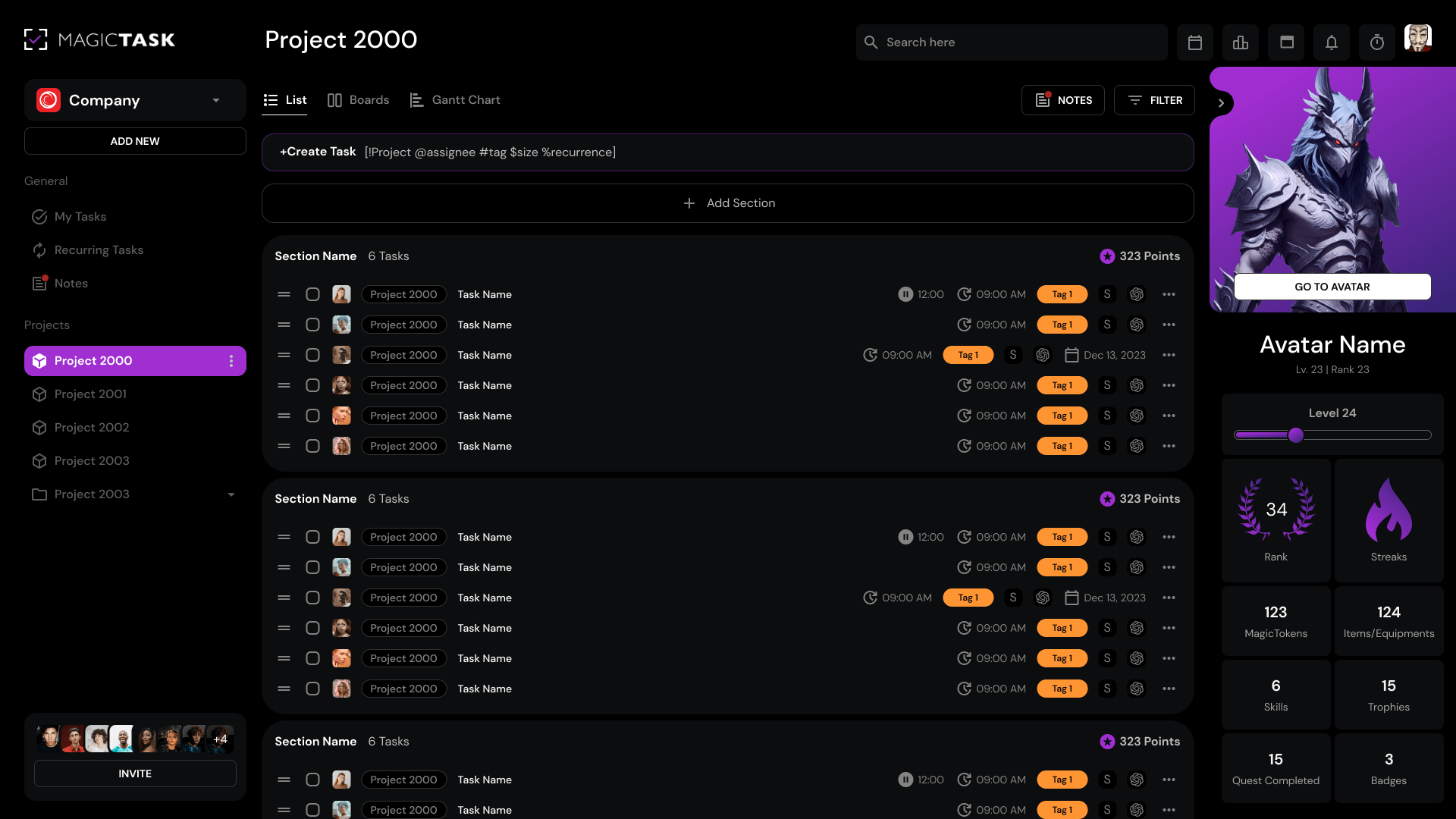
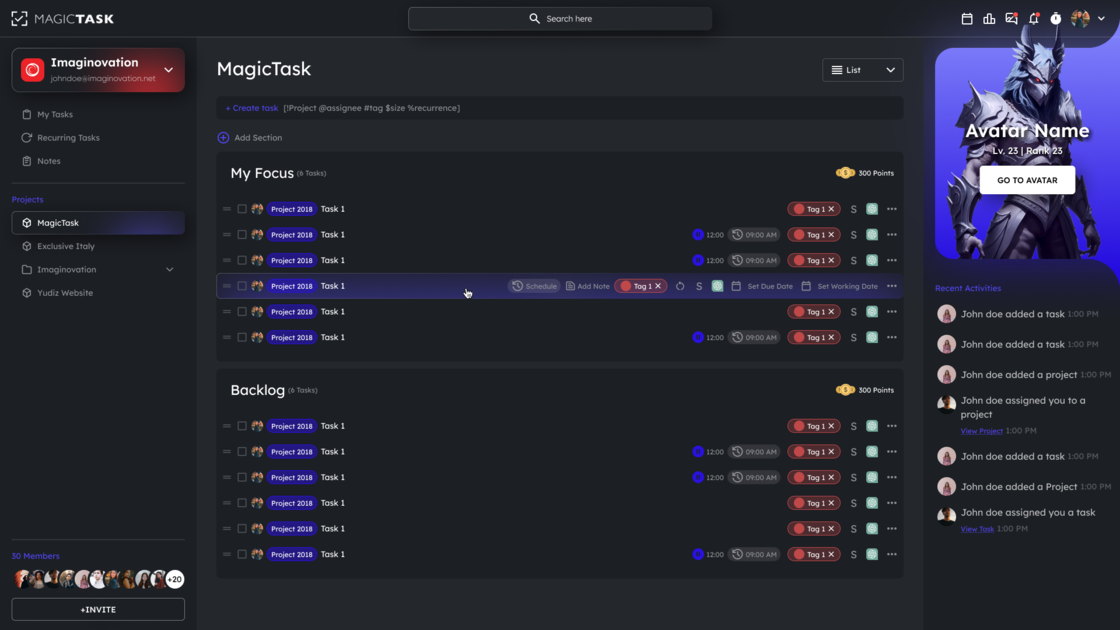
magictask v3 tasks dashboard

Leveraging tools can also boost your productivity when working from home. These technologies aid in managing tasks, coordinating with colleagues and accessing/ storing crucial information. Each of these tasks contributes to your overall productivity. 

Task management tools like MagicTask can be particularly beneficial. This platform lets you organize tasks into lists and assign priority levels. 

This then makes it easy to identify the tasks that should be handled first and the ones that should be handled later. This tool also facilitates collaboration by allowing users to share tasks with team members. 

4. Managing Distractions at Home

You might not realize it, but distractions are among the biggest killers of productivity. Every interruption interferes with your ability to focus, making it harder to embark on the task at hand. 

In fact, research shows that it takes nearly 23 minutes to refocus once you’ve been distracted. If you do the math, you lose a whopping one hour of productivity if you’re distracted thrice. To avoid this, here are a few tips to help you manage distractions when working from home:

  • Set time-bound goals – creating goals with specific timeframes will help you maintain focus for that predetermined period. You're less likely to fall for distractions since you’re working towards completing the goal.
  • Turn all notifications off -Another way to maintain razor-sharp focus is to turn off all notifications. Set aside time during your long breaks to check them so you’re not distracted during your working hours. 
  • Block social media – This might seem extreme, but it’s necessary if you can’t control your social media usage. Install an app or website blocker restricting access to these social networks while working.
  • Avoid multitasking – don’t be tempted to juggle work and house chores, as this can easily hamper your productivity. Instead, create a schedule and stick to it. If it’s time to work, then focus on that. If it’s time to unplug, then step away from work and relax or do chores.


5. Keeping a To-Do List

Creating a to-do list is another hack for maximizing your productivity as a remote worker. It offers two main benefits: accountability and structure. 

Writing down everything you need to do helps you see the big picture. You can then break it down into small, manageable tasks or milestones that can be tracked. This will ensure that you stay on top of projects and remain organized

And with tools like MagicTask, creating a to-do list is a breeze. Once you have an account, you can create task lists with their respective details, deadlines, and priority levels. 

6. Setting Clear Boundaries With Household Members

You may find it challenging to be productive when you’re always distracted by family members. 

So, one thing you should do is establish clear limits. Let your family know they can’t disrupt you during work hours. Adding a visual symbol—like a “Do not Disturb” or “Stop” sign—is an excellent way to set boundaries, especially for kids. Having a designated workstation also helps to enforce these boundaries. 

At the same time, it’s important to unplug at the end of the day. Once you’re done working, detach yourself from work-related activities and spend time with your family. When you make time for them, they will also find it easy to respect your work boundaries the rest of the time. 

7. The Importance of Regular Breaks

While some remote workers easily fall for distractive activities, others become workaholics. Here’s the thing: both of these extremes negatively impact your productivity. In fact, a 2014 study revealed that workers’ output starts plummeting after a 50-hour work week. This shows that working longer or harder doesn’t necessarily make you more productive. 

So, instead of working nonstop, take regular breaks. Create a routine that incorporates these breaks. Better yet, use time management hacks like the Pomodoro, which slots in breaks after every 25 minutes of work. 

Allowing your mind and body to rest helps you rejuvenate. This allows you to resume work with greater creativity, focus, and decision-making ability. 

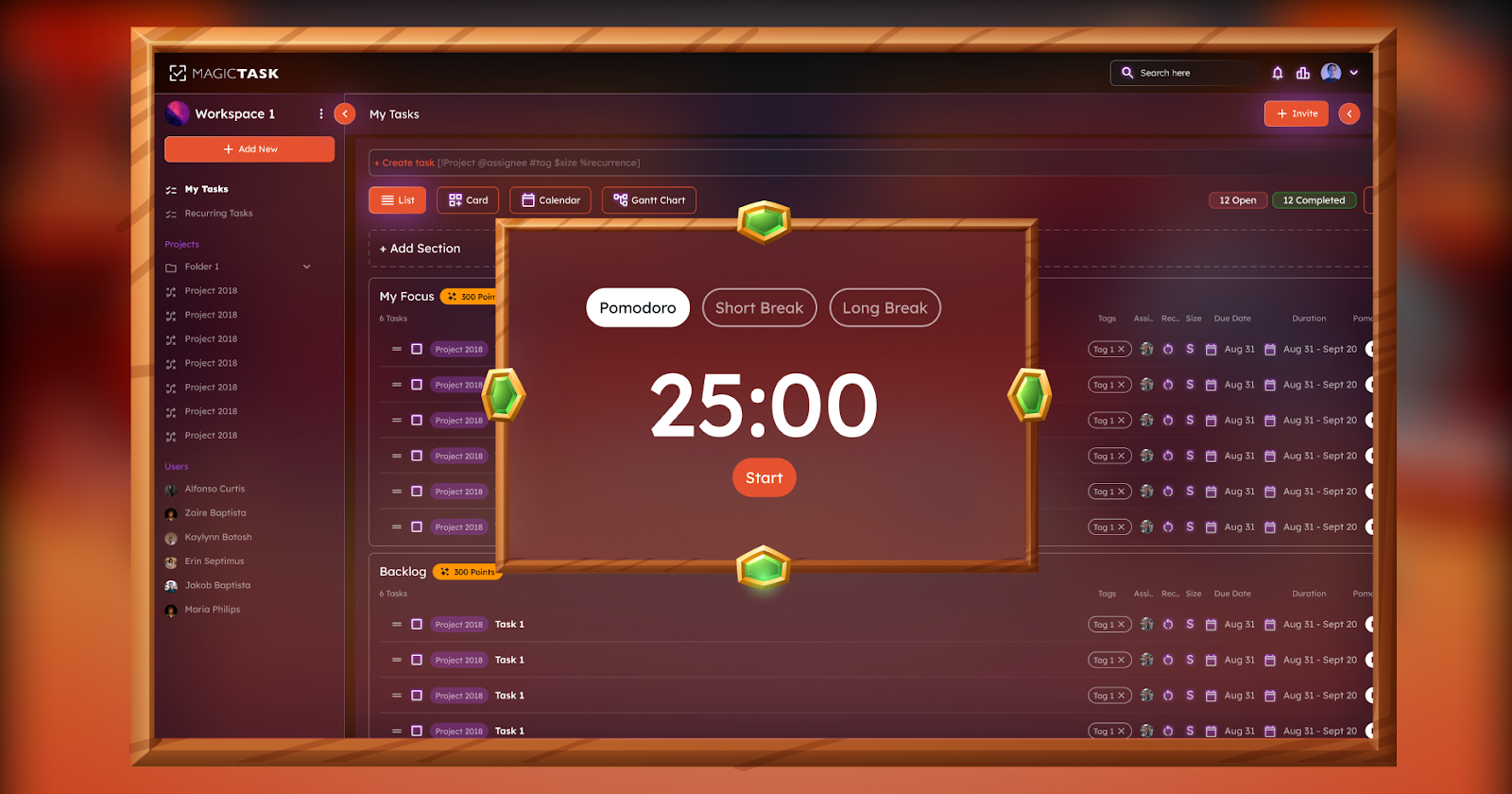
Pomodoro Timer

8. Staying Physically and Mentally Healthy

Just because you’re working from home doesn’t mean you put your physical and mental health on the back burner. In fact, these areas should take center stage if you want to boost your productivity. 

Prioritizing self-care ensures you have a clear mind and relaxed body to tackle the day’s activities. You can make better decisions, be more creative, and maintain focus for longer. In a recent survey, the respondents cited greater productivity as one of the perks of indulging in self-care. 

Here are a few tips to keep you physically and mentally healthy when working from home:

  • Nourish yourself – prepare nutrient-rich meals and snacks, and hydrate regularly
  • Schedule regular workouts – They don’t have to be strenuous, though. This can be as simple as going for a stroll or stretching at your desk.
  • Get sufficient sleep – ensure you sleep for the recommended 7 to 9 hours every night. This gives your body time to relax and re-energize. 
  • Schedule time off – don’t skip your vacation or leave days. Taking time off is essential to recharge your body and mind. 
  • Look for hobbies – spare time to engage in leisure activities outside your work routine. These are great for destressing and boosting your creativity.


9. Regular Communication

Working remotely doesn’t mean you have to cut off connections with colleagues. On the contrary, it’s more important to maintain connections with coworkers. 

Maintaining a collaborative environment is sure to boost your productivity and morale. As a bonus, it also minimizes loneliness and isolation, which you’re vulnerable to due to the nature of your work. Here are a couple of tactics that might help:

  • Arrange virtual breaks – whether taking a coffee or lunch break, consider inviting fellow remote workers to join you.
  • Learn new skills together – whether a sport, work-related skill or other shared interest, invite your coworker and learn together. For instance, you can learn a new language together, especially if it contributes to your career development.
  • Use visual collaboration software – these programs allow you to communicate with your team in real time. Mural is a good case in point. It allows remote workers to connect, correspond, brainstorm, and plan on a shared platform.


10. Reviewing and Adjusting

You might not get your work-from-home routine right the first time. So, it’s important to review your schedule and practices regularly. This will help you determine what is or isn’t working and adjust accordingly. 

For instance, if you realize you’re more productive in the afternoon than in the morning, you could switch things around. This means tackling lower-priority tasks early in the morning and the high-priority ones during peak productivity hours.  

Conclusion

Working from home can blur the lines between your professional and personal lives, compromising productivity. The key is realizing this early on and making necessary changes to maximize productivity. 

Some of the most effective productivity tips for remote work include having a designated work area and creating a to-do list. Additionally, set clear limits, manage distractions, and leverage productivity tools and technology. Keeping in touch with coworkers and taking regular breaks also helps you operate optimally.

9 Essential Goals to Boost Your Productivity in 2024

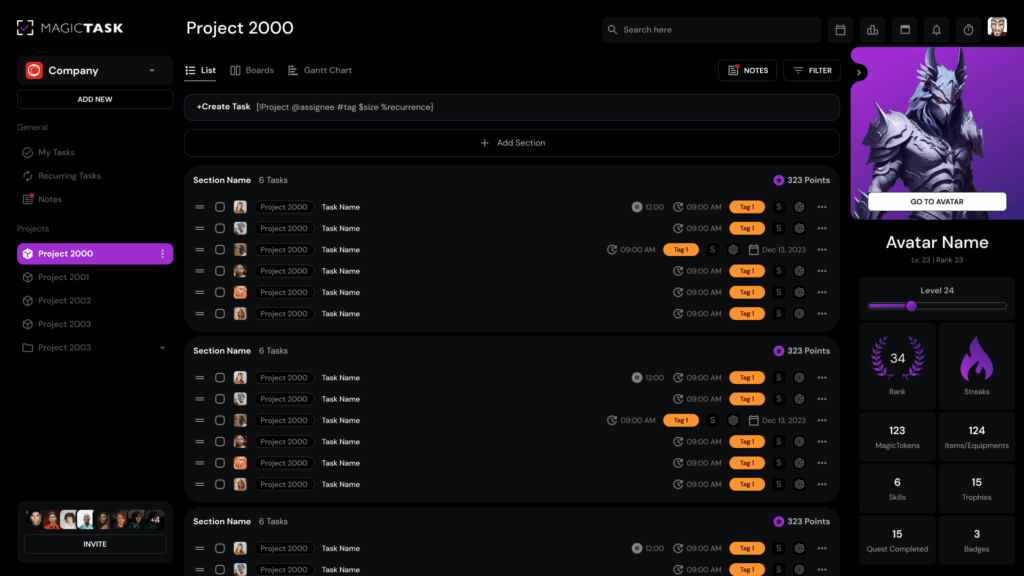
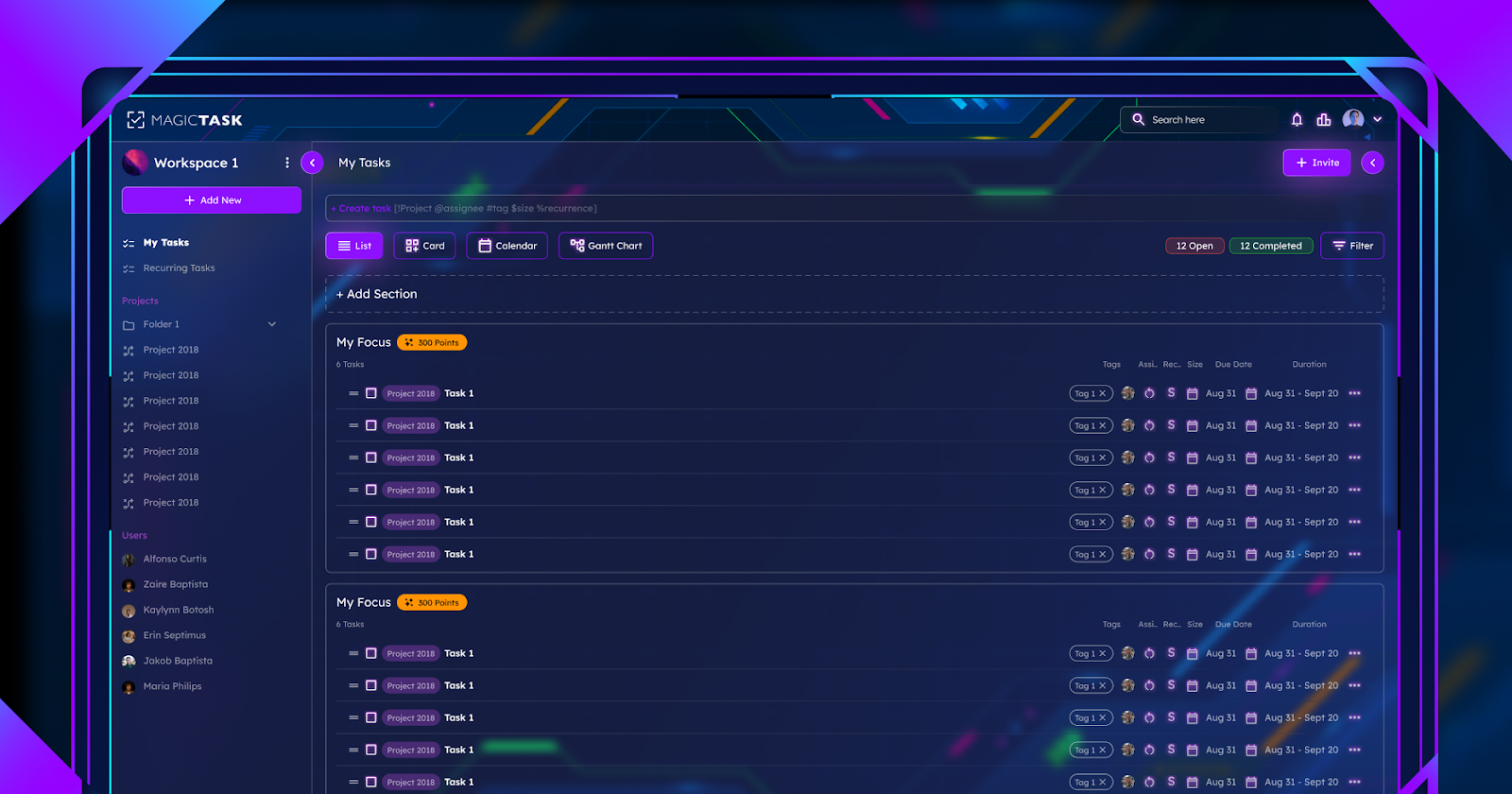
MagicTask V3 Tasks Dashboard

The benefits of productivity are well known. You get to finish projects faster, be happier, and feel less stressed. 

The question of how to be productive is what many struggle with. How can you ensure that you’re spending your time wisely? What’s the best way to avoid distractions at work?

The secret is to set and maintain productivity goals. Working with objectives creates attention and urgency while giving you a sense of purpose. This article lists nine essential productivity goals that will make you more fruitful in your endeavors.

1. Define Clear and Measurable Goal

Goal-setting is an excellent first step in helping you achieve productivity. 

However, you need to ensure that you’re creating specific and quantifiable goals. According to the goal-setting theory proposed by psychologists Gary Latham and Edwin Locke, setting specific goals can boost productivity by up to 25%

Other studies show that the more precise you are with your goals, the higher the likelihood of achieving them. This raises the question: how do you set clear goals? Here are a few tips for effective goal setting:

  • Define an objective – state the outcome you’d like to see by accomplishing the goal.
  • Write down the goals – jotting them on paper provides a visual reminder.
  • Set a timeline – create a deadline for achieving your goals. This way, you will have to take the necessary steps to accomplish the goal within the set timeframe.
  • Choose measurable goals – this is necessary to track your progress. For instance, your goal could be to work undistracted for eight hours daily.

2. Prioritize Tasks and Responsibilities

Creating a to-do list is an excellent way to ensure you’re getting work done. But, it doesn’t necessarily help you achieve productivity. You could spend all your time and energy on non-essential tasks while deadlines for vital projects loom.

Enter task prioritization– it entails defining the order in which you will complete tasks. Prioritizing forces you to sort tasks based on their relevance so that you can work on them in the correct order. 

Ultimately, this helps you spend your time, energy and other resources wisely. And the best part? There are several task prioritization techniques available, making this process a breeze. Examples include:

  • Eat the Frog First: This approach requires you to identify and tackle the hardest task first before everything else. 
  • The ABCDE method involves rating tasks based on their significance level. A represents the most vital tasks (accorded top priority), while E represents the least important. 
  • Eisenhower Matrix this method requires you to classify tasks into four groups as follows:
    • Urgent and important – these are the tasks you should prioritize.
    • Urgent but not important – feel free to delegate these tasks to teammates.
    • Not Urgent and not important – these tasks shouldn’t be on your to-do list to begin with.
    • Important but not urgent – these tasks can be scheduled for later.

3. Enhance Time Management Skills

Many are aware of the importance of managing their time effectively. Yet statistics show that 82% of individuals don’t have a distinct time management strategy. If you fall under this category, consider adopting one. This will ensure that you’re spending time on the most crucial tasks, thus, maximizing your productivity. 

Time management goes hand in hand with task prioritization. After creating the order of completing tasks, allocate time for each one. Here are three time management techniques that might come in handy:

  • Time Boxing involves assigning time intervals to tasks. This approach requires ample discipline, as you must stay within the predetermined timeframe. Essentially, you cannot continue with the task once the duration elapses, even if it’s incomplete. The intervals can range from a couple of minutes to several months. 
  • Time Blocking entails dividing your work week or day into specific time slots. Then, you assign a time block to each task.
  • Pomodoro: With this approach, you spend 25 minutes on a specific task and then take a 5-minute break. Repeat this cycle four times before taking a longer 15- to 30-minute break.

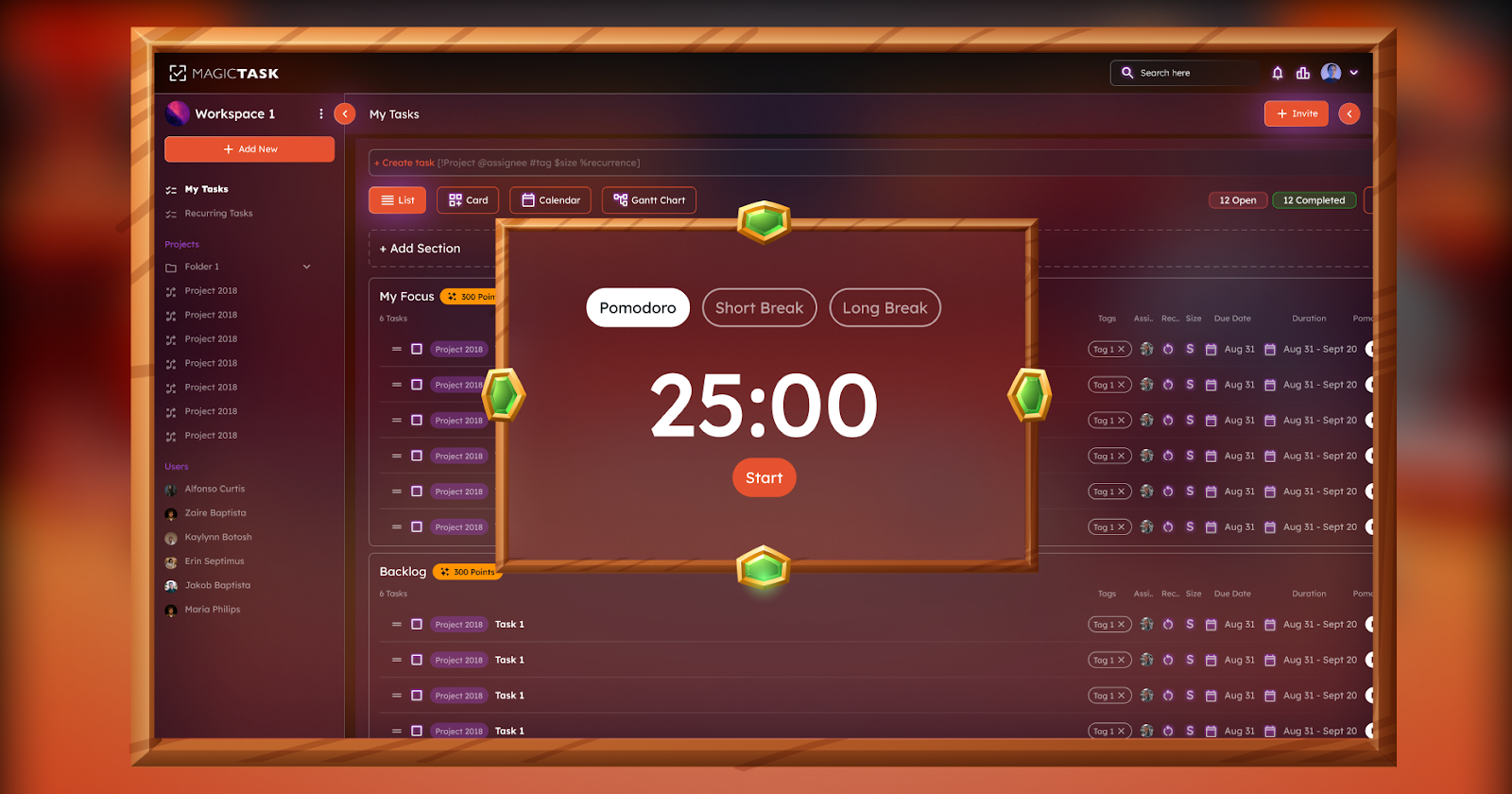
Pomodoro Timer in MagicTask V3

4. Develop a Routine for Success

For some, the word routine conjures up images of monotonous, boring tasks. However, routines don’t have to be dull. More importantly,  they’re among the most powerful tools for achieving productivity. 

Studies show that following a routine boosts one’s cognitive ability. Cognitive ability constitutes memory formation, concentration and reasoning. 

That nap you take every afternoon might seem trivial. But this short period is what gives your body time to relax and rejuvenate. This way, you can focus better on the afternoon tasks. Here are a few more habits you should incorporate into your routine for optimal productivity: 

  • Start your day with a morning routine 
  • Schedule breaks
  • Adopt healthy habits: healthy meals, getting sufficient sleep, exercising regularly
  • Break down projects into smaller, manageable tasks

5. Embrace Continuous Learning

Investing in continuous learning is another productivity goal that should be at the top of your list. This means being deliberate about expanding your knowledge and skill set. 

The beauty of this is that you can choose the learning mode that suits you best. This could involve taking a formal course, informal learning, attending a training program, or shadowing your colleagues. 

“**What do I stand to gain?**” For one, this helps you hone your current skills and retain crucial knowledge related to your profession. This, in turn, enhances your work performance and productivity. 

Secondly, it makes you more adaptable. We live in a fast-paced world where market conditions, regulations and technologies change on a whim. Ongoing learning helps you keep abreast of the latest trends. Thanks to this, you can adapt easily and remain competitive in your field. 

6. Implement a Digital Detox

Did you know that the average American looks at their phone a whopping 96 times? Furthermore, those aged between 18 and 24 years glance at their cell phones twice as much! 

With such statistics, it’s clear that we have become overly dependent on our mobile gadgets. This higher dependency decreases focus, increases stress and lowers productivity.

Digital detox has emerged as an effective means of curbing the addictive nature of tech devices. This doesn’t necessarily mean you ditch technology altogether (although you can if you want to). Rather, it means striking a healthy balance between technology use and productive activities. 

Unplugging helps your body and mind to reset. This way, you can resume work more energized, boosting productivity. Here are a few tips for a digital detox:

  • Downgrade your phone – buying a phone that supports fewer apps makes it easier to unplug.
  • Schedule time away from technology – if you use tech gadgets for your work, schedule time away from screens. 
  • Create zero-tech zones – ban phone use from your bedroom, dining area and more.


7. Improve Physical and Mental Well-being

If you’re like most employees, you’re always juggling between work and familial obligations. This forces you to put physical and mental well-being on the back burner. 

But as research shows, improving productivity means prioritising overall health. In fact, this study involving call centre respondents found that a 1-point increase in happiness led to a 12% productivity boost.  Here are a few ideas to help you stay physically and mentally healthy:

  • Make time for physical activity – exercising not only boosts your energy but also increases blood circulation to the brain. This sharpens your focus and alertness, which translates to better work performance and productivity. 
  • Follow a healthy diet – whether eating a snack or a full-blown meal, look for nutritious options. 
  • Get a good night’s sleep – aim for 7 to 9 hours of uninterrupted sleep. Creating an evening routine can help you achieve this more easily.

8. Foster a Productive Work Environment

Access to technology, effective communication channels and workplace culture are examples of factors that affect your productivity. 

But did you know that your work environment has just as much impact? That’s right, this setting can make or break your productivity. Whether you work remotely or in a traditional workspace, pay attention to these factors if you want to be more productive: 

Reduce noise levels

Do you prefer to work in complete silence? Or, would you rather play a bit of music in the background? If it’s the latter, stick to manageable noise levels to minimize distractions. 

Leverage natural lighting

Poor lighting can lead to eye fatigue, lower concentration and sometimes cause headaches. Consider working in a well-lit area and leveraging natural light whenever possible.

Consider ergonomic office furniture

Contrary to popular belief, ergonomic furniture is not some fancy equipment reserved for the affluent. Rather, it’s a fundamental requirement for every office worker. This furniture supports your natural curvature as you work, increasing your comfort and productivity in the process.

9. Set Up Accountability Systems

Do you struggle to commit to your personal goals? If you do, setting up an accountability system might help. 

The easiest way to do this is to share your goals with someone you trust. This individual will check in regularly to ensure you stick to your objectives. That said, you’ll need to find a cheerleader in your life. The kind who supports you, not one who constantly makes you doubt yourself. 

If finding a trustworthy individual is challenging, technology offers a great alternative. Task management apps like MagicTask can help you track your tasks and goals, ensuring you stay on course even without a personal cheerleader.

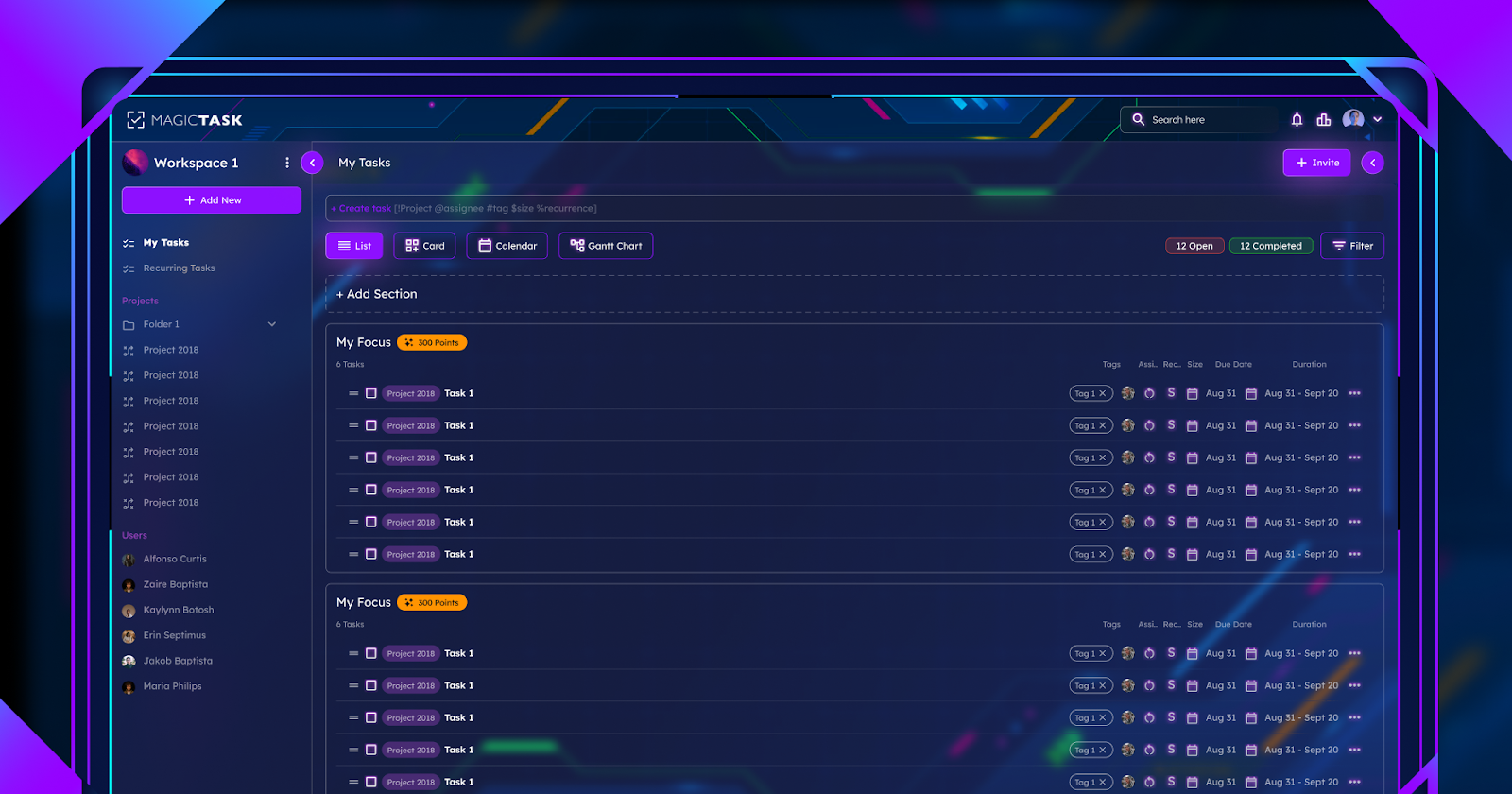
MagicTask V3 Dashboard

Final Thoughts

Increasing your productivity in 2024 is easier than you think. You just have to take the first step of setting productivity goals. With consistency and determination, you will find yourself being more productive than you were. 

Examples of these goals are creating a productive work environment, setting up a routine, and adopting a time-management technique. Similarly, embrace continuous learning and prioritize your physical and mental well-being.

How to Set Team Goals to Maximize Efficiency and Productivity

Set Team Goals

It’s difficult for workers to achieve company goals when they don’t understand their respective roles. 

Sadly, the majority of employees sail in this boat. According to Gallup’s research, in which they questioned company employees globally, only about 50% of them “strongly agree” that they know what’s expected of them at their workplaces. 

One of the primary responsibilities of a team leader is to assist their employees in setting and achieving goals. However, as the above study reveals, they aren’t handling this responsibility efficiently. 

To help you out, this article provides a detailed overview of team goal setting. Read on to learn how you can set goals for your team.

The Importance of Goal Setting in Teams

Before we look at the ‘how’, it’s important to highlight the benefits of setting team goals. These perks include:

Facilitates Easy Collaboration

One reason why leaders should set team goals is that it enhances collaboration. It encourages employees to share skills with their colleagues and help each other when faced with challenges. This leads to a strong comradeship that enables the company to succeed.

Offers Direction and Purpose

Team objectives act as a roadmap, ensuring employees have a clear sense of direction. 

Communicating the desired results enables each member to understand their roles and contributions. This, in turn, improves their work performance. Research shows that setting team goals yields 20% to 25% improvement in work performance. 

Improves Employee Satisfaction

Accomplishing the personal goals you set in life elicits a sense of joy and pride. Team goals are not any different. 

When team members accomplish the goals you set for them, they feel more fulfilled. This improves employee satisfaction, which is linked to other benefits like reduced absenteeism and higher retention rates. 

Identifying Team Goals That Maximize Efficiency

If you’re a team leader, you’ve probably thought of numerous objectives you would like your team to achieve. However, having multiple goals doesn’t automatically mean your team will achieve them. And, if you try to force them on your team, you’ll likely be disappointed. 

A better way to approach this is to work with the members to identify realistic, achievable goals. This is how you should go about it:

Examine the Company’s Objectives

Before diving into the specifics of team goals, it’s essential to have a clear understanding of the company's overarching objectives. These are the primary targets the organization aims to achieve, such as increasing revenue, enhancing customer satisfaction, expanding market share, or innovating new products. These goals provide a foundation upon which team goals are built, ensuring alignment and coherence across all levels of the organization.

Brainstorm Ideas With Your Team

Once you have a clear understanding of the company’s overarching objectives, the next step is to involve your team in the goal-setting process. Brainstorming with your team ensures that the goals are realistic, achievable, and aligned with both the company’s needs and the individual aspirations of team members. This collaborative approach not only fosters a sense of ownership and commitment but also brings diverse perspectives and innovative ideas to the table.

Align Team Goals With Individual Goals

After gathering feedback from everyone, identify team goals that align with the members’ aspirations. 

For instance, assume that the company’s core objective is to improve its online presence. 

One of your team members wishes to become a successful influencer and already has a large following on their social media accounts. 

Instead of hiring an external social media manager, you can assign that particular role to your team members. This way, they can boost the company’s online presence while simultaneously honing their influencing skills (more on goal alignment later in the article.)

Tools and Techniques for Setting Team Goals

There are several tools and methods you can use to establish team goals. The most commonly used are:

SWOT Analysis

This acronym stands for Strengths, Weaknesses, Opportunities, and Threats. It helps you identify suitable objectives by analyzing the company’s strengths and weaknesses. Follow these steps to set team goals using SWOT:

  • Sketch your SWOT matrix – draw a four-section grid and label the four sections: strengths, weaknesses, opportunities and threats.
  • Brainstorm ideas to fill each quadrant – With the help of your team members, evaluate the organization’s strengths and weaknesses. The remaining quadrants (O and T) deal with external factors. So, analyze your industry to identify market gaps and potential challenges.
  • Form action plans – Having identified the four factors, it will much easier to determine the next steps. What actions can your team take to overcome weaknesses or seize available opportunities? These actions represent the team’s goals.


Gamification

Badges

If the SWOT analysis feels complicated, gamification is an alternative approach for team goal setting. 

This simply means integrating gaming elements into the goal-setting process. Using such a technique encourages employee engagement, and boosts motivation and productivity. Here’s how to go about it:

  • Identify core objectives – Using the tips mentioned earlier, identify the main goals. Do you wish to increase company sales? Or, perhaps, improve customer service?
  • Choose a gamified task/project management tool – The next step is to select a gamified task/project management tool. Ideally, the platform should fit your goals and easily integrate into your business workflow.
  • Develop challenges – Look for challenges that correspond to the team’s goals. These activities should be equal parts fun and challenging. The idea is to encourage participation of the entire team. 
  • Identify meaningful rewards – Choose suitable rewards that will motivate your team. These can be extra vacation days, gift cards, or opportunities for career development.


Are you thinking of setting your team’s goals using this approach? If so, consider using MagicTask

The tool makes goal setting easy and fun by incorporating gaming features. You earn points whenever you create or assign tasks to team members, and team members earn points by completing assigned tasks. 

An added bonus of using this tool is that it makes goal-monitoring management feel like child’s play. You can track your members’ to-do list items and provide feedback accordingly. 

Setting SMART Team Goals

Regardless of the tool you use, there are a few points you should keep in mind when setting team goals. 

To be more specific, aim to set SMART goals. This acronym represents specific, measurable, achievable, relevant, and time-bound goals. Let’s look at each of these aspects in more detail:

  • Specific: state the particular result you’d like when you achieve the goal, e.g. increase social media following by 30%
  • Measurable: whenever possible, choose goals whose progress or success can be quantified.
  • Attainable: while it’s good to be ambitious, set goals that your team can achieve. 
  • Relevant: the goal should correspond to the firm’s vision and values.
  • Time-based: develop a timeframe for accomplishing the specified goals.

Aligning Team Goals with Individual Aspirations

By now, you should have a solid understanding of how to identify goals for your team. However, it’s a bit more complicated than it sounds. That’s because you also have to ensure that team goals align with those of individual team members.  

This alignment ensures that every individual’s objectives are in sync with the organization's wider mission and vision. It also means that every team member knows how their roles contribute to the business’s success. So, why is goal alignment so crucial?

1. Improves Employees’ Motivation

One benefit of goal alignment is that it motivates employees by giving them a sense of purpose. A vivid understanding of how their roles contribute to the firm’s success motivates them to work on the team's goals.   

2. Boosts Productivity

With greater motivation, it’s not surprising to learn that goal alignment also improves productivity. According to Gartner, it can increase by as much as 22%.

3. Easier to Review Employees’ Performance

Aligning goals allows you to create a framework for reviewing individual employee performance. It helps you to figure out what success means for every team member. This way, you can monitor their progress and offer relevant insight and support.

The perks of aligning team goals with individual member goals are clear. The only question left is, how do you achieve this alignment? Here are a few tips that might help:

Communicate company goals from the top down

The role of the CEO is to relay the company’s mission and vision to the executives. 

Once they do, it’s your responsibility as a team leader to communicate this information to your team. This does not mean relaying the same message verbatim. Instead, you should translate how this information applies to your department and individuals.  

Acknowledge individual wins

Another way to achieve goal alignment is to celebrate individual wins. If a team member makes a significant contribution, acknowledge them. This helps them feel valued, hence, boosting their motivation. 

Leaderboard

Monitoring and Measuring Goal Progress

Every once in a while, it’s important to evaluate your team’s performance. This will help you know their progress towards achieving goals. Plus, it can shed light on team members’ strengths and weaknesses. Here are a few recommendations on how to do this:

Monitor Key Performance Indicators (KPIs)

There are a couple of metrics you can use to evaluate your team’s performance, such as:

  • Output quality – Start by assessing the consistency of results across the board. Is each team member delivering premium-quality work?
  • Client satisfaction—Soliciting feedback from customers can also illuminate team members' performance. If possible, ask clients to rate their experience on a scale of 1 to 10. This will tell you whether team members are delivering excellent or subpar services. 
  • Error recurrence – There’s nothing wrong with making mistakes. However, this is not an excuse for employees to repeat errors. If one of your team members constantly makes the same mistake, it means they’re not paying attention, and it reflects poor performance.

Assess Attendance and Completion

You can also assess your team’s performance based on their absenteeism and completion rate. 

A team member who is constantly absent affects the team’s efficiency in accomplishing goals. Similarly, one who submits projects past the deadline compromises the team’s workflow. 

On the other hand, workers who are always present and complete their projects within the specified timeframes boost the team’s performance. This also shows they understand their respective roles in the team’s dynamics. 

MagicTask can also help you monitor your team's progress. It contains an in-built analytics module, which uses several KPIs to show each member’s input. As such, you’ll be able to see the best- and worst-performing members by checking their daily, weekly, or monthly MagicTask points. 

Also Read: How to Use Task Management Tools to Track Your Goals

Conclusion

Setting and communicating team goals is vital for a company’s overall success. It gives employees a sense of purpose and direction, thus, improving their efficiency and productivity. Besides, several tools are available to help you set team goals. You can use a SWOT analysis, gamification, and backward goal-setting, among others. 

Whichever approach you use, be sure to set objectives that are specific, measurable, realistic, and relevant to the organization. It’s also wise to consult your team when setting goals. This way, you can set up ones that benefit the company and align with the ambitions of the team members.

Mastering Time-Blocking with MagicTask V3: Turning Productivity into a Winning Game

Time Blocking With MagicTask V3

In the relentless pursuit of productivity, we often find ourselves navigating through a labyrinth of strategies, each promising to be the panacea for our burgeoning lists of tasks and commitments. Amid this overwhelming sea of options, one method stands out not merely for its practicality but for its profound philosophy on managing time—time-blocking. This approach has rapidly gained traction among productivity enthusiasts and skeptics alike, celebrated for its straightforward yet profoundly effective methodology.

At its core, time-blocking transcends the conventional, reactive nature of to-do lists. Instead of a never-ending catalogue of tasks, time-blocking encourages us to divide our day into clearly defined segments, dedicating each to a specific task or set of tasks. This method transforms the abstract concept of "having things to do" into a tangible, structured schedule. It's akin to plotting out a roadmap for your day, where each turn and stop is anticipated and planned for.

What sets time-blocking apart is its dual promise: to significantly boost our productivity while simultaneously bestowing a sense of serenity upon our often chaotic daily routines. By allocating a specific time to each task, we eliminate the paralysis of choice—deciding what to do next becomes a relic of the past. This preemptive planning allows us to engage fully in the task at hand, secure in the knowledge that time has been set aside for other tasks as well. The result is not just a more productive day but a more peaceful one, where the tyranny of the urgent is replaced by the tranquility of the planned.

Moreover, time-blocking offers a flexible framework that can be customized to fit the unique rhythms and demands of individual lives. Whether you're a morning person who thrives on tackling the most challenging tasks at dawn or someone who finds their stride in the quiet of the evening, time-blocking can be tailored to harness your peak hours of focus and energy. It accommodates the ebbs and flows of motivation and concentration, allowing for breaks and adjustments, thereby ensuring that the schedule serves you, not the other way around.

The Essence of Time-Blocking

Time-blocking emerges as a revolutionary approach to time management, standing in stark contrast to traditional methods that often leave us reacting to tasks as they come. This technique is not just about making lists; it's about proactively carving out segments of time for dedicated focus on each task before the day even begins. By transforming our calendars into a meticulously organized mosaic of tasks, time-blocking turns the nebulous cloud of "things to do" into a concrete, actionable plan for the day.

At its heart, time-blocking is built upon a simple yet powerful premise: that which is scheduled is more likely to be accomplished. It compels us to commit to tasks by assigning them a specific time slot, much like appointments or meetings. This commitment mechanism significantly reduces the likelihood of procrastination, as each task is transformed from a suggestion to an obligation. It acknowledges the finite nature of time and encourages us to use it with intention and purpose.

One of the most compelling aspects of time-blocking is its ability to make the abstract tangible. Each block of time is allocated to activities that advance personal and professional goals, making it a dynamic tool for both planning and reflection. By visualizing how time is spent, we gain insight into our priorities and can adjust our schedules to align more closely with our long-term objectives. This visualization isn't just practical; it's motivational, providing a clear roadmap to a productive day.

Moreover, time-blocking advocates for a holistic view of time management. It recognizes that productivity is not merely about work tasks but encompasses all aspects of life. From deep work sessions to exercise, leisure, and family time, every facet of one's day is accounted for and valued. This comprehensive approach ensures a well-balanced schedule that nurtures not just professional achievement but personal well-being too.

The methodology also offers unmatched flexibility within its structured framework. While tasks are scheduled, time blocks can be moved and adjusted as needed, accommodating the inevitable uncertainties of daily life. This adaptability is key to the sustainability of time-blocking as a time management technique, allowing it to be a reliable foundation in the ever-changing landscape of our days.

In essence, the essence of time-blocking lies in its ability to transform our relationship with time. By encouraging us to schedule tasks with deliberate intention, it ensures that our most precious resource is not just spent, but invested wisely. Time-blocking doesn't just promise a more organized day; it offers a more intentional and fulfilling life, where every moment is lived with purpose.

Calendar time blocking

Psychological Benefits and Productivity Gains

The psychological landscape of our workday is often a complex interplay of motivation, focus, anxiety, and satisfaction. Time-blocking, by structuring our time with precision, exerts a profound influence on this landscape, offering benefits that ripple through both our mental state and our productivity levels.

Setting Clear Expectations

One of the cornerstone advantages of time-blocking is its ability to set clear, actionable expectations for the day. This clarity is more than just organizational—it's psychologically liberating. By defining what needs to be accomplished and allocating a specific time for each task, time-blocking demystifies the workday, reducing the anxiety that often accompanies the unknown. This preemptive clarity helps to create a mental environment where focus can flourish, unencumbered by the stress of indeterminate obligations.

Enhancing Focus and Minimizing Decision Fatigue

In a world rife with distractions, maintaining focus is increasingly challenging. Time-blocking offers a sanctuary of concentration. By dedicating specific blocks of time to individual tasks, it eliminates the constant barrage of decision-making about what to do next. This minimization of decision fatigue is crucial; every unnecessary decision we make depletes our mental energy, leaving less for the tasks that truly matter. Time-blocking conserves this energy by providing a predetermined path through the day's obligations, allowing us to invest our full cognitive resources into each task.

Motivation Through Completion

The act of completing a task within its allocated time block is a powerful psychological trigger. Each completion delivers a hit of dopamine, the brain's reward neurotransmitter, providing a sense of pleasure and accomplishment. This biochemical reward system creates a continuous loop of positive reinforcement, where the satisfaction of task completion fuels the motivation to tackle the next one. Over time, this cycle builds a robust foundation of self-efficacy, reinforcing the belief in our ability to meet our goals and manage our time effectively.

Moreover, the visibility of progress inherent in time-blocking amplifies this motivational cycle. Seeing a day's schedule transition from a series of planned blocks to a list of completed tasks is visually and emotionally satisfying. It offers tangible proof of productivity, transforming abstract achievements into something concrete and measurable.

The Broader Impact on Productivity and Well-Being

Beyond individual tasks, the cumulative effect of these psychological benefits on overall productivity and well-being is significant. Time-blocking, by providing structure and reducing stress, enhances mental clarity and energy, which are vital for sustained high performance. Furthermore, the technique's emphasis on allocating time for all aspects of life—including breaks, personal projects, and leisure activities—ensures a more balanced, holistic approach to productivity. This balance is crucial not just for preventing burnout but for fostering a sense of fulfillment and happiness in both work and life.

In essence, the psychological benefits of time-blocking extend far beyond mere organization. By setting clear expectations, enhancing focus, reducing decision fatigue, and creating a motivating cycle of completion, time-blocking transforms the way we approach our days. It not only makes us more productive but also more grounded, satisfied, and mentally resilient.

Setting Up Your Time-Blocking System

Implementing a time-blocking system requires a strategic approach, beginning with a comprehensive review of your tasks and goals. This foundational step is about gaining clarity on what needs to be accomplished and recognizing that not all tasks hold equal weight in the grand scheme of your objectives.

Reviewing Tasks and Goals

Review tasks

Start by laying out a visual map of your tasks and goals. This could be on a digital platform or a physical notebook, whichever you find most conducive to clear thinking. List everything you hope to achieve in the short term (daily or weekly) and categorize these tasks based on their alignment with your broader, long-term goals. This exercise not only aids in prioritization but also ensures that your daily efforts are steps towards your bigger picture.

Prioritization

With your tasks laid out, engage in a prioritization exercise. Utilize the Eisenhower Matrix or a similar method to categorize tasks into urgent/important, important/not urgent, urgent/not important, and neither urgent nor important. This classification serves as a guide to allocating your time blocks, ensuring that you're not merely busy but effectively productive.

Estimating Time Requirements

For each task, assign a realistic time estimate. If you're unsure, it's better to overestimate than underestimate to avoid over-packing your day. Remember, the goal of time-blocking is not to fill every minute with work but to create a balanced schedule that includes time for rest and unplanned demands.

Dividing Your Day into Time Blocks

With priorities set and time estimates in hand, begin carving your day into distinct time blocks. These blocks can range from focused work periods to short breaks, lunch, exercise, and even leisure activities. The key is to ensure that each aspect of your day is intentionally planned. Digital calendars or specialized apps can be invaluable tools here, offering visual layouts and reminders to keep you on track.

Including Breaks and Buffer Times

An often-overlooked aspect of time-blocking is the inclusion of breaks and buffer times. Breaks are essential for mental refreshment and maintaining high levels of focus throughout the day. Similarly, buffer times account for life's unpredictability—delays, overruns, or unexpected tasks. Allocating buffer times within your schedule can significantly reduce stress and provide the flexibility to adapt as needed.

Regular Review and Adjustment

Finally, treat your time-blocking system as a living document. At the end of each day or week, review your blocks to assess what worked and what didn't. Were some tasks underestimated in terms of time required? Were there blocks consistently interrupted by unforeseen demands? Use these insights to adjust your future blocks, refining your system for greater efficiency and satisfaction.

Setting up a time-blocking system is a deliberate process that marries intention with flexibility. By thoughtfully reviewing tasks, prioritizing effectively, and accommodating the natural ebb and flow of daily life, you create a structured yet adaptable framework that enhances both productivity and well-being. Remember, the ultimate aim of time-blocking is not rigid adherence to a schedule but the cultivation of a balanced, purposeful approach to managing your time and achieving your goals.

Also Read: The Pomodoro Technique: Time Management Method You Should Try

Strategies for Effective Time-Blocking

Implementing time-blocking as a strategy for managing your day requires more than just assigning tasks to time slots. To truly harness its power and make your days both productive and manageable, consider these refined strategies:

Prioritization: Aligning Tasks with Goals

The essence of effective time management lies in doing the right things, not just doing things right. Start by evaluating your tasks in the context of your long-term objectives. Tasks that directly contribute to these goals should take precedence. This approach ensures that your daily efforts are investments in your future, not just checks on a list. To prioritize effectively, ask yourself which tasks, if completed, would bring you closer to your goals. These tasks deserve the prime slots in your day—typically, when your energy and concentration are at their peak.

MagicTask v3 dashboard

Task Batching: Maximizing Efficiency

Task batching is a technique that involves grouping similar tasks together and dedicating specific blocks of time to complete them in succession. This strategy leverages the principle of context switching, minimizing the mental load and time lost in shifting between different types of tasks. For instance, batch all your email responses or calls in one time block, and dedicate another to deep, focused work. By organizing your day into thematic blocks, you streamline your workflow, reduce setup and wind-down times, and enhance overall efficiency.

Contingency Time: Planning for the Unpredictable

No matter how meticulously you plan, the unpredictability of life can throw your schedule off course. Integrating contingency time—blocks of unscheduled time reserved for handling unexpected tasks or overflows from previous tasks—into your day is crucial. This buffer ensures that when interruptions occur, they don’t derail your entire schedule. A good rule of thumb is to leave about 10-15% of your day as contingency time, adjusting based on the variability of your typical day. This strategy not only reduces stress but also provides a more realistic and flexible approach to time management.

Regular Review and Reflection: Honing Your Strategy

The final, critical strategy for effective time-blocking is the ongoing process of review and reflection. Set aside regular intervals (weekly or monthly) to evaluate the effectiveness of your time-blocking strategy. Reflect on what tasks consistently take more time than allocated, which time blocks are most productive, and how well your tasks are aligning with your long-term goals. This analysis helps identify patterns, inefficiencies, and opportunities for adjustment. It’s an essential step for continuous improvement, allowing you to refine your approach, reallocate your time more effectively, and ensure your time-blocking strategy evolves with your changing needs and priorities.

Implementing these strategies transforms time-blocking from a simple scheduling exercise into a dynamic framework for achieving both immediate tasks and long-term goals. Prioritization ensures your most important tasks get the attention they deserve, task batching increases your operational efficiency, contingency time adds necessary flexibility, and regular review and reflection keep your strategy aligned with your evolving goals. Together, these strategies form the pillars of an effective time-blocking system, one that not only enhances productivity but also contributes to a more balanced and fulfilling life.

Overcoming Challenges in Time-Blocking

Time-blocking, despite its numerous benefits, is not without its challenges. Common stumbling blocks such as overbooking and underestimating task durations can undermine its effectiveness. However, with strategic adjustments and a mindful approach, these obstacles can be navigated successfully.

Avoiding Overbooking

Overbooking is a frequent issue that arises from an overly optimistic assessment of how much can be accomplished in a day. This optimism, while admirable, often fails to account for the intricacies and unpredictability of real-life tasks. To mitigate this, start by adopting a more conservative approach to scheduling. Allow more time than you think each task will need, acknowledging that interruptions, transitions between tasks, and unexpected complications are part of the workday. This doesn’t mean padding your schedule with excessive downtime but rather being realistic about your capabilities and external demands on your time. As you become more attuned to your working pace and the nature of your tasks, you can gradually refine your time estimates to more accurately reflect reality.

Managing Task Duration Estimates

Underestimating how long tasks will take is another challenge that can disrupt your time-blocking strategy. This often stems from a lack of historical data on your own work habits or the novel nature of a task. Combat this by tracking the time you spend on various tasks over a period, using a simple stopwatch or digital tools designed for time tracking. This data serves as a valuable reference for future planning, enabling you to make more informed estimates. Additionally, employing techniques like the Pomodoro Technique, where work is broken down into intervals (traditionally 25 minutes) followed by short breaks, can help gauge how many intervals a particular task requires, offering a practical framework for estimating task duration.

Learning to Say No

An essential skill in effective time management and a critical strategy in overcoming time-blocking challenges is learning to say no. This involves evaluating new tasks or commitments against your current priorities and schedule. If a task doesn’t align with your goals or if accommodating it would require sacrificing time allocated to higher-priority tasks, it’s important to decline politely. Saying no is not just about guarding your time but also about ensuring that your efforts are concentrated on what truly matters. It’s about making strategic choices that align with your long-term objectives, rather than being swayed by the urgency or demands of others.

Incorporating Flexibility

Finally, while time-blocking encourages a structured approach to managing your day, incorporating flexibility is key to overcoming its challenges. Life is unpredictable, and rigid adherence to a blocked schedule can sometimes be more hindering than helpful. Be prepared to adjust your blocks as necessary, whether it means moving tasks to accommodate unforeseen demands or shortening a block when you complete a task more quickly than expected. This flexibility ensures that time-blocking remains a tool that serves you, facilitating productivity and balance rather than becoming a source of stress.

Overcoming the challenges of time-blocking requires a blend of realistic planning, self-awareness, and strategic refusal. By setting more generous time estimates, becoming adept at gauging task durations, learning to say no, and maintaining a flexible approach to scheduling, you can harness the full potential of time-blocking. These strategies not only enhance the effectiveness of time-blocking but also contribute to a more balanced, productive, and satisfying work life.

Time-Blocking in the Digital Age: MagicTask V3

In the era of digital innovation, time-blocking has transcended traditional paper planners and calendars, embracing the sophistication and versatility of digital tools. MagicTask V3 stands at the forefront of this evolution, revolutionizing the way we approach time management by integrating the principles of gamification. This modern twist not only adheres to the foundational aspects of time-blocking but elevates the experience, making it more engaging and rewarding.

MagicTask V3

Gamification as a Motivational Force

MagicTask V3 harnesses the power of gamification to inject a sense of play and competition into the routine task management process. By rewarding users with points, badges, or levels for completing tasks within their allocated time blocks, it taps into the inherent human desire for achievement and recognition. This approach transforms mundane tasks into challenges to be overcome, providing a continuous stream of motivation and satisfaction. The psychological impact of this gamification cannot be overstated; it leverages the same reward mechanisms triggered by video games, making productivity feel less like a chore and more like an enjoyable pursuit.

Intuitive Scheduling for Dynamic Lives

At the heart of MagicTask V3 is its user-friendly interface, designed with the understanding that flexibility is key to effective time management. The platform allows for seamless scheduling and rescheduling of tasks, accommodating the fluid nature of daily life. Whether it’s a last-minute meeting, an unexpected delay, or a task that requires more time than anticipated, MagicTask V3’s drag-and-drop interface makes it easy to adjust your schedule on the fly. This level of adaptability is essential for maintaining a time-blocking strategy that is realistic, practical, and responsive to your needs.

Integrating with Your Digital Ecosystem

MagicTask V3 doesn’t operate in isolation; it’s designed to integrate smoothly with your existing digital ecosystem. From syncing with your preferred calendar apps to integrating with project management tools, MagicTask V3 ensures that all your time-related data is centralized and accessible. This connectivity enhances the utility of time-blocking by providing a holistic view of your commitments, deadlines, and priorities across all platforms, ensuring that no task falls through the cracks.

Analytics for Continuous Improvement

Beyond scheduling, MagicTask V3 offers analytics and reporting features that provide insights into your productivity patterns. By analyzing your task completion rates, time spent on different types of activities, and your success in adhering to your time blocks, MagicTask V3 helps you identify areas for improvement. This data-driven approach allows you to refine your time-blocking strategy over time, optimizing your schedule for maximum efficiency and effectiveness.

Where Do We Go From Here?

In the digital age, tools like MagicTask V3 are transforming time-blocking from a static scheduling technique into a dynamic, interactive strategy that not only enhances productivity but also makes the process enjoyable. By blending the core principles of time-blocking with elements of gamification, intuitive scheduling, and integrated analytics, MagicTask V3 stands as a testament to the potential of digital tools to revolutionize how we manage our time. For those looking to optimize their time-blocking strategy, MagicTask V3 offers a compelling solution that promises not just better time management, but a more motivated, engaged, and satisfying approach to accomplishing daily tasks.

Conclusion

Time-blocking transcends the realm of simple productivity hacks to embed itself as a fundamental philosophy for managing one's life. It challenges us to reconceptualize our relationship with time, treating it not as an endless stream but as a precious, finite resource that demands careful allocation. This method advocates for a deliberate and intentional approach to our days, ensuring that each hour is spent in a manner that aligns with our deepest values and long-term goals.

By embracing time-blocking, we empower ourselves to take control of our schedules, navigating our tasks with purpose and direction. It liberates us from the tyranny of the urgent and the chaos of disorganization, paving the way for a structured yet flexible routine that accommodates both our ambitions and our well-being. Through this lens, productivity is redefined: it becomes less about the sheer volume of tasks completed and more about the significance of the tasks we choose to undertake.

Moreover, time-blocking has the profound ability to restore the joy and satisfaction that come from engaging in truly productive work. When we complete tasks that are meaningfully connected to our larger objectives, we experience a deeper sense of fulfillment that transcends the temporary high of checking items off a list. This fulfillment is amplified when we witness our progress towards goals that matter to us, reaffirming our agency in shaping our lives.

The integration of digital tools like MagicTask V3 into our time-blocking practice offers an additional layer of sophistication and engagement. By marrying the foundational principles of time-blocking with the dynamic elements of gamification, platforms like MagicTask V3 enhance the user experience, making the process not only more efficient but also more enjoyable. However, the essence of time-blocking remains tool-agnostic, adaptable to both high-tech enthusiasts and proponents of traditional pen-and-paper methods.

The invitation to embark on the journey of time-blocking is open to everyone, regardless of their preferred tools or techniques. The crucial step is to begin—to set aside time to carefully consider and plan how best to utilize your time. Start small if you must, with just a few time blocks in your day, and allow the practice to evolve naturally as you discover what works best for you.

In conclusion, time-blocking stands as a beacon for those seeking to reclaim their time and redefine productivity on their own terms. It offers a path to a more organized, purposeful, and satisfying life, where time is not merely spent but invested in the pursuits that bring us joy and fulfillment. So, why not take the first step today? Carve out a moment to sketch out your time-blocking strategy and embark on the transformative journey towards mastering your schedule and enriching your life.

Mastering the Chaos: How High-Performers Use MagicTask V3 for Unparalleled Productivity

In the realm of professional achievement, akin to an intricate, expansive RPG game, modern work environments present a labyrinth of challenges that test even the most adept players. Like a hardcore gamer navigating through a complex world filled with quests and obstacles, today's professionals face a barrage of tasks, each demanding a strategic approach and skillful execution. The digital age, while bringing unparalleled connectivity and information access, also brings an onslaught of distractions and an ever-growing pile of responsibilities that can overwhelm even the seasoned veteran.

In this game of productivity, it's not just the quests you choose to embark upon, but the strategies and tools you employ that set you apart as a high performer. It's about knowing when to engage in battle, when to forge alliances, and when to upgrade your skills and tools. Just as a gamer meticulously plans their path to victory, learning the game mechanics and leveraging their resources, the modern professional must navigate their work environment with a similar mix of wisdom, foresight, and adaptability. They must differentiate themselves not only through their achievements but through their unique approach to conquering the game of productivity.

The Art of Doing Less: Focused Efficiency

In the gaming universe, the most elite players know that success isn't just about battling every monster or completing every side quest. It's about selecting missions that grant the most experience, level up skills effectively, or unlock key achievements. Similarly, in the professional realm, high performers prioritize tasks based on their impact and value – a strategy reminiscent of discerning gamers who focus on quests that yield the greatest rewards.

This approach mirrors the Eisenhower Matrix, a strategic tool akin to a game strategy guide, which classifies tasks into four quadrants based on urgency and importance. Just like deciding whether to embark on a main story quest or a side mission, professionals use this matrix to determine which tasks require immediate attention and which can wait. The ‘urgent and important’ tasks are like boss battles that must be tackled immediately, while ‘important but not urgent’ tasks are like training sessions to enhance skills for future challenges.

Parallel to this is the Pareto Principle, often reflected in game mechanics where 20% of actions lead to 80% of rewards. In professional settings, this translates to identifying and focusing on the 20% of tasks that will yield 80% of the results. Just as a gamer focuses on acquiring the most powerful gear or mastering the most effective skills, a high performer in the workplace zeroes in on tasks that significantly impact their goals.

Take, for example, a successful project manager who resembles a seasoned guild leader. They don't just assign tasks randomly but analyze which projects will bring the most value to the company, much like choosing quests that offer the best loot or experience points. They focus their team's efforts on these high-impact projects, ensuring that every member's skills are utilized efficiently, mirroring how a guild leader strategically assigns roles based on each member's unique abilities.

assigning tasks

In another instance, consider a software developer who operates like a solo player aiming for high scores. They apply the Pareto Principle by dedicating their efforts to refine the most critical code that enhances the program's performance, akin to a gamer focusing on completing the main storyline missions that progress the game.

In both these examples, the key to high performance is a laser-focused approach to task prioritization, akin to a gamer's strategic selection of missions. It's about doing less but ensuring that every move counts, every quest undertaken is worthwhile, and every task completed significantly propels them closer to their ultimate goal – mastery and success in their professional sphere.

Consistency in Discipline: Building Habits

In the gaming world, consistent effort and disciplined practice are as crucial as they are in any high-stakes quest. The same principles apply in the professional arena, where consistency in discipline is the key to unlocking high performance. Just as a gamer develops skills through regular gameplay, refining tactics and strategies, professionals can enhance their productivity through established routines and habits.

Time-blocking is one such technique, akin to allocating specific periods for quests or grinding sessions in a game. By assigning specific time slots for different tasks, you ensure focused and uninterrupted progress. It's like planning your gaming session to allocate time for exploring, questing, and inventory management. A study by Cal Newport, author of "Deep Work," emphasizes this, suggesting that professionals who schedule their tasks in advance can achieve more focused and productive work.

Morning routines are another element that can greatly impact a professional's efficiency. In gaming, how you start a gaming session often sets the tone for the entire play. Similarly, a morning routine can set a productive tone for the day. Whether it's planning the day's 'missions,' a brief workout to boost energy (similar to a warm-up round in gaming), or a mindfulness practice to clear the mind (like strategizing before a difficult level), a solid morning routine primes you for a day of high performance.

Regular self-reflection is crucial too. In gaming, this might look like revisiting past gameplay to understand mistakes or improve strategies. In a professional context, this translates to regularly reviewing one's work and processes to identify areas for improvement. This could be a weekly review of accomplishments and setbacks or a daily reflection session. As the legendary productivity consultant David Allen says, “You can do anything, but not everything.” This perspective helps in pinpointing what works best and what doesn’t, allowing for continuous improvement.

These practices are not just about maintaining a disciplined approach but about creating a rhythm that elevates your performance. It’s like a gamer who doesn’t just play randomly but has a dedicated schedule, understands the importance of different types of gameplay, and regularly reviews their progress to level up efficiently.

Ultimately, the lesson from the gaming and professional worlds is clear: consistent discipline and routine are like the daily quests that slowly but surely lead to the ultimate prize of mastery and high performance. Just as a gamer rises through the ranks with consistent effort and strategic play, a professional ascends in their career through disciplined habits and regular self-improvement.

Strategic Planning: Staying Ahead of the Game

In the world of gaming, strategic planning isn’t just a skill; it’s a necessity. It’s what separates the casual players from the hardcore gamers. This analogy extends seamlessly into the world of high performance in business. Like masterful gamers who plan their campaigns, skill trees, and resource management, high performers in the professional realm regularly engage in both short-term and long-term planning to stay ahead of the game.

Consider the approach to a complex strategy game or a long-term RPG campaign. The player doesn’t just make random moves; they plan for both the immediate battles and the overarching war. In the professional setting, this translates to weekly planning sessions, where high performers lay out their missions for the week, anticipate challenges, allocate resources, and set checkpoints. It's like setting waypoints in a game – they guide you towards your final objective while allowing for adjustments along the way.
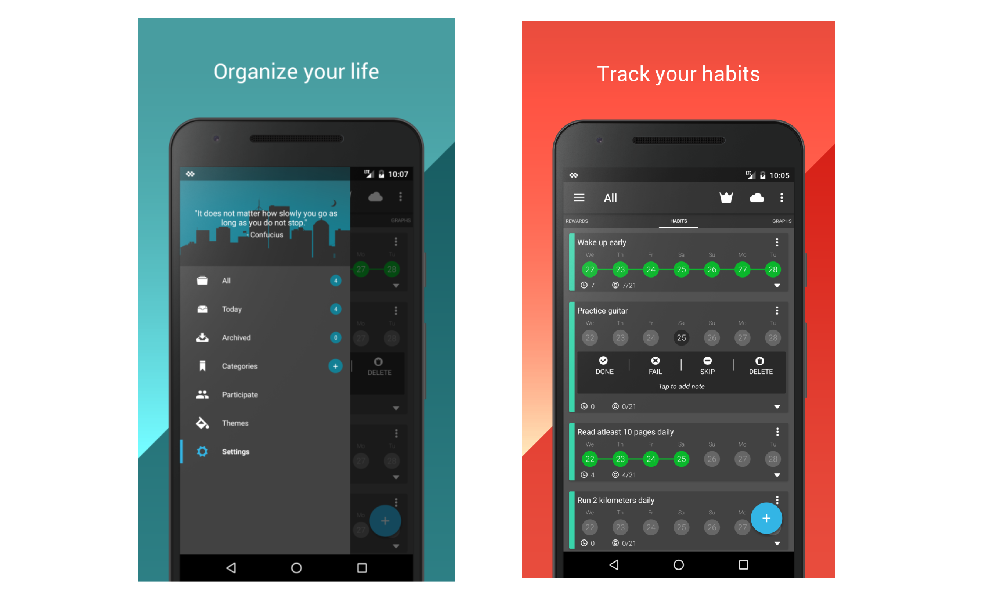
Goals

The concept of setting SMART goals (Specific, Measurable, Achievable, Relevant, Time-Bound) is like setting quests in gaming with clear objectives and rewards. High performers set goals that are clear (like a quest objective), measurable (like tracking progress in a game), achievable (similar to choosing quests that are right for your level), relevant (akin to selecting quests that align with your character’s storyline), and time-bound (like quests with a time limit). These goals keep them focused and motivated, similar to how a gamer feels compelled to complete a challenging, well-crafted quest.

Moreover, just like gamers who regularly check their progress, adjust their strategies, or even respec their characters for optimal performance, high performers in business frequently review and adjust their plans. This agility allows them to respond to changing environments – much like how a gamer adapts their strategy when facing an unexpected boss fight or a new in-game event.

Successful business leaders and entrepreneurs often illustrate this practice. Take Elon Musk, for instance, known for his rigorous planning and ambitious goals. His approach to running multiple companies simultaneously can be likened to a player managing different aspects of a complex game, constantly planning and re-strategizing to ensure all parts are moving towards the overall objective.

In conclusion, strategic planning in the realm of high performance is akin to the detailed and thoughtful planning in gaming. It involves setting clear goals, regularly reviewing progress, and being flexible enough to adjust strategies. Just as a hardcore gamer stays ahead by meticulously planning their next move, high performers use strategic planning to stay ahead in their professional quests, ensuring they not only play the game but master it.

MagicTask V3: A Tool for Maintaining Order in Chaos

In the gaming realm, where chaos is the norm, the best players are those who can bring order to the pandemonium. They’re the ones who keep track of their quests, inventory, and team status, all while battling dragons or navigating treacherous dungeons. This is where MagicTask V3 comes into play in the professional world. It's like the ultimate gaming HUD (Heads-Up Display) for high performers, offering a comprehensive and customizable system to manage the myriad of tasks and projects they face daily.

First up, let’s talk about task categorization. Imagine playing an RPG where quests are scattered and unorganized. Frustrating, right? MagicTask V3 solves this by providing robust categorization features. Tasks can be sorted by priority, deadline, project, or even the level of effort required – akin to sorting quests by difficulty, rewards, or region. This feature is like having a quest journal that’s both comprehensive and easy to navigate, ensuring high performers can focus on what's important without getting lost in the details.

Real-time collaboration in MagicTask V3 is akin to a well-synced multiplayer session. Team members can jump in, update tasks, share files, and communicate effortlessly – as if they are strategizing in real-time to defeat a raid boss. This feature breaks down the silos of individual work and fosters a collaborative environment where ideas and strategies can flow freely, much like information-sharing between guild members during a crucial team battle.

The Gantt chart feature in MagicTask V3 is like the strategic map of a complex strategy game. It provides a visual representation of the entire project timeline, showing how different tasks interlink and what the critical path to completion is. This bird’s-eye view is invaluable for project planning, allowing users to see potential bottlenecks, adjust timelines, and allocate resources effectively – much like planning a campaign in a grand strategy game.

The customizable dashboard feature is akin to personalizing your game interface. Just as gamers adjust their HUDs to show the information they need most, MagicTask V3 allows users to tailor their dashboards. This means having the most crucial data at your fingertips, whether it's upcoming deadlines, task progress, or notifications.

MagicTask Dashboard

User testimonials solidify MagicTask V3’s effectiveness. For instance, a project manager at a tech firm likened the tool to “having a personal quest log that helped keep track of all the side quests and main storylines at work.” Another user, a freelance graphic designer, stated that “the Gantt chart feature was like having a map to treasure – it helped me navigate through my projects with ease and efficiency.”

In conclusion, MagicTask V3 is more than just a task management tool; it’s a comprehensive system designed for high performers who thrive in dynamic and demanding environments. It brings the order, efficiency, and strategic planning of the best gaming experiences into the professional world, enabling users to manage their tasks and projects not just with proficiency, but with a level of engagement and control that mirrors the excitement of gaming.

Work-Life Balance: The Key to Sustainable High Performance

In the world of hardcore gaming, the grind is real. Whether it's leveling up in an MMORPG or pushing for that win in a competitive shooter, the relentless pursuit of excellence can be thrilling. However, just like a wise gamer knows when to log off and recharge, high performers in the professional world understand the critical importance of maintaining a healthy balance between their professional and personal lives.

Think of it like managing your character's health and mana bars. Just as a depleted mana bar limits your in-game abilities, neglecting personal well-being can diminish your professional effectiveness. Setting boundaries is like setting limits on a gaming session. It involves knowing when to power down the computer and step away. This could mean having a strict cut-off time for work emails or designating weekends as a no-work zone. It’s about preserving those hit points for when you really need them.

Mindfulness practices, much like the strategic pauses in a game to plan the next move, play a crucial role. Techniques like meditation, deep breathing, or even short breaks to enjoy a non-work-related activity can be remarkably refreshing. They're like those brief moments in a safe house or a character's home base, where you're safe to relax, regroup, and strategize for the next big quest.

Physical fitness is equally important. Just as a gamer might mod their character for better performance, exercise, good nutrition, and adequate sleep mod our real-life avatars (ourselves) for optimal performance. Engaging in physical activities, whether it's hitting the gym, going for a run, or even just taking a walk, is like taking your character to the blacksmith for some much-needed armor repairs. It keeps your body and mind sharp, ensuring you’re ready for whatever challenges lie ahead.

Incorporating these practices into daily life leads to a more sustainable high-performance lifestyle. It's about maintaining that perfect balance between grinding for achievements and enjoying the side quests of life. After all, just as a game is meant to be enjoyed, so is life.

A balanced lifestyle doesn’t only contribute to better professional performance but also enhances overall quality of life. It’s like playing a game on the perfect difficulty setting; challenging enough to be engaging, but not so overwhelming that it stops being fun. In the end, the goal is to enjoy the game of life, and maintaining a healthy work-life balance is the cheat code to make that possible.

Conclusion

In the epic quest of achieving high performance in the modern work arena, we've navigated through the crucial tactics that set apart the elite players. Like a well-planned gaming strategy, we discussed the art of focused efficiency, the power of consistent discipline, the mastery of strategic planning, and the significance of maintaining a balanced life – all pivotal for leveling up in the professional world.

Just as no hero ventures into a quest without their trusted gear, tools like MagicTask V3 serve as the ultimate arsenal in this journey. It's akin to having a legendary weapon in your inventory, bolstering your ability to manage the chaos of professional challenges with precision and ease. MagicTask V3 isn’t just a tool; it's an ally, enhancing your productivity gameplay with its unique features and intuitive design.

Now, it's your turn to embark on this adventure. Arm yourself with these strategies, adopt the discipline of the high performers, and leverage the power of MagicTask V3. Whether you're a solo player tackling individual projects or part of a guild facing colossal corporate challenges, the path to becoming a high performer is clear. Embrace this holistic approach, and watch as your professional life transforms into an exhilarating and rewarding quest, filled with achievements and success. Ready up, the game of high performance awaits!

7 Best Free Gamified Productivity Tools You Must Consider in 2023

Free Gamified Productivity Apps

Are you constantly battling the clock and losing? Or are you looking for innovative ways to make your work or study routine more engaging and effective? Gamified productivity tools might be the answer you're seeking.

Leveraging the compelling elements of gaming – like achievements, rewards, and levels – these tools transform mundane tasks into exciting challenges.

We've compiled a list of the seven best-gamified productivity tools for 2023. They are here to motivate you, increase your focus, and make you more efficient in your everyday life. So, let's game on!

Understanding Gamification and Its Benefits in Productivity Tools

Gamification, at its core, is about transforming activities typically viewed as mundane or challenging into engaging experiences using game elements such as points, levels, achievements, and leaderboards. In productivity tools, this strategy can motivate users to accomplish tasks, create good habits, and reach their goals in a more enjoyable way.

The benefits of gamified productivity tools are manifold. They can:

  1. Increase engagement and motivation: Adding gaming elements makes productivity fun, encouraging continuous usage.
  2. Enhance goal achievement: The sense of progression in game-like settings can propel users to accomplish more.
  3. Foster habit formation: Regular rewards can reinforce good behavior and habit consistency.
  4. Encourage learning: A fun and interactive environment can make learning new skills more appealing.

Now that we've covered the fundamentals of gamification and its potential benefits, let's dive into the seven best-gamified productivity tools you should consider in 2023.

1. MagicTask

MagicTask is a next-generation simplified task management tool for web and mobile that helps users boost productivity while maintaining a work-life balance through the use of gamification and hyper-simplicity.

It offers a variety of features, including a one-of-a-kind theme marketplace that contains unique themes to add an extra layer of creativity and fun while managing your personal or professional daily tasks.

Gaming Theme

Features:

  • A sleek and straightforward interface that helps you organize your tasks better.
  • It follows a top-down methodology, which is the most common and efficient approach to task management.
  • It cuts through all the clutter and focuses on efficiency and productivity while making it fun at the same time.
  • Easily assign tasks to other members of your team.
  • Every MagicTask theme is loaded up with cool gamification features that not only turn your work into fun but also help you get things done.
  • It is free to sign up for and use.

So, if you want to use a task management app that feels like an RPG, we strongly suggest you check out MagicTask. The more you use it, the more experience you gain, which leads to leveling up and unlocking new features.

2. Epic Win

Epic Win is an iOS app that helps you gamify your life by turning your to-do lists into fun and rewarding games. The app features a variety of game-like elements, such as points, badges, and leaderboards, to motivate you to complete your tasks. It also allows you to set up reminders and track your progress over time.

Epic Win

Features:

  • Points system: Earn points for completing tasks and use them to buy rewards and upgrades. Badges: Unlock badges for completing particular tasks or milestones.
  • Leaderboards: See how you rank against your friends and others in completing tasks.
  • Reminders: Set reminders for yourself or others to ensure tasks are completed on time.
  • Progress tracking: Track your progress over time to see how well you're doing.

Epic Win is a great way to gamify your life and make things fun. The app's features will help you stay motivated and on track, and you'll be able to see your progress over time.

3. HabitHub

HabitHub is a task management app that helps you form and stick to good habits. The app does this by gamifying your tasks, providing rewards for completing them and helping you track your progress over time.

HabitHub

Features:

  • A habit-forming system that uses positive reinforcement to help you form good habits
  •  A reward system that gives you points for completing tasks, which can be redeemed for real-world rewards
  •  A progress tracker that shows you how well you're doing over time
  •  A social sharing feature that lets you share your progress with friends and family

HabitHub is a great way to get into the habit of doing things that are good for you. The app's positive reinforcement and rewards system make it fun and easy to stay on track, while the progress tracker helps you see your progress over time. 

4. Bounty Tasker

Bounty Tasker is a to-do list with a twist! Instead of just checking off items on your list, you get to make every article into an objective, and every objective completed gives you experience. Using this XP, you can outfit your character with better “loot”, level up, get skills and take on more powerful monsters.

Features:

  • RPG-like elements combined with a reward system for completing tasks incentivize task completion.
  • Visual changes to your character as you progress further
  • A core gameplay element that does not detract from your tasks but blends well with them

Overall, this is a great app, especially for RPG and CRPG players, as they’ll be able to easily recognize the distinct patterns and game mechanics that appear in those game types. Once the players make this connection, they’ll be extra motivated to complete their tasks.

5. Beeminder

The Beeminder app is a gamified productivity tool that helps you gamify your tasks in order to stay on track and achieve your goals. It does this by providing you with a visual representation of your progress and setting up reminders and notifications to keep you motivated. Beeminder also allows you to set up rewards for yourself when you reach certain milestones, which can help to keep you even more motivated.

Beeminder

Features:

  • A visual representation of your progress: Beeminder provides a graph showing your progress over time, so you can see how well you are doing at a glance.
  • Reminders and notifications: The app will send reminders to keep you on track with your goals.
  • Rewards: You can set up tips for yourself when you reach certain milestones, which can help to keep you even more motivated.

Beeminder is a great tool for anyone who wants to stay on track with their goals and get more out of their tasks. If you are looking for a way to gamify your life and make your tasks more fun, then Beeminder is the app for you.

6. SmartyPig

Finances can be fun too with SmartyPig. Granted, you don’t often associate the word “fun” with “finances”, but with SmartyPig’s excellent gamification system, you’ll soon find out that hitting goals can reward you with more than just money.

SmartyPig is a “digital piggy bank” at its core. Basically, you set up an account and then set up an automatic transfer of funds from your account to SmartyPig. Once you hit your goal, the app alerts you and prompts you to buy the thing you've been saving up for.

Features:

  • Progress visualization in the shape of a progress bar
  • Ability to share your success stories on social media
  • Competitive interest rates on your SmartyPig savings

Overall, SmartyPig is just about perfect for people that aren’t too good with money. It makes them spend less, save up more, and, in the end, rewards their patience with something tangible and real-world than just in-game experience and monster slaying. 

7. Challenge Timer

Some people work well with positive reinforcement; some like to feel the crunch. Challenge Timer is a Pomodoro model gamified app that appeals to the latter. 

One of the focus features of this product is the timer that does not stop. In most Pomodoro model apps, the timer can be stopped and the task postponed, but, in Challenge Timer, you have to forfeit the task (by pressing the Forfeit Work Session button), essentially instilling the feeling of having been defeated. 

Challenge Timer

Now, this might not be a good fit for people that don’t like feeling pressured, but for those that operate well under stressful conditions and those that can’t be swayed otherwise to fulfill their obligations, this is the right choice.

Features:

  • The timer runs non-stop and cannot be paused
  • To stop the timer, one must forfeit the session, essentially admitting defeat, and most people don’t like feeling defeated

In the end, Challenger Timer is great for time-crunchers, but it does come with the risk of its own version of burnout, so handle it with care.  

Conclusion

When used effectively, gamification can be powerful for improving user experience and motivating users to achieve their goals. However, it is important to use gamification elements judiciously and avoid overloading users with too much information or too many tasks.

Gamification should be used as a supplement, not a replacement for traditional methods of engagement and motivation.

Productivity Management 101: What is It and What It Can Do for You?

Productivity Management 101

Unlock the secrets to optimal efficiency and take control of your productivity with Productivity Management. In this article, we reveal essential strategies and techniques to supercharge your productivity and achieve your goals.

Are you tired of feeling overwhelmed and struggling to stay focused? It's time to break free from the productivity pitfalls and discover a route to optimal efficiency. Join us as we explore practical tips, proven methods, and cutting-edge tools that will transform your work and personal life.

From effective time management to prioritization techniques, we'll guide you on a journey to reclaim your productivity. Get ready to master the art of productivity management and unlock your full potential.

What is Productivity Management?

Productivity Management, at its core, represents a systematic approach to enhancing the efficiency of work activities. Essentially, it's a measure of how effectively resources are deployed to generate goods or services.

Factors influencing productivity range widely, from the quality of resources utilized, and the efficiency of operational processes, to the skill level of employees. The role of productivity management is to optimize these elements to bolster output.

Amongst several metrics to gauge productivity, the most widespread is 'output per hour'. As per recent research, an average employee is productive for only about 3 hours each day.

Productivity growth serves as a crucial economic barometer, gauging how resourcefully an economy capitalizes on its assets. An economy boasting a high rate of productivity growth can either generate more output with equivalent inputs or maintain the same output level with fewer resources. This fuels higher living standards and propels economic growth.

This identical principle can be extrapolated to a business environment or a smaller team framework.

Therefore, productivity management essentially involves overseeing, assessing, and boosting employee efficiency. Businesses leveraging this approach can ensure optimal workforce utilization and maximize their output potential.

Key Benefits of Productivity Management

Productivity Management

Now that we handled the topic of what is productivity management let's talk about why, exactly, you should implement it. There are many benefits to productivity management, including:

1. Improved Efficiency

By monitoring employee productivity, businesses can identify areas where workers are struggling and implement changes to help them work more efficiently. This can lead to increased output and improved bottom-line results.

2. Greater Engagement

Employees who feel like their productivity is being monitored and managed are more likely to be engaged in their work. This leads to a more positive work environment and greater job satisfaction.

3. Increased Flexibility

Productivity management can help businesses to be more flexible in their operations. By knowing where employees are struggling, businesses can make changes to processes and procedures to accommodate workers and improve efficiency.

4. Better Decision Making

Businesses can make better decisions about where to allocate resources by monitoring employee productivity. You can see this resulting in improved efficiency and cost savings.

5. Improved Morale

When employees feel like their productivity is being managed effectively, they are more likely to be motivated and have a positive attitude toward their work. This can lead to improved morale and job satisfaction.

6. Greater Customer Satisfaction

When businesses operate efficiently, it leads to happier customers. When customers are happy, they are more likely to come back and do business with the company again.

7. Increased Profits

One of the ultimate goals of productivity management is to increase profits. Businesses can directly impact their bottom line by monitoring and improving employee productivity.

It is a critical part of any business and can positively impact many different areas. By understanding the key benefits of this type of management, businesses can make sure that they are getting the most out of their workforce and achieving their goals.

Also Read: 10 Common Productivity Mistakes & How to Avoid Them At All Costs

7 Practical Ways to Improve Your Team's Productivity

Now let's talk about the practical stuff – what you can do or start right now and boost your team's productivity.

1. Maintain Open Communication

Open Communication

There are a few ways to encourage open communication within your team. First, make sure that team members feel comfortable communicating with each other. This could involve setting up regular meetings or check-ins, using collaborative tools like Slack or Google Docs, or simply creating an open and inclusive culture where everyone feels heard.

Another way to encourage communication is to remove any barriers to information sharing. This could mean giving everyone access to the same resources and information or making it easy for people to ask questions and get help when they need it.

Finally, you can encourage communication by creating opportunities for team members to interact with each other. This could involve planning team-building activities or social events or simply making sure that there are plenty of opportunities for people to work together.

2. Encourage Collaboration

There are many ways to encourage collaboration among employees. One way is to create opportunities for employees to work together on projects. You can do this by assigning tasks that require cooperation and communication or by setting up team-building exercises.

Additionally, you can create a culture of collaboration by rewarding employees for working together and displaying teamwork. Finally, you can lead by example and encourage collaboration yourself.

By working together on projects, employees have the opportunity to get to know each other better and build trust. When employees feel like they can rely on and trust their colleagues, they are more likely to be willing to collaborate.

Team-building exercises can help employees learn how to communicate and work together more effectively. These exercises can be as simple as ice-breakers or team-building games. By doing these activities together, employees will start to see each other as teammates instead of just co-workers.

Rewarding employees for collaborating can also encourage more cooperation among staff. Recognizing employees who work well together and displaying teamwork can inspire others to do the same. You can give out awards, bonuses, or other forms of recognition to those who exemplify collaboration in the workplace.

3. Support Creativity

Support Emplyoee Creativity

There are a number of ways to encourage creativity among employees. One is to provide them with opportunities to be creative, such as by giving them assignments that require them to be innovative or by allowing them time to work on personal projects. 

Another is to create an environment that is conducive to creativity, such as by encouraging open-mindedness and risk-taking.

Finally, you can reward employees for their creativity by giving them bonuses or recognition. By taking these steps, you can create an environment in which employees feel comfortable being creative and are more likely to come up with innovative ideas.

4. Encourage Critical thinking

There are a few key ways to encourage critical thinking among employees. First, as a manager, you need to model critical thinking yourself. If you're not demonstrating critical thinking in your decision-making, your team won't see its value either.

Second, create an environment where questioning is encouraged. This means creating opportunities for employees to share their ideas and concerns and listen to what they say.

Encourage employees to think outside the box, and reward them when they do. Finally, provide employees with the resources they need to think critically. This includes access to information, time to reflect, and opportunities to learn. You'll create a more innovative and effective team by encouraging critical thinking in your workplace.

5. Build Healthy Competition

It's no secret that competition can be a powerful motivator. When employees feel like they're in competition with their colleagues, they're more likely to push themselves to perform at their best.

Of course, not all competition is healthy. If the competition is too intense, it can lead to resentment and conflict among employees. That's why it's essential to encourage healthy competition in the workplace.

Here are a few tips for doing so:

  • Make sure the playing field is level. If some employees feel like they're at a disadvantage, the competition won't be fair or fun. To level the playing field, make sure everyone has the same opportunity to succeed.
  • Set clear rules and objectives. Without clear rules, the competition can get out of hand. Make sure everyone knows what they're competing for and how the winner will be determined.
  • Encourage friendly rivalry. Competition doesn't have to be cutthroat. Encourage employees to be supportive of one another while still striving to come out on top.
  • Offer prizes that everyone wants. The prize should be something that all employees would be happy to win. Avoid offering prizes that are too personal or that not everyone would want.
  • Celebrate the winner…and the losers. Recognize and reward the employees who do well in the competition. But don't forget about the employees who didn't win. Make sure they feel like they're still valued members of the team.

6. Establish Consequences for Poor Performance

There is the carrot, and then there’s the stick. Now, you should always use the carrot as much as possible, but people need to know that slacking off has true consequences.

If team members know that there will be consequences for not meeting deadlines or completing their assigned tasks, they will be more likely to take their work seriously and stay on track. Possible consequences could include being reassigned to a less desirable project, loss of privileges (e.g., working from home), or even termination.

One way to establish consequences for poor performance is to create a grading system that is linked to raises, bonuses, and other forms of compensation. This will give team members an incentive to do their best and maintain a high level of productivity. 

Another way to establish consequences for poor performance is to have a meeting with all team members where you discuss the issue and agree on what the consequences will be. This will help to ensure that everyone is on the same page and that there is a clear understanding of the expectations.

7. Develop Open Feedback Culture

Open Feedback Culture

Encouraging team members' feedback can help identify areas where productivity can be improved. Feedback can be solicited through regular one-on-one meetings, surveys, or simply by asking team members for their input on a regular basis.

Once you have received feedback, be sure to take it into account and make changes accordingly. This will show team members that their feedback is valued and that you are willing to make changes to improve productivity.

Feedback should be encouraged from all team members, not just those in management positions. Junior team members may have fresh perspectives that can be valuable in identifying areas for improvement. Furthermore, soliciting feedback from various team members will help ensure that all voices are heard and that everyone feels like they have a say in how the team operates.

Also Read: How MagicTask Improved Productivity at Imaginovation

Conclusion

Implementing these practical ways to improve your team's productivity will help to create a more cohesive and effective team.

You can create more motivation and oversight by using a task management platform like MagicTask.

With a good task management system, you can clearly see the tasks assigned to you and your team, how many tasks within a project have been finished, and much more.