


Ever feel like your remote team is only half present—cameras off, minimal interaction, and a general sense of “just going through the motions”?
You’re not alone.
According to a recent Gallup report, more than 50% of remote employees say they struggle to feel connected to their company’s mission and vision.
If you’re leading a remote team, that number can sting even more. When your colleagues are scattered across different couches, time zones, and sweatpants, it’s easy to slip into a “going through the motions” routine.
But it doesn’t have to be this way.
In the next few minutes, I’ll walk through the reasons why remote employees sometimes feel adrift—and, more importantly, how you can help them rediscover that spark of motivation.
Let’s dive in.
Why Do Remote Employees Feel Disengaged?
You can always roll out more meetings, add fancy new tools, or put new policies in place—but if you don’t address the real reasons people feel cut off, you’re only putting a band-aid on a deeper issue.
When you truly understand what’s causing remote disengagement, you can create a culture where employees feel excited to log on daily.
Here are the most common reasons why remote employees feel disengaged:
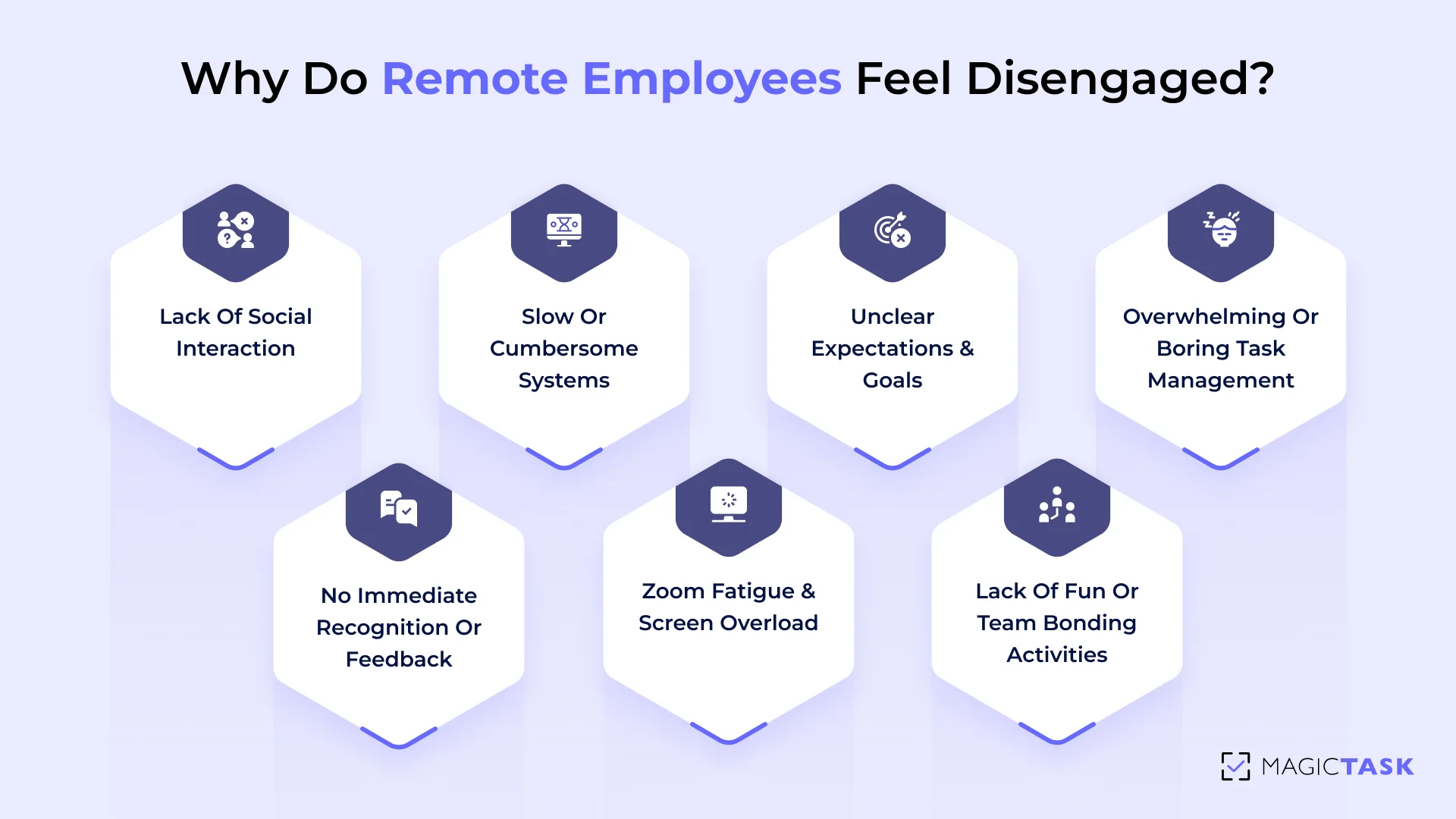
1. Lack of Social Interaction
Humans are wired for connection. In a traditional office, those connections happen naturally through quick chats by the coffee machine, spontaneous brainstorming sessions, or just a shared laugh over an inside joke. These small, everyday moments build trust, spark creativity, and strengthen a sense of belonging.
But in a remote setting, these interactions don’t happen organically. Without them, employees can start to feel like faceless names on a screen—disconnected from their colleagues and, over time, disengaged from their work. When people feel invisible, their motivation fades, collaboration suffers, and they may start questioning their place within the company.
2. Slow or Cumbersome Systems
Technology is supposed to make work easier, not more frustrating. But nothing kills momentum faster than a slow-loading tool, a cluttered system, or a never-ending series of clicks just to update a simple task. Instead of getting things done, employees waste time wrestling with software that should be helping them.
When every small action feels like a chore, motivation disappears. Work stops feeling like a place to create and problem-solve—it turns into a daily grind of navigating roadblocks. Over time, that frustration adds up, making even the best employees feel stuck and disengaged.
3. Unclear Expectations & Goals
When remote employees aren’t given clear objectives, they’re left wondering what to prioritize. Without clear direction, tasks start to feel arbitrary, and employees may spend time on work that ultimately doesn’t move the needle.
Take this example—a marketing manager tells the team to “increase engagement” on social media but doesn’t specify which platforms to focus on, which metrics define success, or what kind of content works best.
Some team members focus on likes, others on comments, while a few try boosting follower count. The result? Scattered efforts, misalignment, and frustration as no one knows if they’re actually making progress.
4. Overwhelming or Boring Task Management
No one signs up for a job just to check boxes, but that’s exactly what most task management tools turn work into—rigid, repetitive, and uninspiring. Instead of feeling like they’re contributing to something meaningful, employees get bogged down in endless lists, complicated workflows, and overly structured processes.
When every task feels like just another step in an assembly line, motivation fades. Employees start working for the sake of finishing rather than finding purpose in what they do. Over time, this mechanical approach drains creativity, stifles innovation, and makes work feel more like a chore than a challenge.
5. No Immediate Recognition or Feedback
In an office, recognition happens naturally—a quick “nice job” in passing, a nod of approval, or a spontaneous round of applause after a successful presentation. These little moments add up, making employees feel valued and seen.
In a remote setting, those moments disappear. When great work goes unnoticed, silence starts to feel like invisibility. Employees begin to wonder if their contributions even matter. Without consistent feedback, motivation erodes, and engagement slips away, not because employees don’t care, but because they feel like no one else does.
6. Zoom Fatigue & Screen Overload
At first, video calls seemed like the perfect solution for remote work—face-to-face interaction, seamless collaboration, and a way to stay connected. But now? They’ve become exhausting.
Back-to-back meetings leave employees drained before they even start their real work. Staring at tiny squares for hours on end feels isolating, not engaging.
And when every discussion, no matter how minor, turns into a scheduled call, productivity takes a hit. Instead of bringing teams together, excessive meetings are pulling them away from meaningful, focused work.
7. Lack of Fun or Team Bonding Activities
A great team isn’t just a group of people working toward a goal—it’s a group of people who enjoy working together. In an office, that bond forms naturally through casual chats, inside jokes, and spontaneous “Hey, what do you think about this?” moments.
In a remote world, those interactions don’t just happen—they have to be created. Without them, work becomes purely transactional. Conversations stay strictly work-related, and personal connections fade.
Over time, the team starts feeling less like a team and more like a collection of individuals just doing their jobs.
How to Fix Remote Employee Disengagement?
Now that we understand why remote employees feel disconnected, let’s explore practical steps you can take to re-engage your remote team.
The goal is to create an environment where employees feel connected, valued, and empowered—no matter where they are.
1. Foster a Strong Virtual Culture
Building a strong virtual culture is about creating a space where everyone feels seen and heard.
Start by making time for authentic conversations. Consider dedicating the first 10 minutes of your weekly team call to a casual check-in. Set up virtual coffee breaks or create informal Slack channels for non-work discussions.
These micro-interactions can rebuild the sense of belonging that remote work often lacks.
Ask questions like, “What’s something good that happened this week?” or “What’s one challenge you’re facing right now?”
This isn’t just small talk; it’s about human connection. When people know that their struggles and successes matter, they’re more likely to open up and collaborate. It might even be as simple as encouraging a daily “good morning” in your team chat where everyone shares a quick personal update.
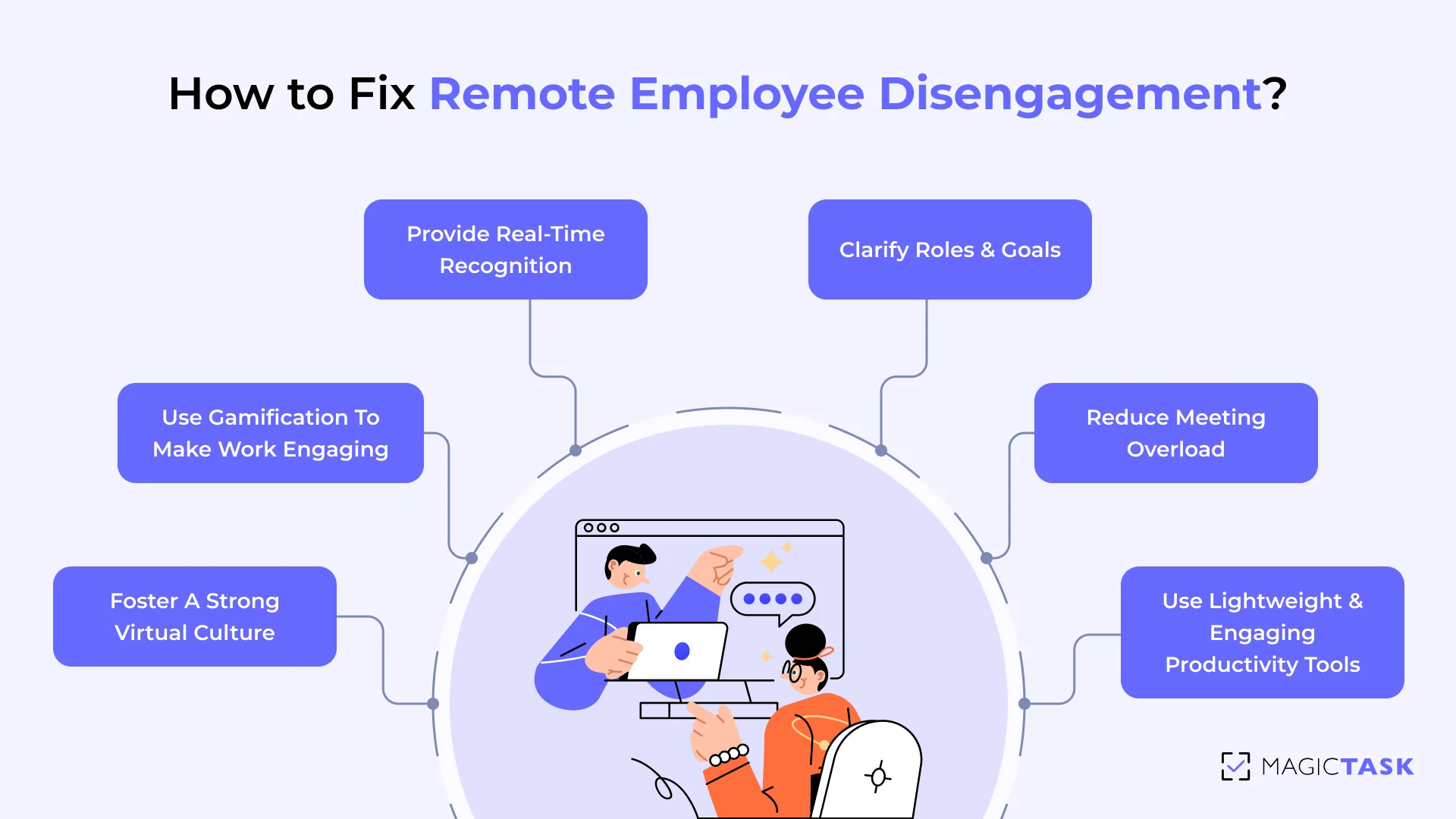
2. Use Gamification to Make Work Engaging
Remote work can feel like running on a treadmill—you’re moving but not moving forward. But gamification flips the script.
Here’s what leaders can do to make work fun:
- Visualize Progress: Allow employees to see their progress through badges, milestones, or leveling up as tasks are completed.
- Foster Friendly Competition: Establish a leaderboard or friendly challenges that reward initiative and proactive behavior.
- Deliver Instant Feedback: Make sure that achievements are recognized immediately, reinforcing momentum and boosting morale.
- Transform Routine Tasks: Incorporate game elements to turn everyday tasks into engaging challenges that motivate employees to take ownership.
3. Provide Real-Time Recognition
Real-time recognition is about making sure that when someone does a great job, it's acknowledged right away. Instead of waiting for the weekly roundup or the annual review, capture the moment as it happens.
Here’s how you can do it:
- Make recognition a habit. Public shoutouts, quick check-ins, and immediate feedback should be part of the daily workflow—not an afterthought.
- Turn progress into something tangible. Tools like MagicTask make momentum visible, so employees don’t feel like they’re working in a void.
- Celebrate effort, not just outcomes. Recognizing initiative, problem-solving, and creative thinking reinforces proactive behavior before the results even show up.
People do their best work when they know it matters. Try to appreciate the small wins rather than only big accomplishments.
4. Clarify Roles & Goals
Clarify roles and goals so your team isn’t left guessing what’s expected. When remote employees don’t know their specific responsibilities or how their work fits into the bigger picture, it creates confusion and can drain motivation.
As a leader, you can:
- Set Measurable Objectives. Instead of asking for a vague improvement, specify a clear target, such as “Increase newsletter open rates by 15% over the next quarter.”
- Break Down Larger Goals. Divide big projects into smaller, actionable tasks. For instance, if the goal is to increase user sign-ups, outline steps like optimizing the landing page, creating targeted ad campaigns, and scheduling weekly performance reviews.
- Maintain Open Communication. Schedule regular check-ins to discuss progress, address questions, and adjust targets if necessary. This ongoing dialogue ensures everyone understands their role and how their work contributes to the overall objective.
5. Reduce Meeting Overload
If you’ve ever sat through a call where nothing gets done, you know how draining it can be. Instead, try swapping some of those calls for a quick email or a shared document update.
For instance, instead of scheduling a 30-minute meeting to discuss weekly progress, ask your team to jot down their updates in a shared space. This not only cuts down on the number of meetings but also gives everyone the freedom to work uninterrupted.
It’s about being intentional. Look at your calendar and ask, “Is this meeting really necessary?” If the answer isn’t a clear yes, consider whether there’s a faster, less disruptive way to communicate.
6. Use Lightweight & Engaging Productivity Tools
You don’t need a behemoth system with endless features that only slow everyone down. Instead, opt for tools that are intuitive and simple to use—ones that feel more like an assistant than another task to manage.
Try switching to a platform that offers quick task updates and clear visuals of progress without overwhelming your team with too many options.
When tools are designed to be engaging, it’s easier for your team to stay focused on their work rather than wrestling with the software. The right tool should feel like a natural extension of your workflow, helping you keep things moving without adding extra hassle.
How MagicTask Helps Remote Teams Stay Engaged?
We know you're juggling a lot: project timelines, team morale, and the constant pressure to deliver exceptional results.
You understand that a happy, engaged team is a productive team, and you're searching for tools that reflect that understanding.
And let's be honest, some task management tools feel like they're designed to waste your time.
Seriously, who has time to wait five minutes for a page to load?
That's where MagicTask comes in.
MagicTask was built during the pandemic to help remote employees make work fun and exciting. Unlike other complex task management systems with a bit of a learning curve, MagicTask helps you get started almost immediately.
But it's not just about speed. It's about fun, too.
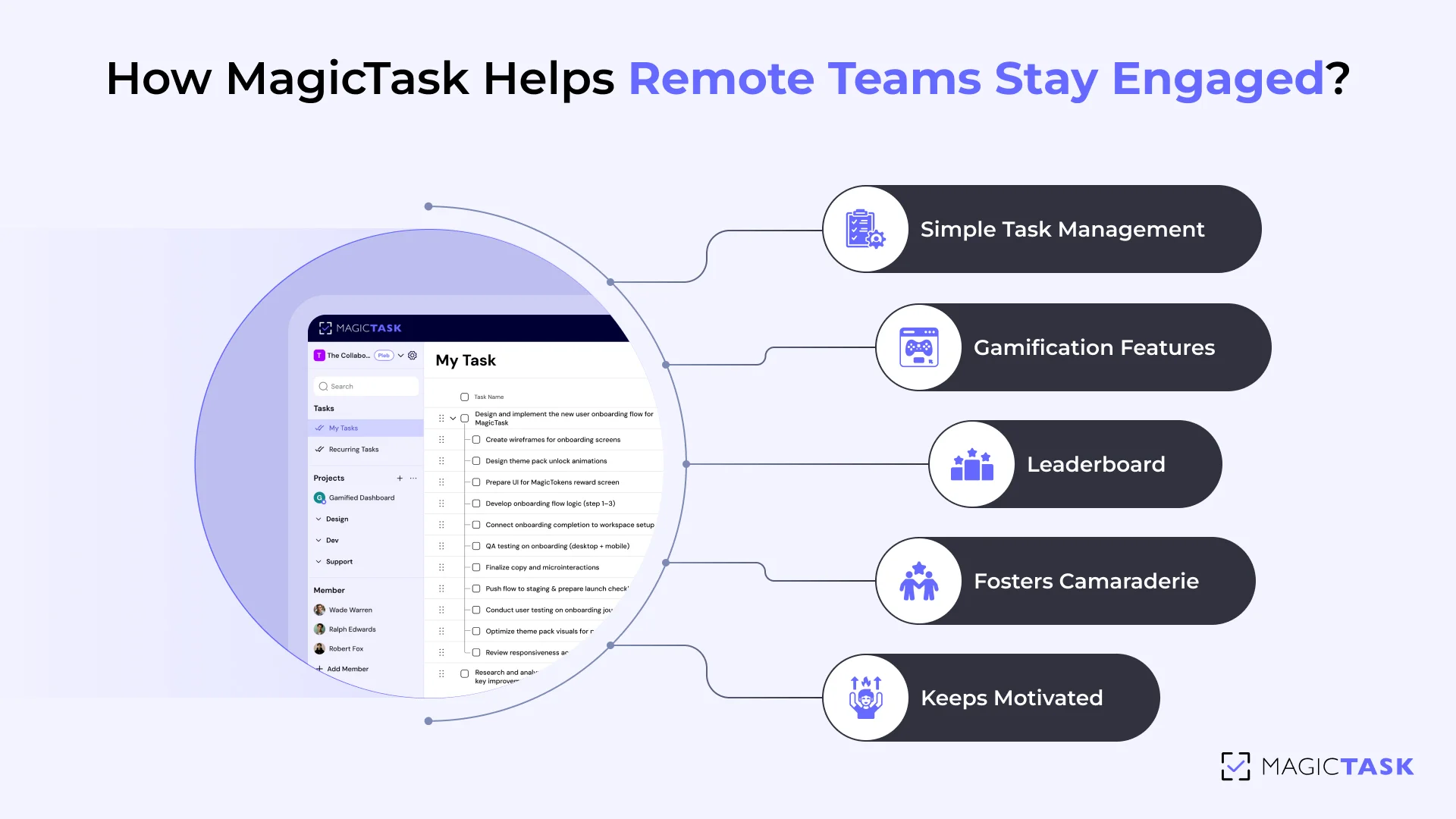
Here’s how MagicTask uses gamification to transform everyday tasks into rewarding moments that build genuine connections:
- Gamification Magic: MagicTask adds a layer of gamification to your daily task management. It smartly transforms routine work into a series of little wins.
- Built-in Leaderboard: You have a built-in leaderboard that rewards you for moving things along. You compete with others using the MagicTask system, and as you finish more tasks, you move up in the leaderboard.
- Fostering Camaraderie: It’s not about turning work into a competition for the sake of it—it's about fostering that same kind of camaraderie you’d get when you play a favorite video game with friends.
- Real Connections Through Gaming: Shared challenges can spark genuine bonds—just imagine your team reconnecting over friendly competition, where every completed task feels like teaming up with a trusted friend.
Conclusion
Tackling remote disengagement starts with understanding why employees feel disconnected. Small changes can make a big impact, especially when work feels engaging and rewarding.
MagicTask helps bring that sense of challenge and motivation back. It’s fast, simple, and designed to make everyday tasks more rewarding. Sign up for MagicTask now and see how a more engaging workflow can transform your team’s energy and productivity.