


Motivation often feels powerful at the beginning of something new. A fresh project, a new productivity system, or a habit meant to improve daily life usually begins with strong energy. People feel focused and optimistic. Tasks seem manageable, and progress appears exciting.
During this early phase, productivity often feels effortless. Plans come together quickly. Goals feel achievable. The sense of possibility makes work enjoyable and engaging.
Then something slowly changes.
The excitement that fueled the beginning begins to fade. Tasks that once felt easy now require more effort. The project still matters, yet the emotional drive that helped you start begins to weaken.
This experience happens to almost everyone. Many people assume the issue lies in discipline. They believe they simply need stronger willpower or better habits to continue.
However, motivation rarely remains constant over long periods. Human behavior does not run on endless enthusiasm.
Long-term engagement depends on something more stable. People stay consistent when progress feels visible and achievable. Small wins provide reinforcement that motivation alone cannot sustain.
When progress becomes easy to see, effort begins to feel meaningful again. Even on slower days, completing small actions creates a sense of movement. Over time, those small steps build momentum and help people stay connected to their work.
Understanding the role of small, visible wins can change how individuals and teams approach productivity. Instead of chasing constant motivation, they build systems that reinforce progress every day.
Why Motivation Naturally Fades Over Time
Motivation usually begins with excitement. Starting something new creates curiosity and anticipation. The brain responds strongly to novelty, which produces emotional energy that makes early effort feel lighter.
At the beginning of a project or productivity system, several positive effects often appear.
- Novelty effect: New systems feel exciting because they break routine and stimulate curiosity.
- Initial optimism: People often believe progress will come quickly, which increases confidence and energy.
- Clear direction: Goals and plans feel fresh, making it easier to take action.
- Emotional momentum: Early progress produces enthusiasm that encourages further work.
During this stage, productivity systems often appear extremely effective. People organize tasks, create ambitious plans, and move quickly through their work.
However, novelty does not last forever.
Once routine replaces excitement, the brain stops producing the same emotional boost. Tasks become familiar. Effort begins to feel heavier. The project still matters, yet the emotional reward becomes weaker. This shift reflects how human psychology works rather than a failure of discipline.
Research published in Harvard Business Review explains that people feel most motivated when they experience consistent progress in meaningful work. When progress becomes difficult to recognize, motivation declines even if the work itself remains important.
When effort continues without visible signals of advancement, people begin to question their productivity system.
Several patterns usually appear during this stage.
- Growing procrastination: Tasks feel harder to start because the emotional reward of progress becomes less visible.
- Increased mental resistance: Work that once felt manageable begins to feel heavier and more demanding.
- Reduced engagement: People start disconnecting emotionally from projects that previously felt exciting.
- System abandonment: Productivity systems often get replaced because they no longer feel motivating.
Many productivity approaches struggle because they depend heavily on motivation. Emotional energy can help people start something new, yet it rarely sustains long periods of consistent effort.
Consistency requires reinforcement. People continue showing up when their effort produces visible evidence that progress is happening. Small wins provide that reinforcement.
The Psychology Behind Small Wins
Small wins influence behavior because they shorten the distance between effort and reward. Large goals often feel distant and overwhelming. When people focus only on the final outcome, the brain struggles to stay engaged because the reward feels too far away. Small wins solve this problem by creating frequent signals of progress.
Each completed action tells the brain that effort is working. That signal produces a small sense of satisfaction, which increases confidence and encourages repetition. Over time, this process creates a progress loop that strengthens engagement.
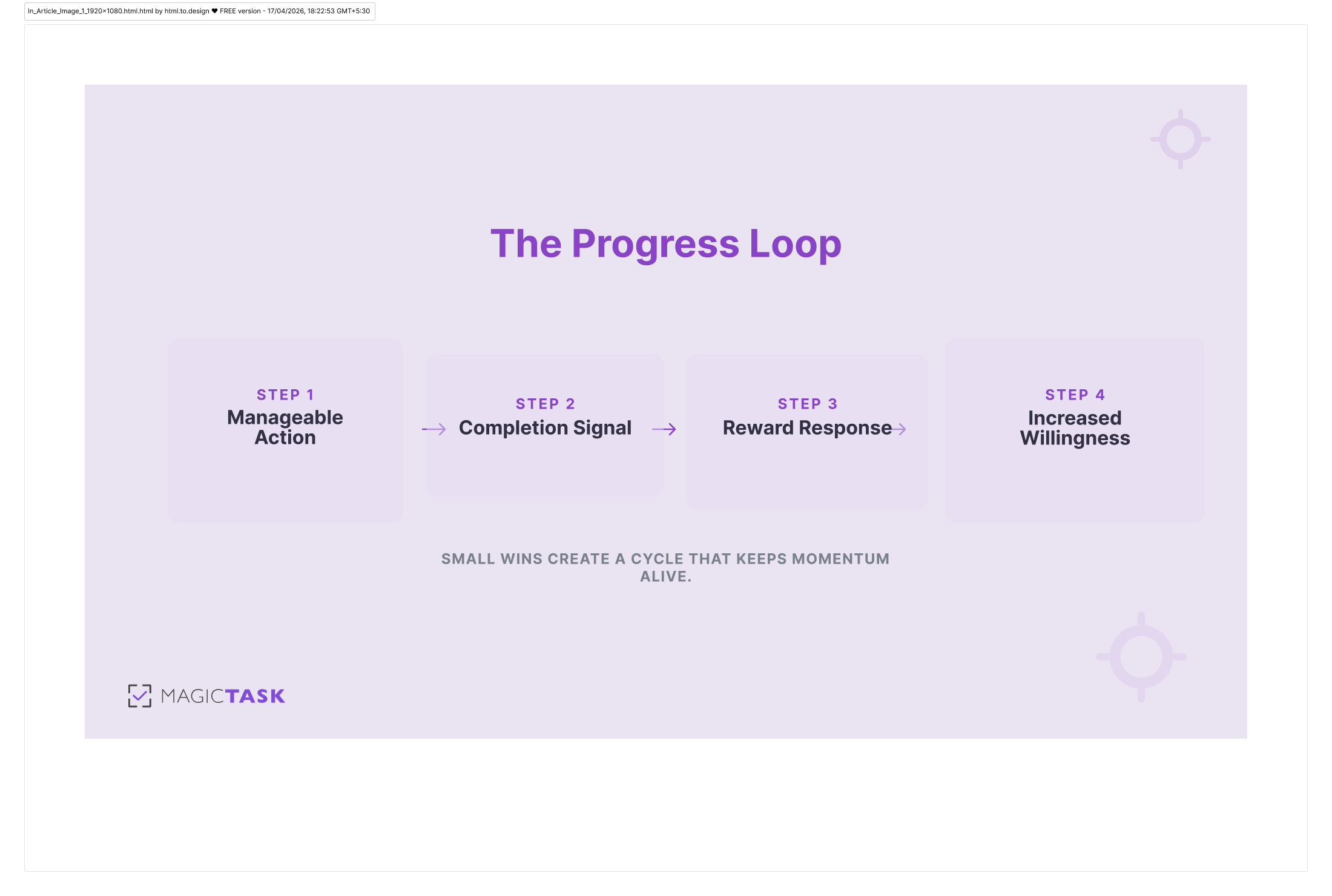
A typical progress loop follows a simple pattern.
- Manageable action: A task small enough to complete without significant resistance.
- Completion signal: The brain recognizes that progress has occurred.
- Reward response: A small feeling of accomplishment reinforces the action.
- Increased willingness: Starting the next task becomes easier because confidence grows.
Research by Teresa Amabile and Steven Kramer explored this idea through thousands of workplace diary entries. Their findings showed that progress in meaningful work was the strongest factor influencing positive emotions and engagement at work.
Even small steps forward produced measurable improvements in motivation. This insight changes how productivity should be understood. Many people assume motivation creates progress. In reality, progress often creates motivation.
When people see that their effort leads to results, they feel encouraged to continue.
Small wins also reduce psychological resistance. A large project may appear intimidating when viewed as a single objective. Breaking that project into smaller actions changes the experience completely.
Examples of small wins may include:
- Task completion: Finishing one clearly defined task within a larger project.
- Section progress: Completing a specific section of a report, presentation, or design.
- Communication progress: Sending important emails or messages that move work forward.
- Organizational progress: Sorting tasks, updating plans, or reviewing priorities.
- Progress review: Recognizing completed work during a daily or weekly review.
These actions may appear simple, yet they create reinforcement that keeps people engaged.
Small wins also help people remain productive on low-energy days. Motivation naturally rises and falls, and no one operates at peak energy every day. When tasks remain manageable, people can still move forward even when they feel tired or distracted.
Instead of waiting for motivation to return, they rely on little progress to rebuild momentum.
Why Visibility of Progress Changes Behavior
Progress only influences behavior when people can clearly see it. Invisible effort often feels unrewarded. Someone may work for hours yet remain uncertain about how much progress has actually occurred.
When this situation repeats over time, motivation begins to fade.
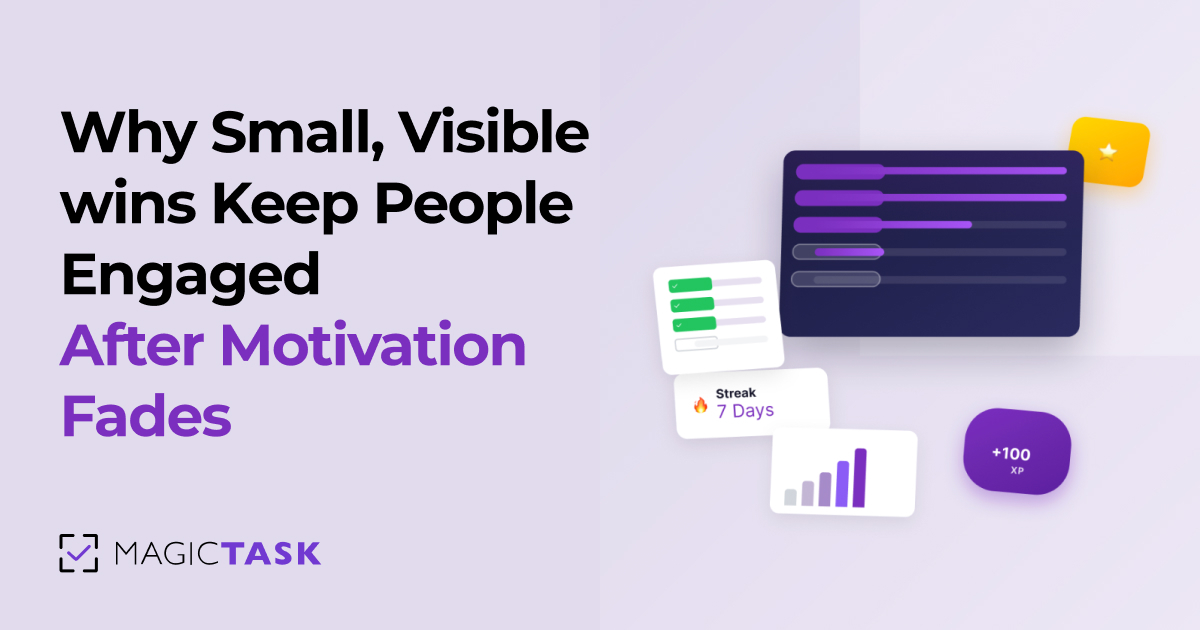
Visible progress changes this experience in a powerful way. Clear signals allow the brain to connect effort with results. Each completed action produces visual confirmation that advancement has occurred.
Several types of visual signals reinforce engagement.
- Completed tasks: Finished items remain visible so people can see accumulated progress.
- Visual boards: Tasks move across stages such as pending, active, and completed.
- Progress indicators: Visual markers show advancement toward a goal or milestone.
- Consistency tracking: Streak counters highlight repeated actions over time.
- Milestone recognition: Larger accomplishments become visible checkpoints within longer projects.
These signals turn abstract effort into something tangible.
Instead of feeling like work disappears into the background, people can observe the accumulation of completed actions. Each visible signal reinforces the idea that effort leads to progress.
Psychological research supports the importance of feedback in maintaining engagement. A report by ScienceDirect explains that immediate feedback improves performance and motivation because people can clearly see how their actions influence outcomes.
Feedback works as reinforcement. When someone finishes a task and sees visible confirmation, the brain registers completion as a reward.
Without that signal, effort can feel disconnected from progress.
Signs That Progress Is Too Invisible
Many productivity systems struggle because progress remains difficult to see. Work happens, yet the system provides little reinforcement.
Several warning signs indicate that progress may be too hidden.
- Large undefined tasks: Work remains grouped into broad goals that feel overwhelming.
- Delayed results: Progress becomes visible only after long periods of effort.
- Disappearing achievements: Completed work quickly disappears without recognition.
- Lack of feedback: People receive little confirmation that their actions create progress.
When progress remains invisible, motivation gradually declines even if people continue working hard.
Making progress visible solves this problem by reinforcing effort consistently.
Designing Systems That Reinforce Small Wins
Productivity systems become more effective when they reinforce progress regularly. Instead of relying on motivation alone, they create structures that make advancement visible and achievable.
Several principles help build these systems.
Break Work Into Manageable Actions
Large projects often appear overwhelming when viewed as single objectives. Breaking work into smaller steps makes progress easier to achieve.
For example:
- Large project goal: Launch a new product.
- Research stage: Collect user insights and define requirements.
- Planning stage: Create feature outlines and development priorities.
- Development stage: Complete individual tasks related to product functionality.
- Review stage: Evaluate progress and refine the launch plan.
Each completed action becomes a small win that builds momentum.
Make Progress Easy to Track
People remain engaged when they can clearly see what has been accomplished. Systems should allow progress to remain visible instead of disappearing.
Helpful tracking methods include:
- Task boards: Visual structures that display tasks across different stages of completion.
- Completion sections: Dedicated areas where finished tasks remain visible.
- Daily reviews: Short reflections that highlight progress made during the day.
- Milestone markers: Clear checkpoints that represent meaningful progress.
Visible progress reinforces the sense that effort produces results.
Reinforce Consistency Instead of Perfection
Many people lose momentum because they believe productivity requires perfect performance. Missing a single day or falling behind schedule often creates discouragement.
Systems that reward consistency prevent this problem.
- Consistency recognition: Systems highlight repeated actions rather than isolated achievements.
- Small progress tracking: Even minor steps count as meaningful advancement.
- Flexible expectations: Progress remains possible even during busy periods.
This approach helps people stay engaged even when energy levels fluctuate.
Keep Tasks Achievable on Low Energy Days
Productivity systems often assume people operate at peak energy every day. In reality, energy levels change constantly.
Smaller actions allow people to continue making progress even when energy is limited.
- Low effort tasks: Simple actions that move work forward during slower days.
- Progress continuation: Completing one small step helps restore momentum.
- Momentum recovery: Small wins help people return to productive flow.
When tasks remain achievable, consistency becomes easier to maintain.
Conclusion
Motivation often sparks the beginning of a new project, habit, or productivity system. The excitement of starting something new creates the energy needed to take the first steps.
However, motivation rarely lasts forever.
Emotional energy naturally rises and falls. When productivity depends entirely on motivation, engagement eventually begins to fade.
Small wins provide a more reliable foundation for sustained progress.
Each completed action creates visible evidence that advancement is happening. These signals reinforce effort, strengthen confidence, and encourage consistency.
When systems reinforce small wins and make progress easy to see, people remain engaged with their work long after the initial motivation fades.