
Why Gamification Works for Productivity in Modern Workflows
Gamification is often misunderstood. For many people, it brings to mind flashy rewards or surface-level motivation, things that feel distracting rather than useful.
But when designed with intention, gamification isn’t about making work playful.
It’s about supporting focus, consistency, and follow-through in environments where attention is constantly pulled in different directions.
Modern workflows are fragmented by nature. Work happens across tools, time zones, and shifting priorities. In that reality, relying on discipline alone isn’t enough. People need systems that provide clear feedback, visible progress, and a sense of momentum. That’s where thoughtful gamification proves its value.
This post explores why gamification works for productivity today as a design approach that helps people stay engaged, complete meaningful work, and follow through in the flow of everyday tasks.
Why Traditional Productivity Tools Struggle in Modern Workflows
Most productivity tools look good on paper. Clean lists. Clear deadlines. Plenty of features. But once you’re in the middle of a real workday where messages are coming in, meetings are popping up, priorities are shifting, those tools start to feel heavy instead of helpful.
They weren’t built for how work actually feels today.
They Don’t Match How Work Really Happens
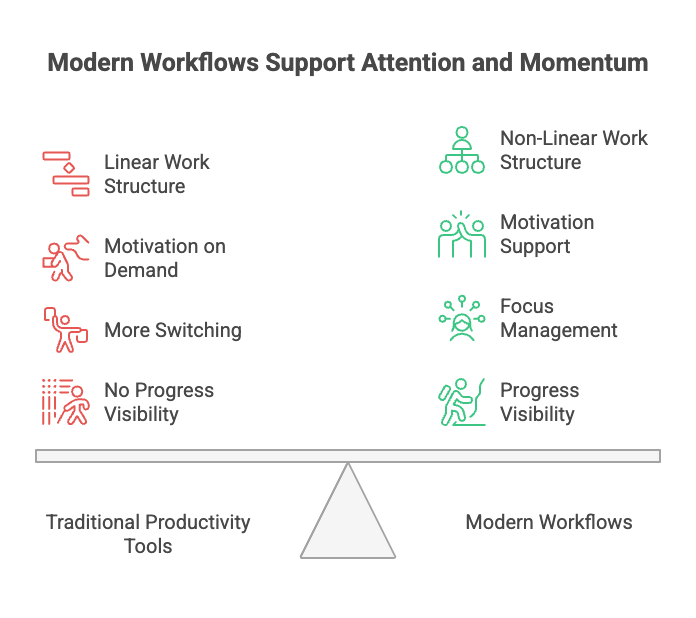
Modern work isn’t linear. You don’t sit down, complete one task, and move neatly to the next. You jump between conversations, documents, and decisions, often across different tools and time zones.
Traditional tools assume:
- Work happens in long, uninterrupted blocks
- Everyone is online at the same time
- Tasks move forward in a straight line
When reality doesn’t match those assumptions, progress starts to slip, and the tool feels out of sync with your day.
They Expect Motivation on Demand
Most task managers rely on one thing: your discipline. They list what needs to be done and assume you’ll handle the rest.
There’s usually no:
- Feedback when you make progress
- Reinforcement for showing up consistently
- Support when energy drops
When work gets busy or overwhelming, tasks don’t move, not because you don’t care, but because the system gives you nothing to lean on. Over time, opening the tool feels more like pressure than help.
They Create More Switching
Ironically, many tools meant to improve focus end up breaking it. Multiple views. Endless filters. Notifications everywhere.
You open the tool to work and immediately have to decide where to look, what matters right now, and which view to use.
That mental overhead pulls attention away from the work itself. Instead of helping you focus, the tool becomes another thing to manage.
They Don’t Make Progress Feel Real
This is the quiet problem most tools ignore. You check off a task… and nothing happens. No sense of buildup. No momentum. Just another item gone.
Without visible progress:
- Effort feels invisible
- Consistency feels unrewarded
- Motivation fades over time
Eventually, people stop checking the list altogether.
Modern workflows don’t struggle because people lack discipline. They struggle because the systems they rely on don’t support attention, effort, or momentum.
What Gamification Actually Solves in Everyday Work
When people hear “gamification,” they often imagine distractions layered on top of work. In reality, well-designed gamification does the opposite. It removes friction, reduces mental load, and supports follow-through in moments where motivation usually drops.
At its best, gamification doesn’t compete with productivity. It reinforces it.
Progress Feels Immediate
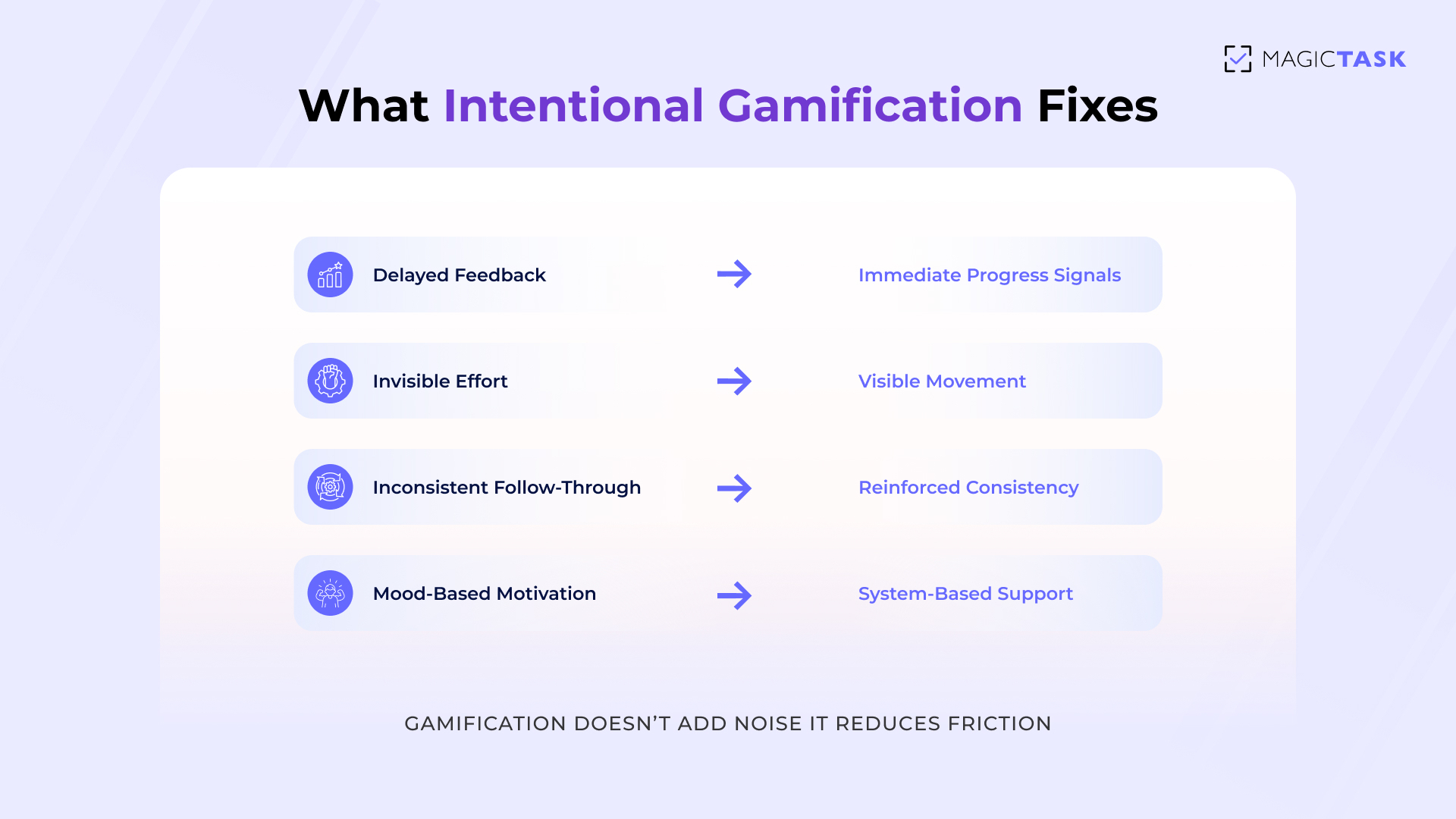
One of the biggest gaps in everyday work is delayed feedback. You put in effort now, but the payoff feels distant. Gamification shortens that gap by making progress visible as it happens. When effort leads to immediate confirmation, momentum builds naturally. You don’t have to wonder if today mattered because the system shows you that it did.
Effort Becomes Visible
Traditional tools only acknowledge outcomes: finished projects, closed tasks, completed milestones. Gamification shifts the focus to effort itself. Showing up, taking small steps, and moving work forward all count. When effort is recognized, people stay engaged longer — especially during long or complex projects where results take time to show.
Consistency Is Reinforced, Not Forced
Staying consistent is harder than starting. Small rewards act as gentle reinforcement, encouraging people to return without pressure. These signals don’t need to be dramatic. They simply need to confirm that consistency matters. Over time, repetition feels rewarding instead of draining, and follow-through becomes easier to maintain.
Motivation Comes From the System
Relying on willpower works until it doesn’t. Gamification shifts motivation away from mood and discipline and into the structure of the workflow itself. When progress, effort, and consistency are supported by design, people don’t have to push themselves as hard to keep going. The system carries part of the load.
That’s why gamification works best when it’s quiet, intentional, and grounded in real work.
Why Gamification Works When It Is Designed Intentionally
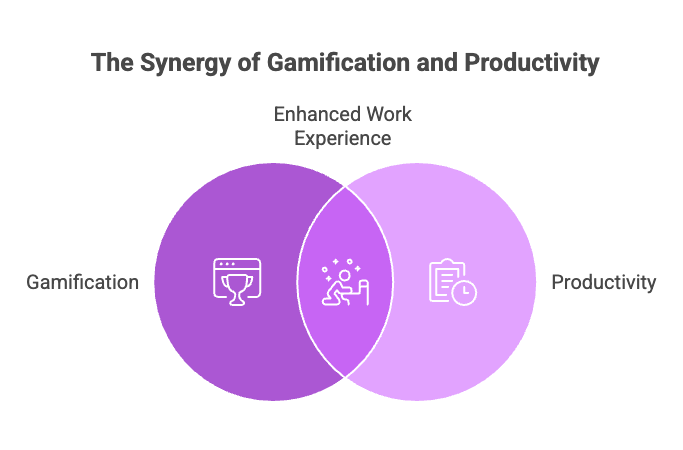
Gamification doesn’t fail because the idea is flawed. It fails when it’s added without purpose. When rewards are disconnected from real work, they feel hollow. When competition is forced, it creates pressure instead of motivation. Intentional design is what separates gamification that supports productivity from gamification that gets ignored.
When done right, it quietly reinforces the behaviors that matter most.
1. Rewards Are Tied to Real Work
Gamification only feels motivating when rewards mean something. That happens when they are directly connected to real effort. When rewards reflect actual work completed, they reinforce progress instead of distracting from it.
In intentional systems, every reward answers a simple question: What did I move forward today? Completing a task, finishing a focused session, or making steady progress all earn recognition because they represent meaningful effort. Nothing feels random or inflated.
This alignment builds trust. Users don’t feel like they’re being nudged for engagement’s sake. They feel acknowledged for doing real work. Over time, that trust is what keeps people coming back. Rewards stop feeling like incentives and start feeling like confirmation that their effort counts, which is exactly what sustains productivity.
2. Progress Feels Supportive
When gamification is designed intentionally, progress creates reassurance. Instead of asking you to perform or compete, it quietly shows that you’re moving forward. That sense of support makes it easier to stay engaged, especially during long or demanding stretches of work.
Progress feels supportive when it’s framed around growth, not comparison:
- Personal progress: You see how your own work is advancing, without being measured against others. This keeps focus on improvement rather than performance.
- Visible movement: Small steps register clearly, so effort never feels wasted or invisible.
- No penalty for slow days: Progress doesn’t disappear because of missed time or lower energy. Momentum stays intact.
- Encouraging signals: Feedback confirms that consistency matters more than speed.
Supportive progress reduces anxiety and keeps motivation steady. Instead of pushing harder, people feel safe continuing, and that’s what allows productivity to last.
3. Consistency Matters More Than Perfection
Perfection feels productive on paper, but it rarely survives real life. Consistency does. The difference becomes clear when you look at how work actually unfolds over time.
So when you’re trying to build a daily writing habit with a “go big or go home” mindset:
- Monday: An hour of focused writing. It feels like a great start.
- Tuesday: Another strong session. Confidence is high.
- Wednesday: Meetings run long, energy dips, and writing gets skipped.
- Thursday: The habit already feels broken. Guilt creeps in.
- Friday: Starting again feels heavier than stopping, so nothing happens.
Now contrast that with a consistency-first approach. Writing for ten minutes a day fits even on busy or low-energy days. Some sessions are productive, others aren’t, but the habit continues.
That’s why consistency wins. It removes pressure, keeps momentum intact, and reinforces identity. Progress doesn’t depend on perfect days; it survives real ones.
4. Friction Is Reduced, Not Added
The best gamification blends into the workflow. It doesn’t demand extra decisions or attention. Instead, it clarifies priorities, reinforces progress, and gently nudges users forward. When gamification reduces mental effort instead of adding noise, it becomes a natural part of getting work done.
Intentional gamification works because it respects how people actually work. It supports focus, rewards effort, and helps consistency grow without turning productivity into a performance.
How Gamification Supports Focus and Consistency Over Time
Motivation is loud at the beginning of any new system, and quiet a few weeks later. That’s where most productivity tools lose people. Gamification, when designed intentionally, fills that gap by supporting focus and consistency long after the initial excitement fades.
It doesn’t push harder. It reinforces gently.
Here’s how gamification sustains productivity over time:
- Progress stays visible: Seeing effort accumulate helps people stay engaged even when work feels repetitive or slow.
- Small wins create momentum: Completing manageable tasks provides regular signals that progress is happening.
- Consistency feels rewarding: Returning day after day feels worthwhile because effort is acknowledged, not ignored.
- Focus is easier to protect: Clear feedback reduces decision fatigue and keeps attention on what matters.
- Motivation becomes reliable: The system supports follow-through instead of relying on mood or willpower.
Over time, these small reinforcements add up. Focus becomes steadier. Consistency becomes easier. Productivity feels less like a struggle and more like a rhythm.
That’s why gamification works best as a quiet layer beneath daily work.
Conclusion
Gamification works for productivity because it makes progress feel clear, supported, and worth continuing. In modern workflows filled with interruptions and shifting priorities, people don’t need more pressure or complexity. They need systems that reinforce effort, protect focus, and help consistency grow naturally over time.
When gamification is designed intentionally, it becomes invisible in the best way. It supports real work, rewards showing up, and keeps momentum alive long after motivation fades. That’s when productivity stops feeling forced and starts feeling sustainable.
MagicTask is built around this philosophy. It uses thoughtful gamification to reinforce progress, focus, and follow-through.
If your current tools rely too heavily on discipline alone, it may be time to rethink how motivation is designed into your workflow. Try MagicTask and experience how intentional gamification can make everyday productivity feel clearer, lighter, and easier to sustain.
Similar Blogs
The Productivity Reset Ritual: A 10-Minute Daily Routine to Stay Organized and Motivated
Have you ever ended a day feeling exhausted… but not accomplished? You answered emails. You jumpe
How Gamified Productivity Tools Solve Task Fatigue (and Keep Teams Engaged)
You’re already buried every Monday with deadlines, messages, meetings, and a dozen priorities fig
The Fresh Start Effect: Why Starting Small Helps You Build Better Habits
Have you ever felt a sudden urge to get your life together just because it was a Monday? Or the f
FAQS?Have questions? Look here
Gamification in productivity is the use of progress tracking, feedback loops, and small rewards to reinforce focus, consistency, and task completion in everyday work. It supports real work instead of distracting from it.
Gamification improves productivity by making progress visible, reinforcing consistent effort, and reducing reliance on willpower. In modern workflows filled with interruptions, these feedback signals help maintain momentum and follow-through.
No. Effective gamification is not about flashy rewards or competition. It’s about intentional design that supports attention, highlights progress, and reinforces meaningful work behaviors over time.
Traditional tools often assume linear, uninterrupted work. Modern workflows are fragmented across tools, meetings, and time zones. Without built-in feedback and reinforcement, these systems rely too heavily on discipline alone.
When designed intentionally, gamification reduces distraction rather than adding it. It clarifies priorities, provides clear progress signals, and lowers mental friction, making focused work easier to sustain.

Make Work Feel Like Play
Follow Us


