
The Dopamine Trap: Why Some Gamified Apps Fail Users (and What Actually Works)
Gamified apps promise motivation. They promise streaks, badges, XP, and momentum. At first, it feels exciting. You open the app, complete a task, see points pop up, and think, This is actually kind of fun.
And then something shifts.
The notifications feel louder. The streak feels stressful. The rewards start to feel automatic, almost meaningless. What once felt motivating now feels like pressure. Eventually, you stop opening the app altogether.
This is what I call the dopamine trap.
It happens when gamified apps rely on short-term reward spikes instead of meaningful progress. They optimize for stimulation. The result is early excitement followed by fatigue, disengagement, and sometimes even guilt.
This blog isn’t about dismissing gamification. Gamification can work incredibly well. The problem isn’t dopamine itself. The problem is shallow design reward systems that prioritize novelty over growth.
Let’s unpack why some gamified apps fail users and what actually sustains motivation over the long term.
What the Dopamine Trap Looks Like in Gamified Apps
The dopamine trap doesn’t look obvious at first. In fact, it usually looks exciting.
You download an app. You complete a few actions. Points pop up. It feels rewarding… almost energizing. You feel productive, engaged, maybe even a little competitive with yourself.
Then, slowly, the excitement fades.
The core issue isn’t that rewards exist. It’s that they become disconnected from meaningful effort. The stimulation continues, but the sense of progress doesn’t.
Here’s what the dopamine trap typically looks like:
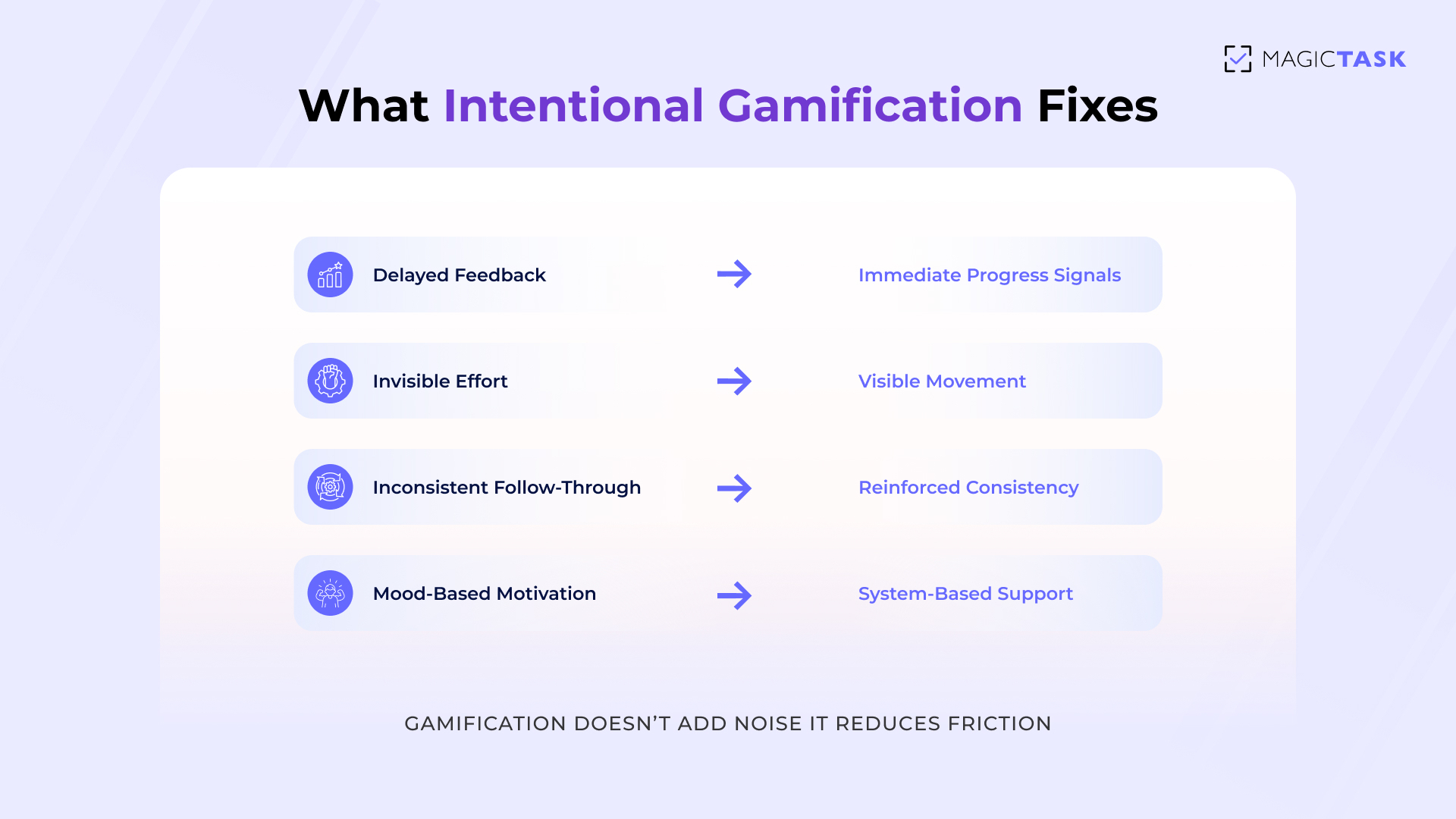
- Rewards disconnected from real effort: You receive points or badges for trivial actions that don’t meaningfully move work forward. The feedback feels inflated rather than earned.
- Novelty-driven engagement: The app introduces constant new visuals, animations, or achievements to keep you stimulated, but none of them reflect deeper growth or mastery.
- Streak pressure instead of support: Missing a day feels like failure. Instead of encouraging consistency, the system creates anxiety around maintaining perfection.
- Constant notification loops: Alerts are designed to pull you back in, not because your work progressed, but because the app wants engagement.
- Early excitement followed by fatigue: The first few weeks feel motivating. After that, rewards feel predictable and repetitive, and engagement drops sharply.
When rewards become noise instead of feedback, users start to feel manipulated rather than supported.
The trap isn’t that dopamine is involved. It’s that dopamine is being triggered without reinforcing real progress. And over time, your brain learns the difference.
Why Dopamine-Only Rewards Stop Working
Dopamine is critical for how the brain responds to reward, learning, and motivation, but its role isn’t static.
Research shows that dopamine neurons respond especially strongly to novel and unexpected rewards, not to predictable ones. As stimuli become familiar, the dopamine response naturally habituates, meaning the signal weakens over time if the reward remains the same or predictable. This phenomenon helps explain why the thrill of a new app feature or random point popup feels motivating at first but gradually loses its impact with repetition.
Here’s what’s going on under the surface:
- Dopamine rewards novelty, not repetition: Novel experiences trigger stronger dopamine responses. Once a reward becomes expected or familiar, dopamine neurons show reduced activity, a basic form of habituation that’s been observed across species.
- Predictable rewards lose impact quickly: When users know what to expect, the reward stops surprising them. The brain doesn’t signal “more value here” anymore, so motivation drops.
- Constant stimulation leads to burnout: Gamified loops that rely on frequent, similar rewards create temporary spikes but don’t build sustained engagement because the brain stops responding to predictable signals.
- Motivation fades without meaningful growth: Rewards disconnected from real effort or progress might feel fun briefly, but they don’t reinforce the behaviors that actually matter, the ones tied to growth, competence, and mastery.
In short, dopamine alone can’t sustain motivation when the reward becomes predictable or shallow. That’s why “dopamine-only” gamification often fizzles: it delivers quick hits without meaningful reinforcement, and the brain adapts, reducing the very signal that once felt motivating.
What Actually Sustains Motivation Over Time
If shallow rewards are the problem, the solution isn’t to remove rewards altogether. It’s to design them differently.
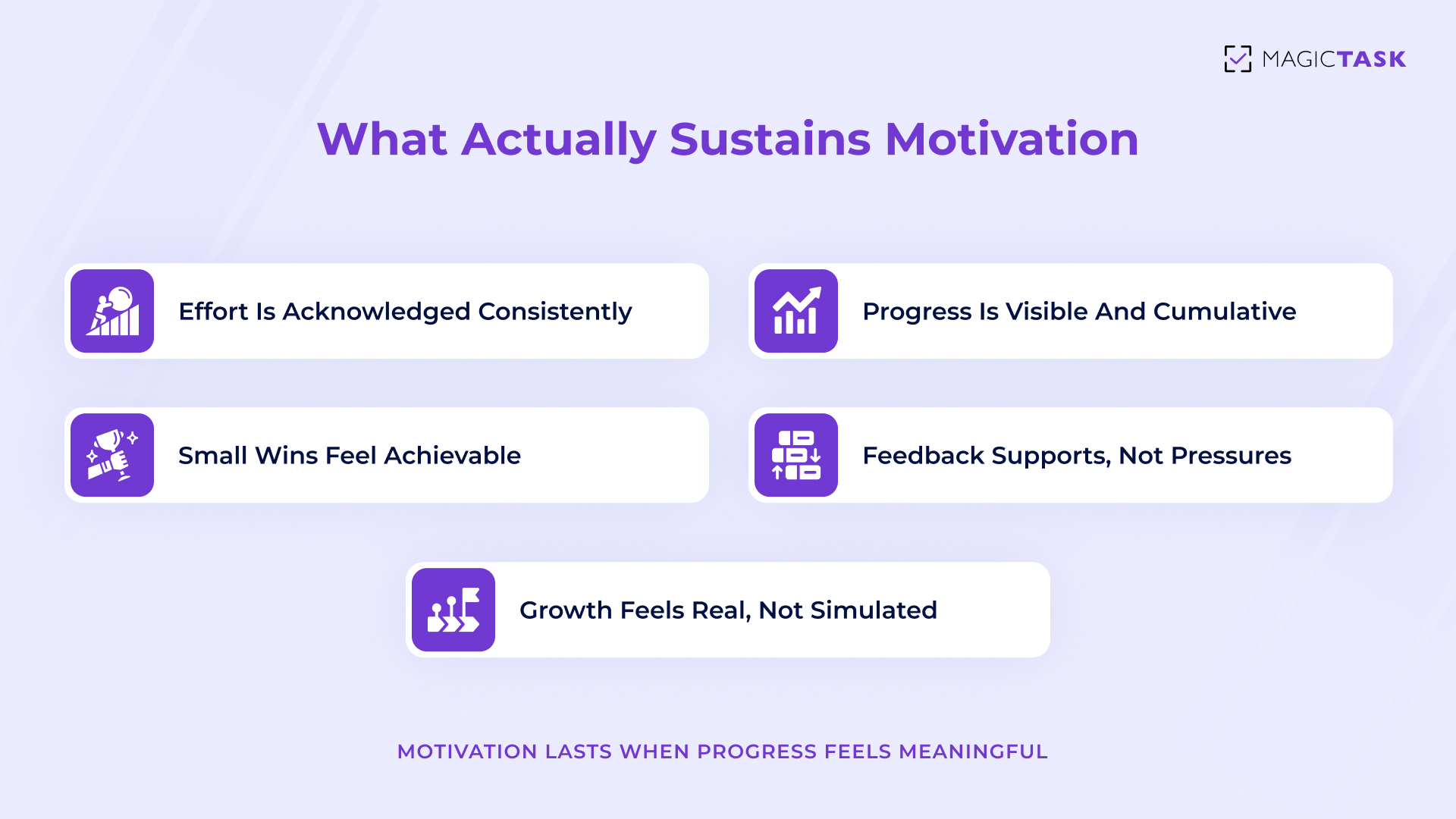
Motivation doesn’t last because something is flashy. It lasts because it feels meaningful. When rewards reinforce real effort and visible progress, they stop being stimulation and start becoming feedback.
Here’s the shift.
Reinforce Effort
When a system only celebrates big wins, most days feel invisible. That creates inconsistency. Sustainable motivation comes from acknowledging effort along the way, showing up, working steadily, finishing small steps.
When effort is recognized:
- Consistency feels worthwhile.
- Progress feels earned.
- Momentum builds naturally.
The reward doesn’t need to be dramatic. It just needs to reflect something real.
Make Progress Visible
Humans are wired to respond to progress cues. When we see ourselves moving forward, confidence increases. That confidence becomes identity.
Instead of thinking: “I’m trying to be productive.”
You start thinking: “I’m someone who follows through.”
That shift happens when progress accumulates visibly. When tasks are completed that contribute to something larger, growth, levels, experience, and mastery, the work stops feeling isolated. It feels connected.
Visible progress turns repetition into reinforcement.
Create Small Wins Without Pressure
Small wins are powerful because they lower resistance. When tasks are manageable and completion feels achievable, starting becomes easier.
Unlike high-pressure streak systems, meaningful small wins:
- Encourage showing up without demanding perfection.
- Build momentum gradually instead of through spikes.
- Reduce anxiety around missed days.
Momentum created through small wins is calmer and more sustainable than motivation created through urgency.
Use Feedback as Support
Good gamification doesn’t push users to stay engaged for the app’s sake. It supports behavior the user already values.
Feedback should answer:
- “Am I moving forward?”
- “Is my effort accumulating?”
- “Am I building consistency?”
It shouldn’t create artificial urgency or pressure.
When rewards are designed as signals, they build trust. And trust keeps users engaged far longer than novelty ever could.
Sustainable motivation isn’t about chasing dopamine. It’s about designing feedback that reinforces growth, consistency, and identity over time.
What Thoughtful Gamified Design Looks Like in Practice
Understanding the psychology is one thing. Applying it in real-world tools is another.
Sustainable gamification isn’t about adding more animations, louder notifications, or endless achievement tiers. It’s about designing systems that reinforce behavior in a way that feels supportive, not addictive.
Here’s what that looks like when done right.
Reward Effort, Not Just Outcomes
In many apps, rewards are tied to finishing something big. That creates long stretches where users feel invisible.
Thoughtful design flips that.
- Completing small steps matters.
- Consistency is acknowledged.
- Showing up counts.
When effort is recognized along the way, motivation becomes less fragile. Users don’t have to wait for a major milestone to feel progress. The system reinforces the process, not just the final result.
That’s what builds long-term engagement.
Make Progress Visible Without Overwhelming Users
Visibility drives motivation. Overstimulation kills it.
Good design shows progress clearly but calmly. It avoids clutter, avoids flashing distractions, and focuses attention on what matters.
Progress visibility should:
- Accumulate in a meaningful way.
- Be easy to understand at a glance.
- Reinforce direction without adding noise.
When users can see forward movement without feeling overloaded, engagement becomes sustainable instead of exhausting.
Encourage Consistency Without Punishment
Many gamified apps rely on fear-based mechanics: break a streak, lose progress. That pressure works temporarily, and then backfires.
Sustainable systems encourage return, not perfection.
Instead of punishing missed days, they:
- Allow easy restarts.
- Preserve progress.
- Reinforce cumulative growth.
This reduces anxiety and prevents the “I missed one day, so I quit” spiral.
Consistency thrives in environments that feel forgiving.
Use Gamification as Feedback
The biggest distinction comes down to intent.
Is the system trying to maximize time spent inside the app? Or is it trying to reinforce meaningful behavior?
When gamification is used as feedback:
- Rewards signal real effort.
- Progress reflects actual growth.
- Engagement feels aligned with the user’s goals.
When it’s used as an addiction:
- Stimulation becomes constant.
- Novelty replaces substance.
- Users feel pressured rather than supported.
The future of gamified design isn’t louder rewards. It’s a better alignment between feedback and real progress.
When rewards reflect growth instead of chasing attention, motivation stops being fragile and starts becoming sustainable.
Conclusion
Gamification doesn’t fail because it’s playful. It fails when it’s shallow. When apps chase dopamine spikes instead of reinforcing real effort, users burn out. Novelty fades. Streak pressure builds. Motivation collapses. The problem is rewards that aren’t tied to growth.
Sustainable motivation looks different. It acknowledges effort, makes progress visible, builds identity through consistency, and supports users instead of manipulating them.
The future of gamified productivity isn’t about more stimulation. It’s about better design, design that reinforces mastery, momentum, and meaningful progress. That’s the philosophy behind MagicTask.
MagicTask doesn’t gamify for noise or novelty. It uses XP, streaks, and visual progress as feedback signals, small reinforcements that reflect real work, real effort, and real consistency. No pressure. No manipulation. Just momentum.
If you’ve experienced the dopamine trap before, try a system built for sustainable motivation instead. Start using MagicTask and experience gamification that works with your goals.
Similar Blogs
The Productivity Reset Ritual: A 10-Minute Daily Routine to Stay Organized and Motivated
Have you ever ended a day feeling exhausted… but not accomplished? You answered emails. You jumpe
Why Gamification Works for Productivity in Modern Workflows
Gamification is often misunderstood. For many people, it brings to mind flashy rewards or surface
How Gamified Productivity Tools Solve Task Fatigue (and Keep Teams Engaged)
You’re already buried every Monday with deadlines, messages, meetings, and a dozen priorities fig
FAQS?Have questions? Look here
The dopamine trap occurs when gamified apps rely on short-term reward spikes — like badges, streaks, and points — instead of reinforcing meaningful progress. Early excitement builds, but over time the rewards feel hollow, leading to fatigue and disengagement.
Dopamine neurons respond strongly to novel and unexpected rewards. Once rewards become predictable and repetitive, the brain's response weakens — a process called habituation. Without meaningful progress tied to rewards, motivation naturally fades.
Shallow gamification prioritizes stimulation — constant notifications, novelty animations, and streak pressure. Sustainable gamification uses rewards as feedback signals that reflect real effort, visible progress, and consistent behavior aligned with the user's actual goals.
When missing a single day means losing all streak progress, users shift from intrinsic motivation to fear of failure. This pressure creates an all-or-nothing mindset — and when the streak eventually breaks, many users quit entirely.
Effective gamification rewards effort (not just big outcomes), makes progress visible without overwhelming the user, encourages consistency without punishment, and uses feedback to reinforce behaviors the user already values — not to maximize time spent in the app.
MagicTask uses XP, streaks, and visual progress as feedback signals rather than attention hooks. Every reward reflects real work and real consistency — no artificial urgency, no manipulative loops, just momentum built through meaningful progress.

Make Work Feel Like Play
Follow Us


