
How to Use Daily Micro Habits in MagicTask To Achieve Your Big Goals
Did you know you can completely change your results just by changing what you do for five minutes a day? It’s true! Research found that about 45% of our daily actions are not conscious decisions, but a result of habits. That means success is built on what you consistently do without thinking.
That’s why I stopped chasing big goals and started focusing on micro habits to achieve them. And with MagicTask, tracking and managing those habits become easier.
If you’ve ever felt stuck between ambition and follow-through, micro habits coupled with a little gamification might be exactly what you’ve been missing.
Why Micro Habits Outperform Motivation
Motivation feels great, but only if you have an endless supply of it. You wake up some mornings ready to conquer the world, and others barely ready to conquer your inbox. That’s normal. The problem is that most goal-setting systems depend on motivation to work.
Micro habits remove that dependency. They’re built on action, not emotion. By keeping progress small, consistent, and measurable, they help you move forward even when you don’t feel like it.
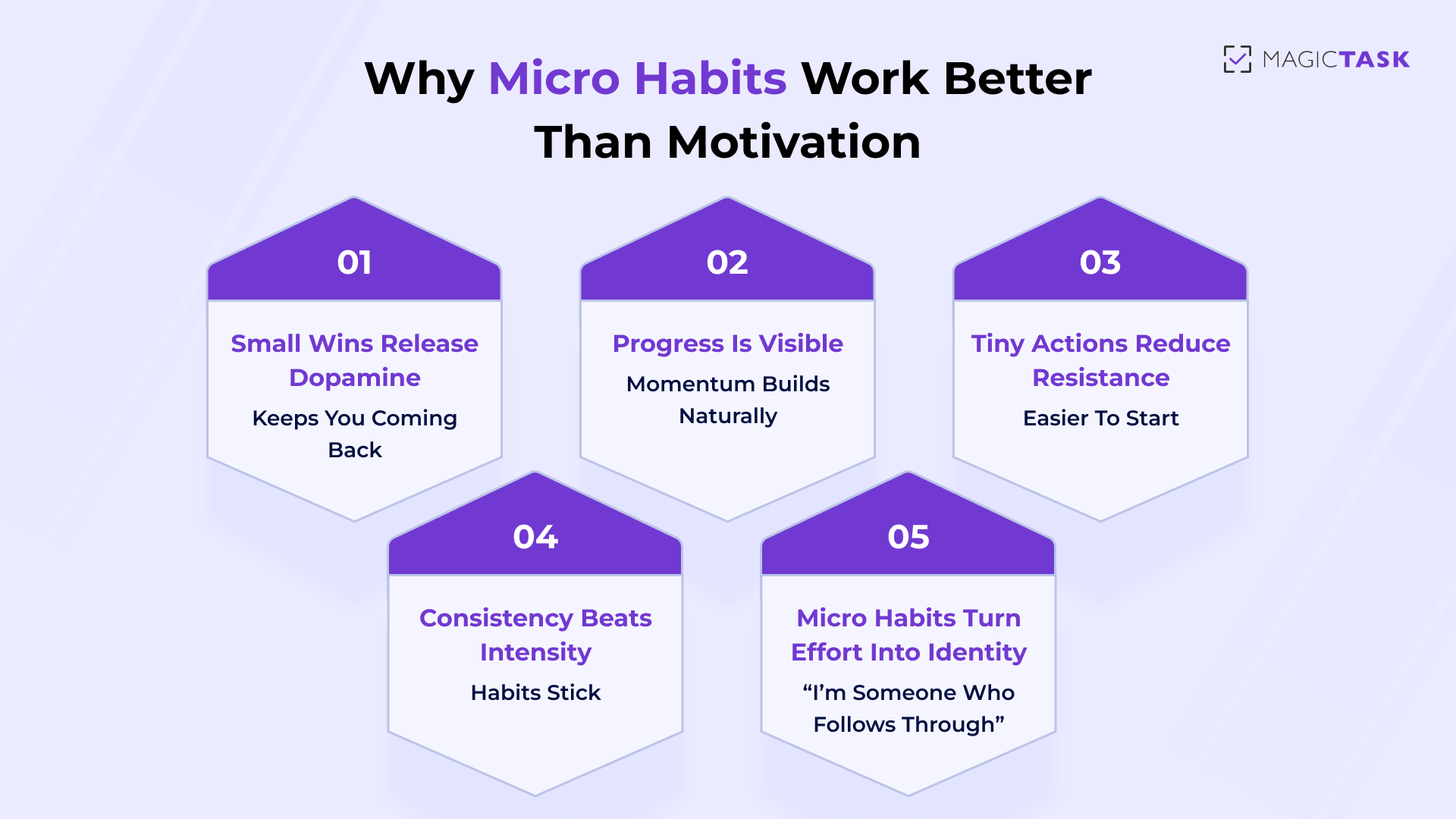
1. Small Wins Build Real Momentum
Big goals might inspire you, but it’s the small wins that keep you going. Every time you complete a tiny task, like sending one email, doing ten push-ups, or reading a single page, your brain gets a hit of dopamine. That chemical reward tells your brain, “Hey, this feels good, let’s do it again.”
Psychologists call this the progress principle, the idea that people feel the most motivated when they can see tangible progress, no matter how small. The real secret to long-term success isn’t intensity; it’s consistency fueled by visible wins.
You can start building momentum right away by:
- Breaking big goals into daily actions: Replace “get fit” with “walk for 10 minutes.”
- Tracking your completions: Whether on paper or in an app, seeing streaks form matters.
- Celebrating micro milestones: Finishing one part of a project? Acknowledge it and reward it with a small treat for yourself.
- Ending the day with proof of progress: Write down three things you actually completed without focusing on what’s left undone.
Momentum doesn’t come from doing everything at once. It comes from doing something again and again until it becomes who you are.
2. Micro Habits Reduce Overwhelm
You know that feeling when your goals feel too big to even start? That’s your brain trying to protect you from something it sees as overwhelming. It’s why “write a book,” “get fit,” or “start a business” sound inspiring at first, but quickly become intimidating.
Here’s a simple exercise:
Tomorrow morning, instead of telling yourself you’ll “go for a 5K run,” try this — just put on your shoes and step outside. Don’t promise yourself the run. Just the shoes. Just the door.
Sounds small? That’s the point. Once you’re out there, momentum does the rest. You might walk a block, maybe jog a little and suddenly, you’ve already started. That tiny moment of action rewires your brain to associate starting with success, not fear.
That’s how microhabits work. They shrink resistance down to a single, easy step, and once you start, consistency naturally follows.
3. Consistency Beats Intensity
James Clear, author of Atomic Habits, said it best: “You do not rise to the level of your goals. You fall to the level of your systems.”
That single line explains why most people never reach their big goals. Ambition sets the direction, but systems keep you moving. Consistency, not intensity, is what builds real progress. It’s not about how hard you work on your best days, but how reliably you show up on the average ones.
Anyone can crush one productive day. But the people who actually hit their goals are the ones who keep going when motivation fades. They’ve built a rhythm around small, repeatable actions that eventually compound into something big.
As Muhammad Ali says, "start counting when it hurts". The real work and progress begin when things get difficult, and those are the repetitions that truly count towards making you a champion or achieving your goal.
Here’s what that looks like in practice:
- Big effort burns fast: You go all in for a week, then burn out because it’s not sustainable.
- Small effort compounds: You commit to 10 focused minutes a day, and that turns into hours of progress over time.
- Consistency builds identity: When you show up every day, even for small wins, your brain starts to believe “I’m someone who follows through.”
- Momentum multiplies: Each small win creates confidence and makes the next step easier to take.
In the end, it’s about creating a system that makes showing up effortless.
Setting Up Micro Habits in MagicTask
So how do you take all this and actually apply it to your daily life?
MagicTask turns the science of micro habits into something you can see, track, and feel rewarded for every single day. Instead of relying on willpower, you build momentum through small, visible progress.
Let’s look at how you can set up micro habits inside MagicTask and turn your daily routine into a system that practically runs itself.
1. Create Your Micro Habit Board
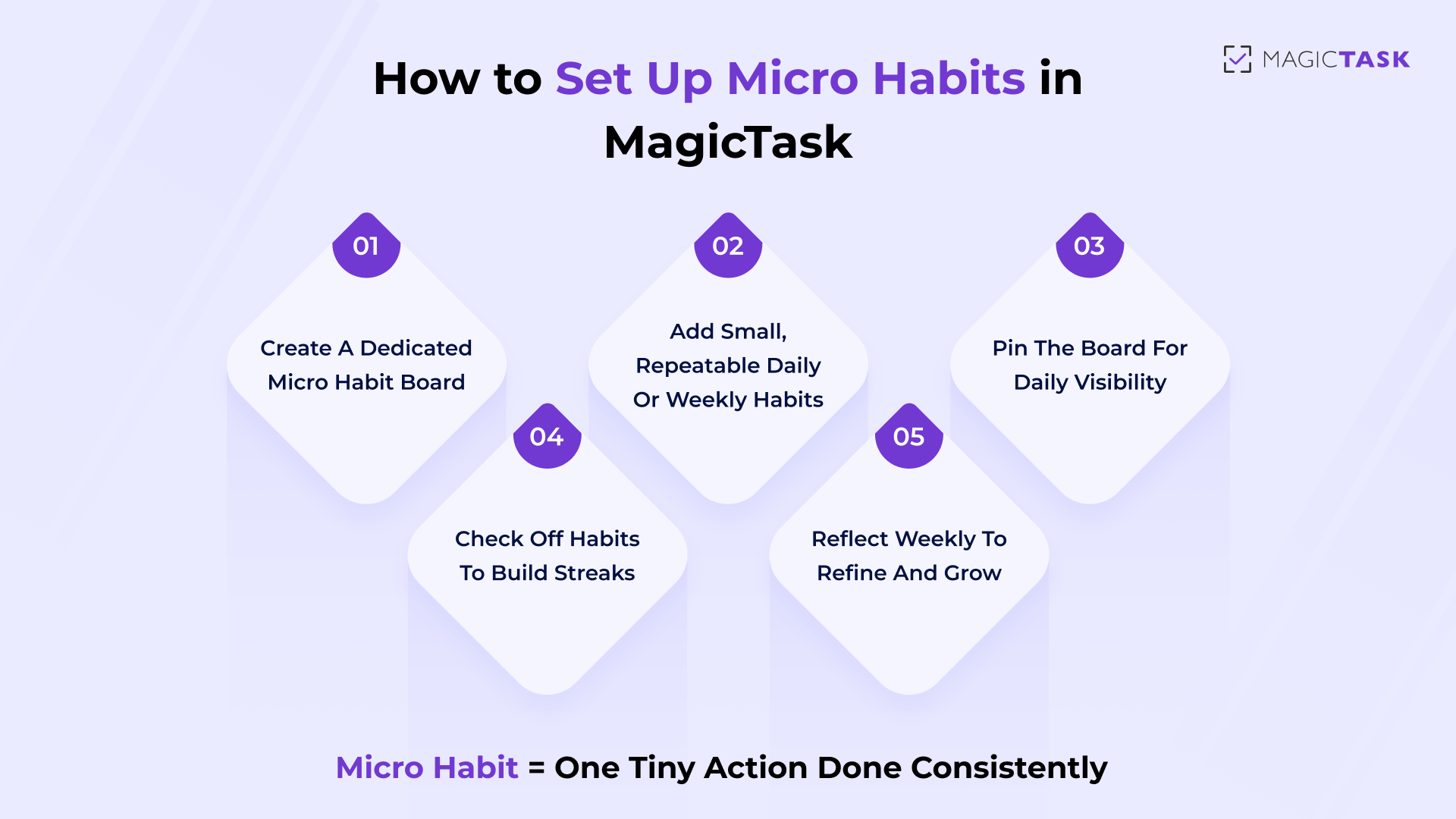
Start by creating a dedicated Micro Habit Board inside MagicTask, a space just for small, repeatable actions that move you forward every day. Think of it as your personal training ground for consistency.
Here’s how it works:
- List your recurring habits: Add daily or weekly actions.
- Keep it visible: Pin the board to your dashboard so it’s the first thing you see each morning.
- Mark progress daily: Check off each habit as you complete it. The visual feedback keeps your streak alive.
- Reflect weekly: Review what stuck and what slipped to fine-tune your habits.
Over time, this board becomes a visual record of your consistency. Each checkmark tells a story of small wins stacking up, day after day, until progress starts to feel automatic.
2. Size Your Habits Smartly
One reason habits fail is that they start too big. You don’t need an hour-long workout or a full chapter written every morning; you just need a realistic starting point. That’s where task sizing comes in.
MagicTask uses a simple sizing system — S, M, L, XL — to help you match your effort to your energy. When you size habits correctly, you remove the guilt of “not doing enough” and focus on doing what’s sustainable.
Here’s how to size your habits effectively:
| Size | Effort Level | Example Habit |
|---|---|---|
| S | Takes 2–5 minutes | Stretch for 3 minutes or drink a glass of water before coffee |
| M | Takes 10–20 minutes | Read 10 pages or go for a short walk |
| L | Takes 30–45 minutes | Journal deeply or complete a full workout |
| XL | Takes 1 hour+ | Work on a side project or skill practice session |
Start small and scale up as your consistency builds. Progress is about how often you show up.
3. Track Progress and Build Streaks
Each completed habit, each checked task, adds a small piece to a much bigger picture of growth.
Inside MagicTask, every time you complete a habit, you earn XP and keep your streak alive. That daily streak rewires your brain to want to stay consistent. The more you see your progress build, the less likely you are to break the chain.
To make this work:
- Check in daily: End your day by marking what you completed. It takes 2 minutes, but reinforces the loop.
- Celebrate streaks: A 5-day streak feels great. A 15-day streak feels unstoppable.
- Review weekly: Look at your XP and completed tasks to see how small actions are compounding into real progress.
Consistency becomes its own reward when progress is visible. What starts as checking boxes turns into building momentum, and eventually, a habit you don’t want to break.
Turn Daily Effort into Achieving Long-Term Results
Every big goal is just a collection of small, consistent actions, stacked day after day. The problem is, most people focus only on the end result and lose steam before they get there. The secret lies in connecting those everyday habits to something bigger.
Start by breaking your goals into milestones, and then turn those milestones into daily actions. For example:
“Write 10 minutes daily” → “Publish weekly” → “Grow audience.”
This laddered approach helps you see how today’s small effort contributes to tomorrow’s bigger achievement. Inside MagicTask, you can visualize this process using tags or quests, grouping related habits and milestones under one long-term mission.
Over time, these micro actions create a compounding effect. Each completed task is momentum toward the bigger picture you’re building.
Staying Consistent Through Gamification
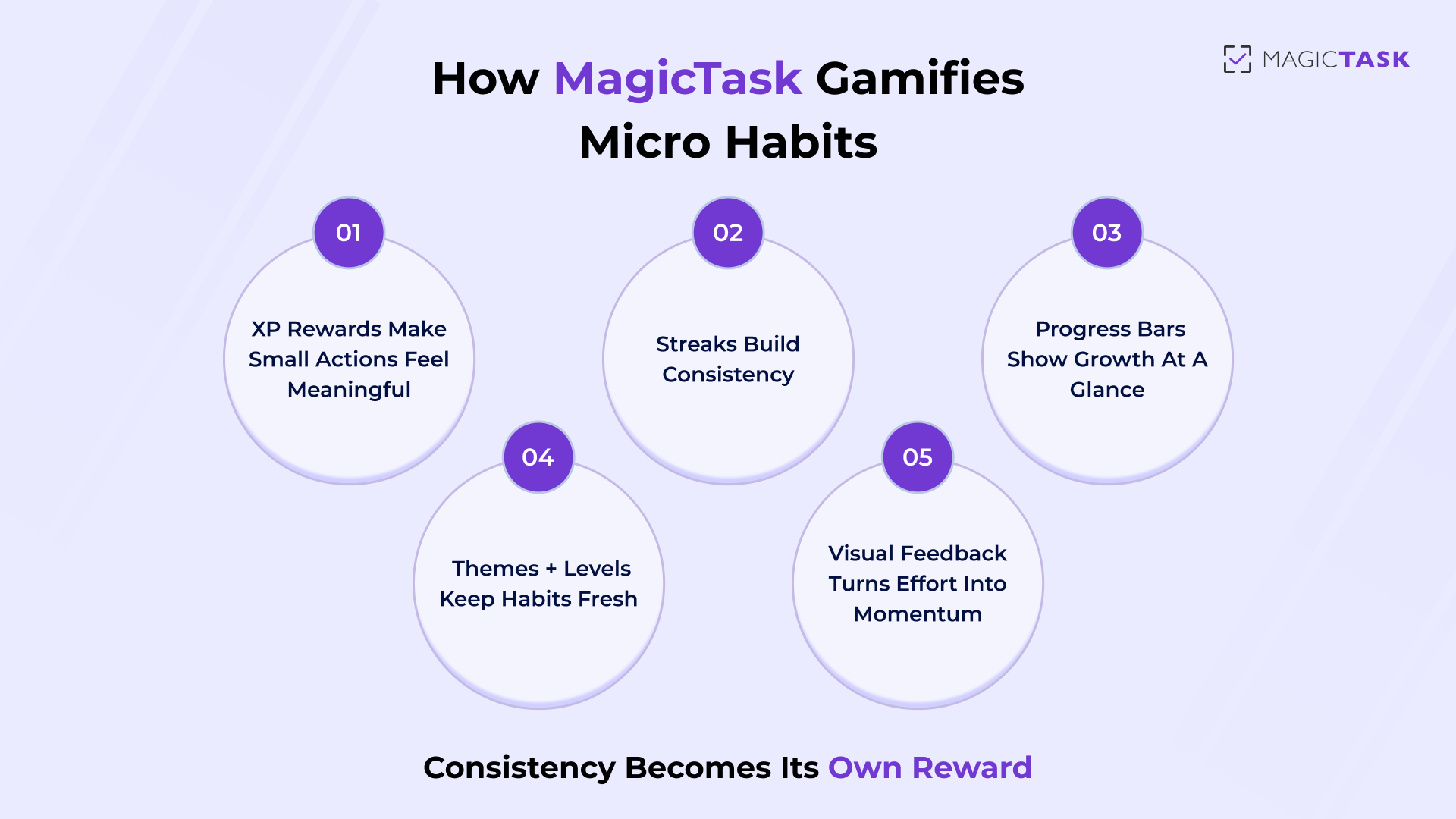
Gamification keeps habits alive long after motivation fades. It transforms routine actions into rewarding experiences. Each checkmark, streak, or level-up becomes proof of progress. With MagicTask, every completed task adds a spark of achievement through XP, streaks, and visual feedback.
This creates a powerful loop: you act, you get rewarded, and you naturally want to act again. That’s the secret behind lasting consistency. Your brain begins to associate progress with enjoyment instead of effort.
Celebrate Daily Wins with XP and Visual Progress
Small wins deserve recognition. When you earn XP or see your progress bar climb, your brain releases dopamine, the “feel-good” chemical tied to motivation. These micro-rewards are what keep you showing up every day, even when energy dips.
- XP: Reinforces that effort pays off.
- Progress bars: Offer visual satisfaction of growth.
- Themes and levels: Keep things fresh and rewarding.
Each visual cue reminds you that consistency matters more than perfection. Over time, this turns effort into habit, and habit into growth.
Stay Accountable with Weekly Habit Challenges
Accountability keeps momentum alive. MagicTask helps you set weekly habit challenges and small goals that stretch your limits just enough to keep things interesting. These challenges prevent stagnation by giving your progress a rhythm: every week brings a fresh start, new points to earn, and streaks to maintain.
By reviewing your results at the end of the week, you build a clear sense of accomplishment. Reflection becomes a built-in motivator as you see how much you completed. And when consistency feels rewarding, showing up becomes second nature.
Conclusion
Every big win starts with one small, consistent step. The difference between people who dream and people who achieve isn’t motivation; it’s momentum.
MagicTask helps you build that momentum in the most natural way possible. It turns those small, repeatable steps into something you actually look forward to. Each habit earns points, builds streaks, and shows visible progress, so your growth feels real.
Your goals don’t have to stay “someday” plans. They can start today, with one micro habit, one task, one win at a time.
Create your first Micro Habit Quest in MagicTask and start leveling up your goals today.
Similar Blogs
Why Most Productivity Systems Fail After Setup and How to Make Them Stick
Most productivity systems feel incredible at the beginning. You block off an afternoon. You organ
The Fresh Start Effect: Why Starting Small Helps You Build Better Habits
Have you ever felt a sudden urge to get your life together just because it was a Monday? Or the f
How to Use Leaderboards to Improve Team Performance
I’ve worked with enough teams to notice a pattern. People are doing great work, deadlines are met
FAQS?Have questions? Look here
Micro habits are small, low-effort actions that take just a few minutes to complete. They work because they reduce resistance, build consistency, and create momentum through repeated small wins.
Big goals are achieved by breaking them into small, daily actions. Micro habits compound over time, turning consistent effort into meaningful progress without relying on motivation or willpower.
Motivation fluctuates, but habits don’t rely on emotion. Micro habits are action-based systems that keep you moving forward even on low-energy days, making them more sustainable long term.
A micro habit can take anywhere from 2 to 20 minutes. The key is choosing an action small enough to complete consistently, even on busy or unmotivated days.
Start by choosing one small action tied to a larger goal. Make it easy, specific, and repeatable, then track it daily to build consistency and momentum over time.
MagicTask helps users track daily micro habits, build streaks, earn XP, and visualize progress. Its gamified system reinforces consistency and makes habit tracking more engaging.
Habit streaks track how many consecutive days you complete a habit. They matter because visual progress and streaks motivate consistency and reduce the likelihood of skipping habits.
Gamification uses rewards like XP, progress bars, and levels to trigger dopamine responses. This makes habit completion feel rewarding and encourages users to repeat positive behaviors.
Yes. Micro habits break large, intimidating goals into manageable steps. This lowers mental resistance and makes starting easier, which helps reduce stress and overwhelm.
Results vary, but many people notice increased consistency and momentum within a few weeks. Over time, these small actions compound into noticeable progress toward larger goals.

Make Work Feel Like Play
Follow Us


