
Gamified Productivity: Supporting Mental Well-Being Without Burnout
You don’t clock out of your mind when you log into work. Your mental health walks right in with you into meetings, into deadlines, into that ever-growing task list. And yet, most productivity systems behave as if none of that exists. They treat people like machines. Just input, output, repeat. So what happens next? Output goes up. Expectations quietly climb. And somewhere along the way, the human side of work gets pushed aside. And that’s affecting businesses all over the world.
According to the World Health Organization, 12 billion workdays are lost every year due to depression and anxiety, costing businesses more than US $1 trillion in lost productivity. Work has started to feel heavier than it should. This is something many people feel but don’t always say out loud.
And here’s the part we don’t talk about enough. Productivity systems often add to that weight. They focus on output but do not consider how it feels to move through the work itself and how much pressure that creates on one’s mental health.
So the question is how to make productivity feel sustainable.
Work can feel structured, manageable, and even engaging when systems support mental well-being. Gamified productivity builds on that idea. It introduces a different way to approach progress, using reinforcement and visible progress to make small steps feel meaningful and worth continuing.
Why Traditional Productivity Systems Lead to Burnout
We didn’t always think productivity systems were a problem. At one point, they actually felt like the solution that helped you make a list, set deadlines, stay disciplined, and stick to the plan. It sounds simple, and honestly, it works for a while. You feel organized, in control, maybe even a little ahead of things.
Then the list gets longer, and you see deadlines popping up one by one. You finish one thing, and instead of feeling done, your brain immediately jumps to what’s still pending. You’re wondering why this feels harder than it should. Why does getting things done feel draining?
Most productivity systems keep you going without accounting for how that feels over time. So you end up stuck in this quiet loop.
Overemphasis On Output and Deadlines
Do you know the feeling when you finish something and instead of feeling relieved, your mind immediately jumps to what’s next?
You close one task, and before you even register that it’s done, you’re already thinking about the next deadline, the next item, the next thing waiting for you.
That’s how most productivity systems are set up. They focus heavily on output.
- How much did you get done?
- How quickly did you do it?
- What’s still pending?
It creates this quiet pressure to keep moving, even when you’ve already done enough for the day. It feels like there’s no real finish line.
The pressure builds on:
- Output focus: Your day starts getting measured by how much you completed, not how manageable or sustainable it felt.
- Deadline pressure: Tasks begin to feel urgent all the time, even when they don’t actually need to be.
- Sense of completion: Finishing something doesn’t feel satisfying because your attention shifts immediately to what’s next.
When everything is about keeping up, it becomes hard to feel like you’re actually making progress. Instead, it starts to feel like you’re constantly catching up.
Long Task Lists Create Overwhelm
Do you know that moment when you open your task list and just stare at it for a few seconds? Everything is written down. It’s all organized. And somehow, it still feels like too much.
Nothing has even started yet, but you already feel a bit drained just looking at it. Long lists tend to do that to people. In fact, three in five people say they’ve taken on more tasks than they can realistically complete
When too many tasks sit in front of you at once, your brain doesn’t see structure. It sees pressure and starts trying to process everything at the same time. So instead of starting, you hesitate. And before you know it, you’ve spent more time looking at the work than actually doing it.
That results in:
- Task overload: Seeing too many items at once makes the work feel bigger than it actually is.
- Mental clutter: Your attention keeps jumping between tasks instead of settling on one.
- Slow starts: When everything feels important, it becomes harder to begin anything.
What’s meant to help you move forward ends up creating friction. And the more often that happens, the easier it becomes to avoid the list altogether, even when you know exactly what needs to get done.
Lack of Positive Feedback or Reinforcement
Have you ever finished a task… and then just moved on like it didn’t really count?
You tick it off, maybe feel a brief second of relief, and then your attention goes straight back to everything that’s still left. No pause. No real sense of “I did something.”
That’s how most productivity systems are set up. They’re great at showing you what’s pending. They’re not great at showing you what you’ve already done. So even when you’re making progress, it doesn’t always feel like it.
Over time, that starts to wear you down. When effort doesn’t get acknowledged, your brain doesn’t get that small reward signal that says, “this is working.” And without that, it becomes harder to stay engaged.
- Invisible progress: Completed tasks fade quickly as your focus shifts to what’s still pending.
- No reward signal: Your brain doesn’t register progress in a meaningful way, so motivation starts to drop.
- Emotional disconnect: Work begins to feel repetitive because nothing feels finished or recognized.
You’re still doing the work. You’re still moving forward. But it doesn’t feel satisfying.
Systems Rely Heavily on Discipline and Pressure
Every night I end up saying, “I just need to be more disciplined”. But the minute I wake up the next morning, I fall back on when things start slipping. If we’re not keeping up, the assumption is to try harder. And to be fair, discipline does help getting things started. It helps you show up even when you don’t feel like it.
But most productivity systems don’t just rely on discipline. They lean on it heavily.
They assume you’ll have the same level of focus every day. The same energy. The same ability to push through, no matter what else is going on. Real life doesn’t work like that.
Some days feel lighter. Some days feel heavier. Focus comes and goes. Energy shifts. And when a system doesn’t account for that, it starts to feel rigid.
You end up with:
- High expectations: You feel like you should perform the same way every day, regardless of how you feel.
- Low flexibility: The system doesn’t adjust when your energy, workload, or mental state changes.
- Pressure build-up: Falling behind starts to feel like failure instead of something normal.
So what do most people do? They double down on the same system that’s already draining them.
And that’s where it starts to backfire. Instead of supporting your work, the system turns into something you’re constantly trying to keep up with.
How Gamification Can Support Mental Well-Being
Traditional productivity systems often make work feel like something you have to push through. Gamification shifts that experience in a subtle but powerful way.
Instead of looking at everything you need to do and feeling pressure, your focus narrows down to one simple question.
What’s the next small step I can complete?
That shift reduces resistance. Work starts to feel more approachable, and progress becomes easier to build.
Gamification is not about turning work into a game for the sake of it. It’s about adding structure that helps your brain stay engaged. When progress is visible and actions feel achievable, you don’t have to rely on willpower alone.
- Smaller actions: Tasks are broken into steps that feel easier to begin and complete.
- Visible progress: You can clearly see movement instead of wondering if you’re getting anywhere.
- Positive reinforcement: Completing something gives you a sense of progress that feels real.
- Lower mental friction: Starting feels lighter, which makes it easier to continue.
When work feels manageable, consistency becomes natural instead of forced.
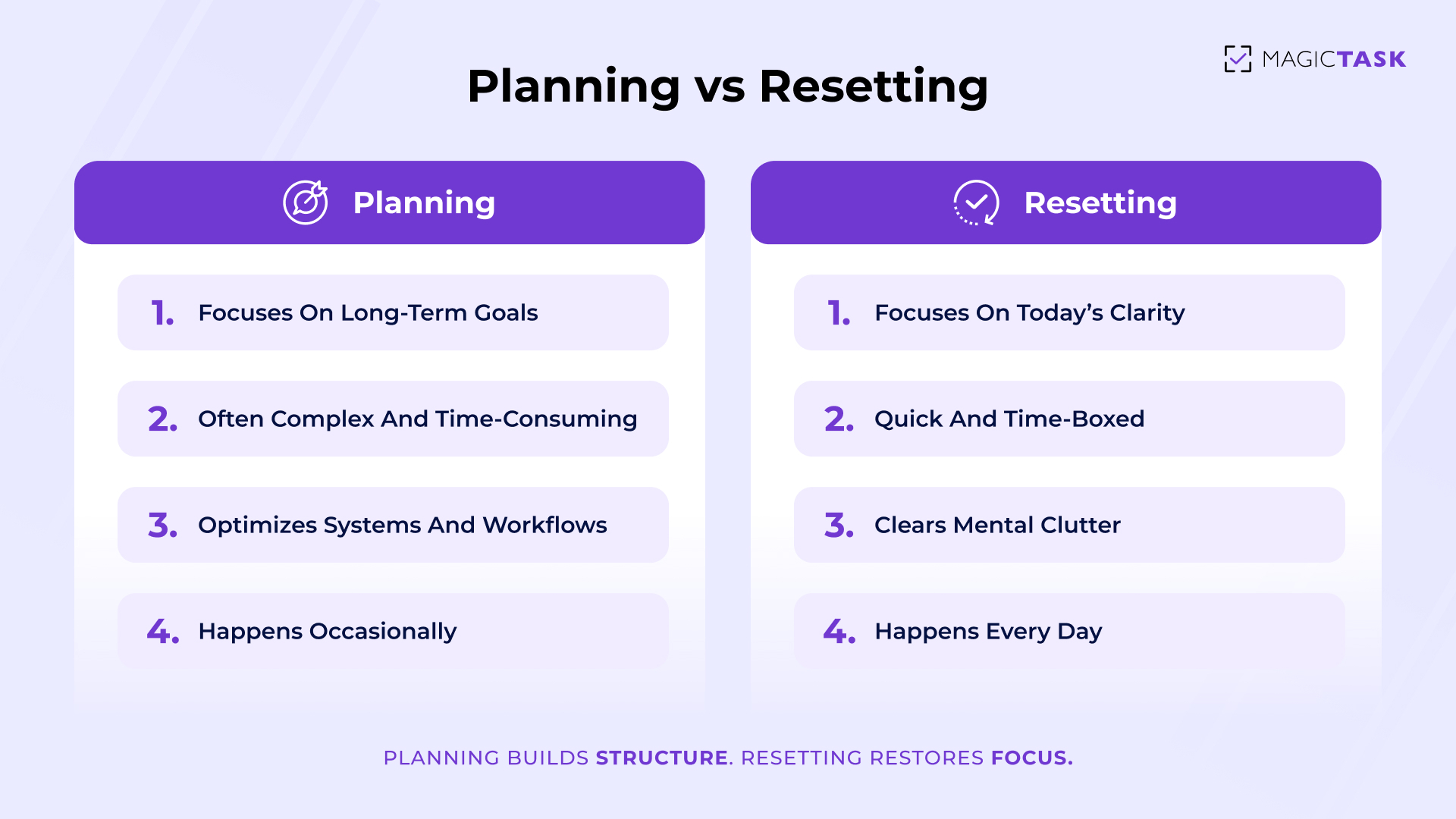
A Simple Daily Reset You Can Try
Start your day without looking at your full task list. Pick just three small tasks that you know you can complete without stress. Finish those first before moving on to anything else.
This creates early momentum. Instead of starting your day feeling behind, you start with progress. That shift alone can change how the rest of your day unfolds.
The Difference Between Healthy and Unhealthy Gamification
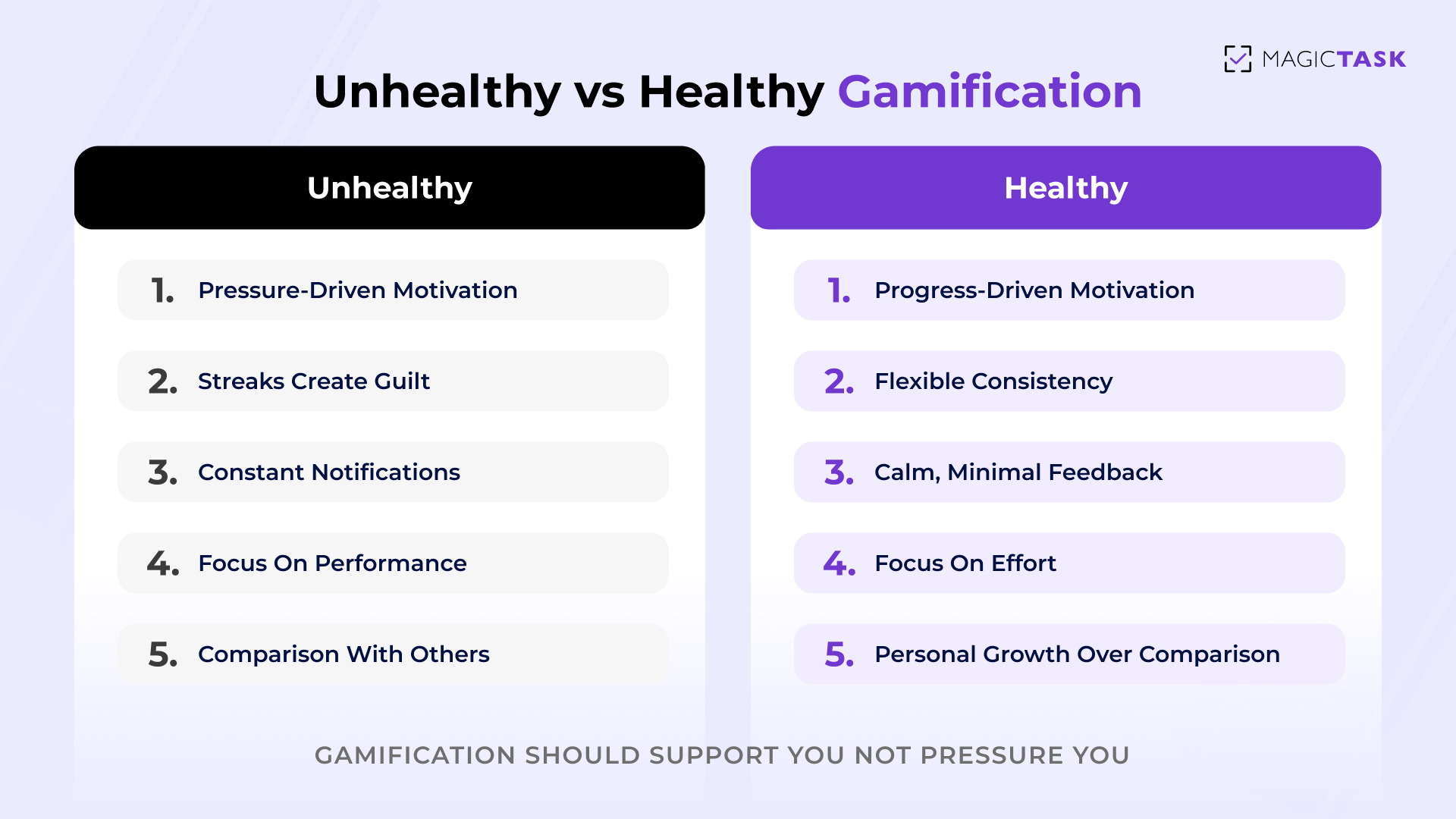
Gamification can either support you or add more pressure. The difference lies in how it’s designed.
Some systems use gamification in a way that increases stress. They push streaks, constant notifications, and comparison with others. It may look engaging, but it often creates anxiety.
| Aspect | Unhealthy Gamification | Healthy Gamification |
|---|---|---|
| Motivation style | Relies on pressure and urgency to push action | Encourages progress through positive reinforcement |
| Streaks | Creates guilt when you miss a day | Allows breaks without losing your sense of progress |
| Focus | Performance and outcomes | Effort and consistency |
| Comparison | Encourages competition with others | Keeps attention on personal progress |
| Notifications | Uses frequent alerts that interrupt and overwhelm | Provides feedback without constant interruption |
| Progress tracking | Highlights what’s missing or incomplete | Shows what has been achieved clearly |
| Emotional impact | Increases stress and pressure over time | Supports a calmer, more sustainable workflow |
| Flexibility | Rigid structure with little room for off days | Adapts to changing energy and workload |
Designing Systems That Balance Productivity and Well-Being
Once you start looking at productivity through this lens, it becomes clear that the system matters more than the effort.
You don’t need to do less work. You need a system that makes it easier to stay consistent without feeling drained.
That starts with how your work is structured.
Break Work Into Small, Achievable Steps
Large tasks often create hesitation. Smaller steps create movement.
When work is broken down properly, it becomes easier to start and easier to continue.
Take something simple like “finish a presentation.”
That sounds straightforward, but when you actually sit down to do it, it feels like a lot. Where do you even begin?
Now compare that to breaking it down:
- Open slides and write the title
- Outline the main points
- Add content to the first slide
Suddenly, starting feels easier. You’re not trying to “finish everything.” You’re just taking the first step.
Reward Effort
Most systems only acknowledge finished work. That creates pressure to perform at a high level all the time.
Effort deserves recognition too.
- Effort recognition: Progress counts even if the task is not fully complete.
- Consistency support: Regular small actions are valued more than occasional bursts.
- Reduced pressure: Work feels lighter when perfection is not the only measure.
This helps you stay engaged even on days when energy is low.
Make progress visible without pressure
Seeing progress helps you stay motivated. Feeling pressured by it does the opposite.
The goal is to make progress clear without turning it into something stressful.
- Visible tracking: Completed work remains visible so you can see what you’ve done.
- Gentle feedback: Progress is shown without creating urgency.
- Momentum awareness: You can see consistency building over time.
This creates encouragement instead of pressure.
Allow Flexibility for Real-life Energy Levels
Energy is not the same every day. Some days feel focused. Some days feel slower.
A system that works with you adapts to that.
- Flexible pacing: You can adjust your workload based on your energy.
- No penalty for breaks: Missing a day doesn’t undo your progress.
- Sustainable rhythm: Work fits into your life instead of taking it over.
This is what makes productivity feel sustainable over time.
A Simple End-of-day Practice That Changes Everything
Before you end your day, take two minutes to write down three things you completed. Only completed tasks. Nothing pending.
This small habit shifts your focus. Instead of ending the day thinking about what’s left, you end it seeing what you actually got done. Over time, this builds a stronger sense of progress and reduces mental fatigue.
Conclusion
Productivity should not come at the cost of mental well-being. A system that helps you get things done should also support how you feel while doing the work. When that balance is missing, even the most organized setup can start to feel exhausting over time.
Gamification offers a different approach. When used thoughtfully, it brings structure, visibility, and reinforcement into your workflow in a way that feels lighter. It helps you focus on progress instead of pressure, and consistency instead of perfection.
Over time, that changes your relationship with work. It becomes something you can stay connected to without feeling drained. You need to keep going in a way that feels sustainable.
If your current system feels overwhelming, it might be worth stepping back and asking a simple question: Does this help me move forward, or does it make the process harder than it needs to be?
Choose systems that make progress feel clear, manageable, and worth continuing.
Similar Blogs
The Dopamine Trap: Why Some Gamified Apps Fail Users (and What Actually Works)
Gamified apps promise motivation. They promise streaks, badges, XP, and momentum. At first, it fe
The Productivity Reset Ritual: A 10-Minute Daily Routine to Stay Organized and Motivated
Have you ever ended a day feeling exhausted… but not accomplished? You answered emails. You jumpe
Why Gamification Works for Productivity in Modern Workflows
Gamification is often misunderstood. For many people, it brings to mind flashy rewards or surface
FAQS?Have questions? Look here
Gamified productivity uses elements like progress tracking, small wins, and positive reinforcement to make tasks feel engaging and manageable, helping you stay consistent without relying on pressure.
Traditional systems focus heavily on output, deadlines, and long task lists, which can create constant pressure, overwhelm, and a lack of satisfaction from completed work.
Gamification improves mental well-being by reducing mental friction, making progress visible, and rewarding small actions, which helps lower stress and increase motivation.
Healthy gamification supports flexibility, effort, and progress, while unhealthy gamification relies on streak pressure, constant notifications, and comparison, which can increase stress.
Gamification breaks work into smaller, achievable steps and focuses on one action at a time, making tasks feel easier to start and complete.

Make Work Feel Like Play
Follow Us


