Top 15 Features of MagicTask V3 That Will Elevate Your Productivity Game

features of magictask v3

The pursuit of maximum productivity is a common goal in our digitally advanced day. Amid a plethora of digital solutions designed to improve productivity, MagicTask V3 stands out as a guide for individuals looking to streamline their processes. This state-of-the-art task management application offers a feature set that is both creative and user-friendly, having been developed with a thorough awareness of the nuances of productivity and collaboration.

Users now have all the tools they need to interact easily, manage tasks with unmatched accuracy, and streamline projects with MagicTask V3. The top 15 features of MagicTask V3, each created to up your productivity game, will be covered in this post along with a road map for utilizing this game-changing tool to the fullest.

Improved User Interface

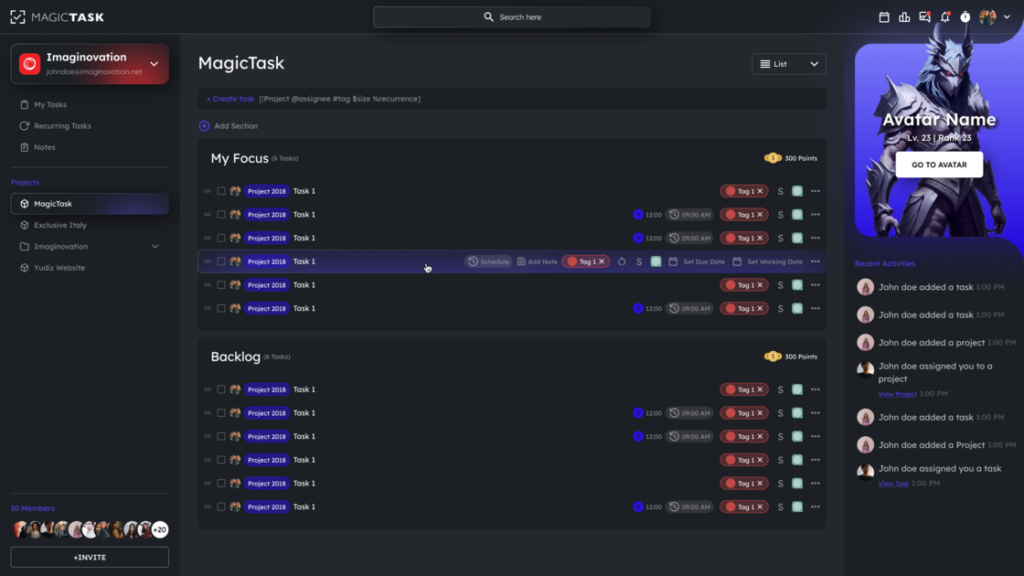
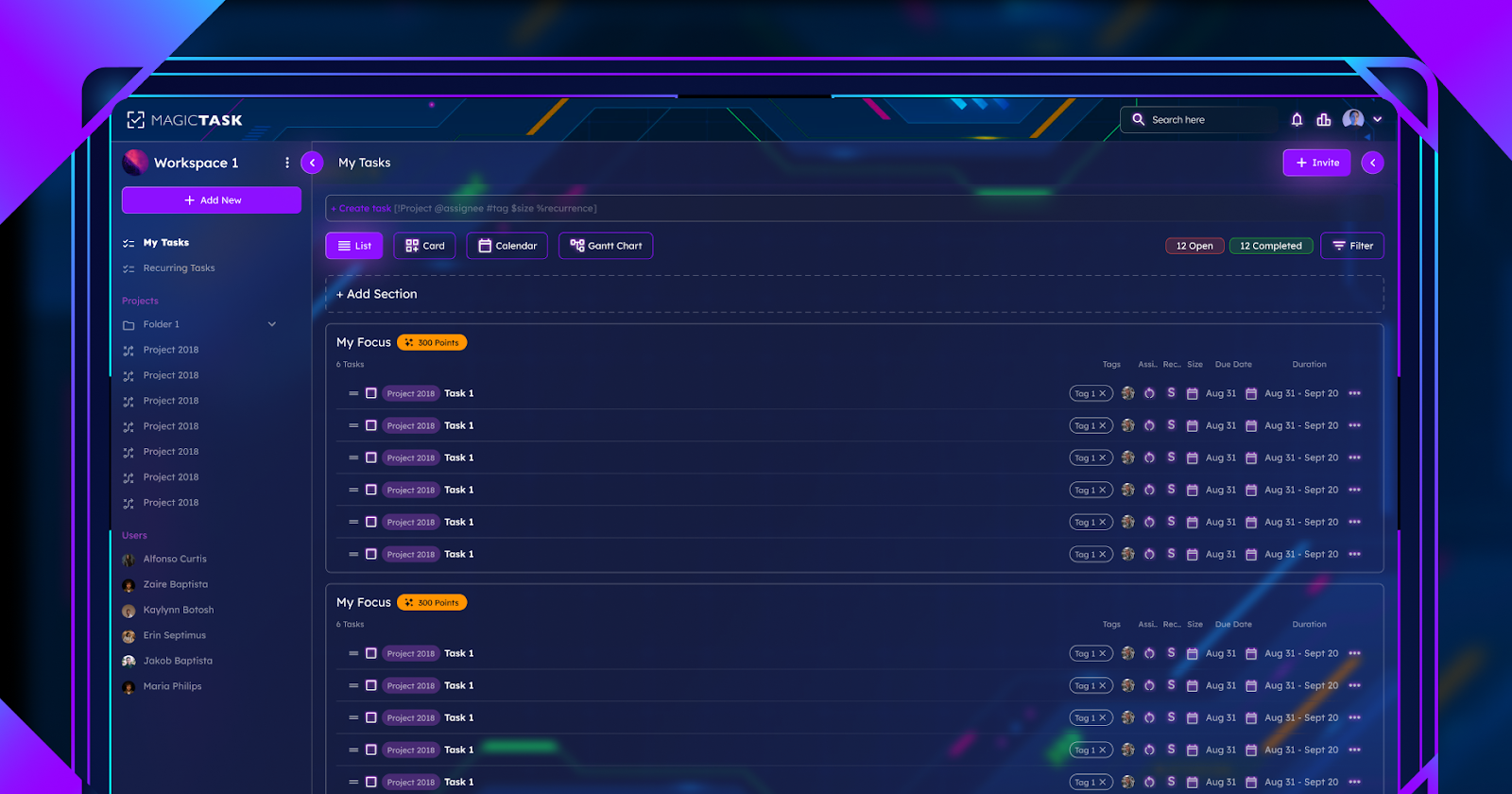
The elegant and straightforward UI of MagicTask V3 provides a clutter-free environment that prioritizes usability and functionality. Because of the careful design, users may get the functionality they require without having to deal with needless complexity. The UI emphasizes user-friendliness and minimizes the time spent learning how to use the tool, making it suitable for both novice and experienced project managers. MagicTask V3 paves the way for increased productivity by emphasizing a simplified user experience, freeing up users to concentrate more on their tasks and less on how to manage them.

Personalized Dashboards

MagicTask V3's customizable dashboards, which act as private command centers for your tasks and projects, are what give it its power. You may customize these dashboards to show you exactly what matters most to you, be it a high-level summary of project progress, thorough task lists, or approaching deadlines. Better decision-making and project management are made possible by this degree of customization, which guarantees that you always have immediate access to the data that matters most. MagicTask V3 gives users the flexibility to customize and improve these dashboards, enabling them to establish a personalized productivity hub that suits their particular workflow preferences.

Advanced Task Management

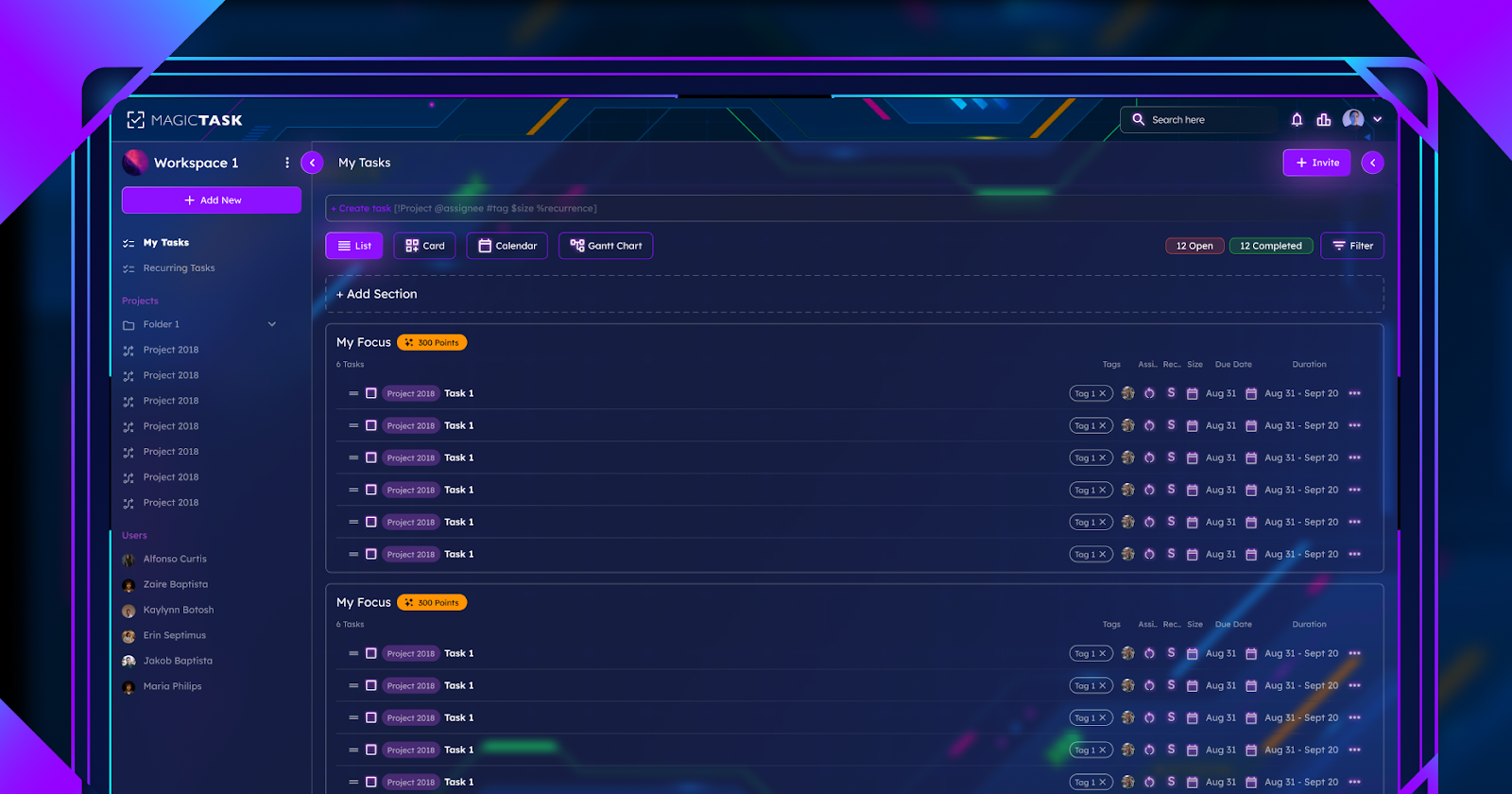
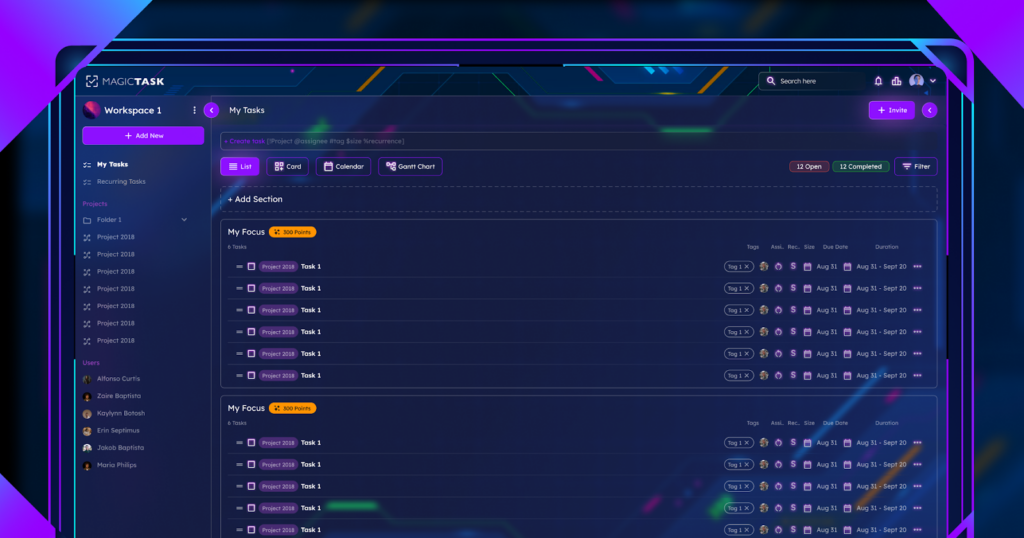
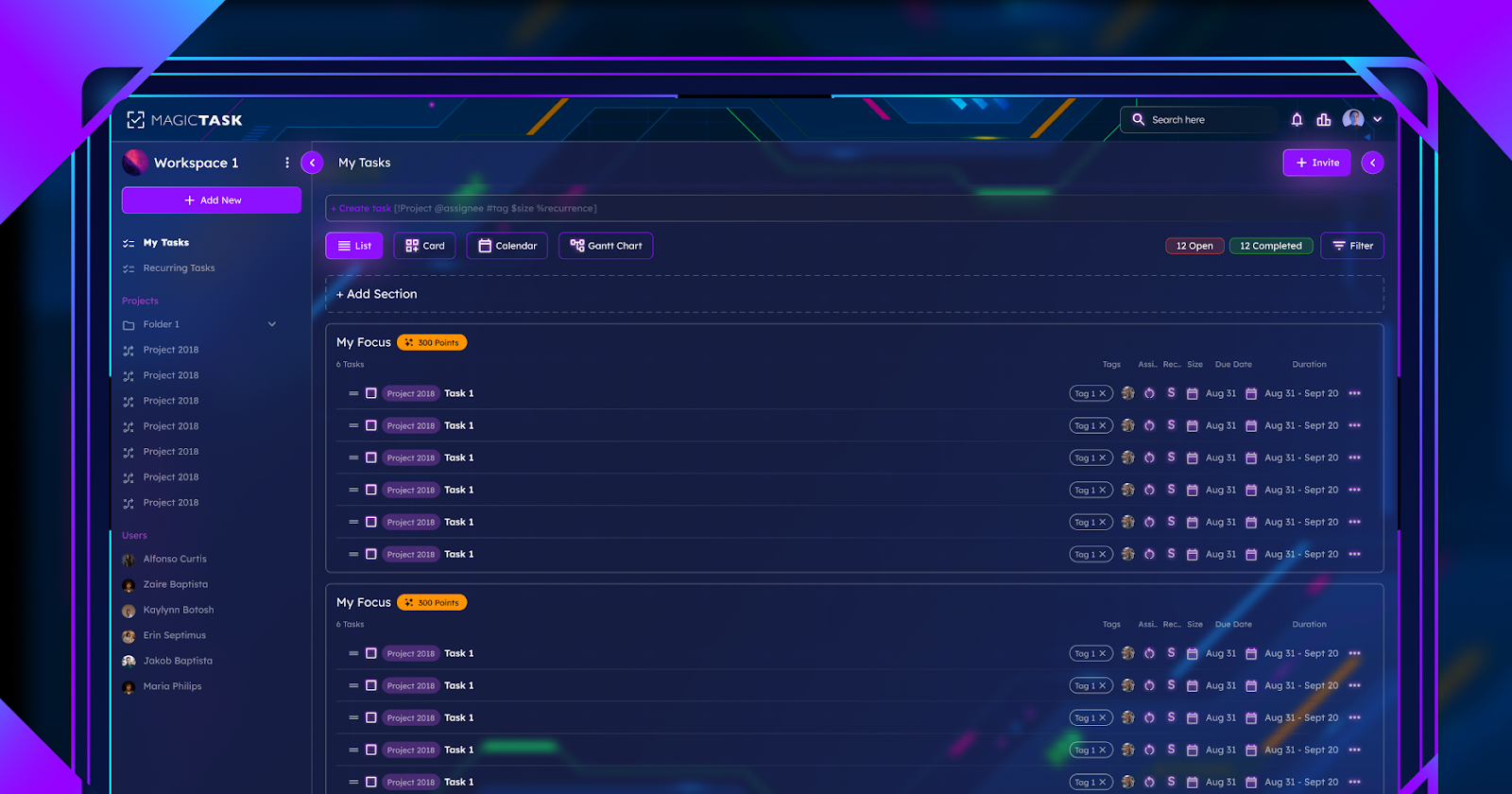
MagicTask V3 Dashboard

With a robust feature set that meets intricate and demanding project needs, MagicTask V3 excels in advanced task management. To provide a thorough understanding of each task's scope, users can construct tasks with several layers, such as subtasks, deadlines, priority levels, and attached files. This level of detail improves organization and clarity while facilitating more efficient project component tracking and administration. MagicTask V3's task management system is made to help you stay organized and in control, whether you're managing several projects at once or concentrating on a single, complex work.

Teamwork Instruments

MagicTask V3 has a strong tool suite aimed at promoting teamwork, but its main focus is effective collaboration. The platform makes sure that team members are always in sync and informed by providing real-time chat, task assignments, file sharing, and progress tracking. Regardless of geographical location, these collaboration technologies facilitate quick communication, feedback sharing, and connection by being seamlessly incorporated into the process. MagicTask V3 removes obstacles to productivity by optimizing the collaboration process, empowering teams to collaborate more effectively and accomplish their objectives as a unit.

Capabilities for Integration

The capacity to interface with other tools is essential in the networked work environment of today. In this regard, MagicTask V3 excels thanks to its broad integration capabilities, which enable it to easily interface with a variety of third-party programs and services. MagicTask V3 serves as a single hub, bringing together all of your necessary tools, including file storage, chat platforms, email, and calendar apps. Because of this compatibility, you use fewer programs and may streamline your workflow, saving you precious time.

Monitoring Time

time management

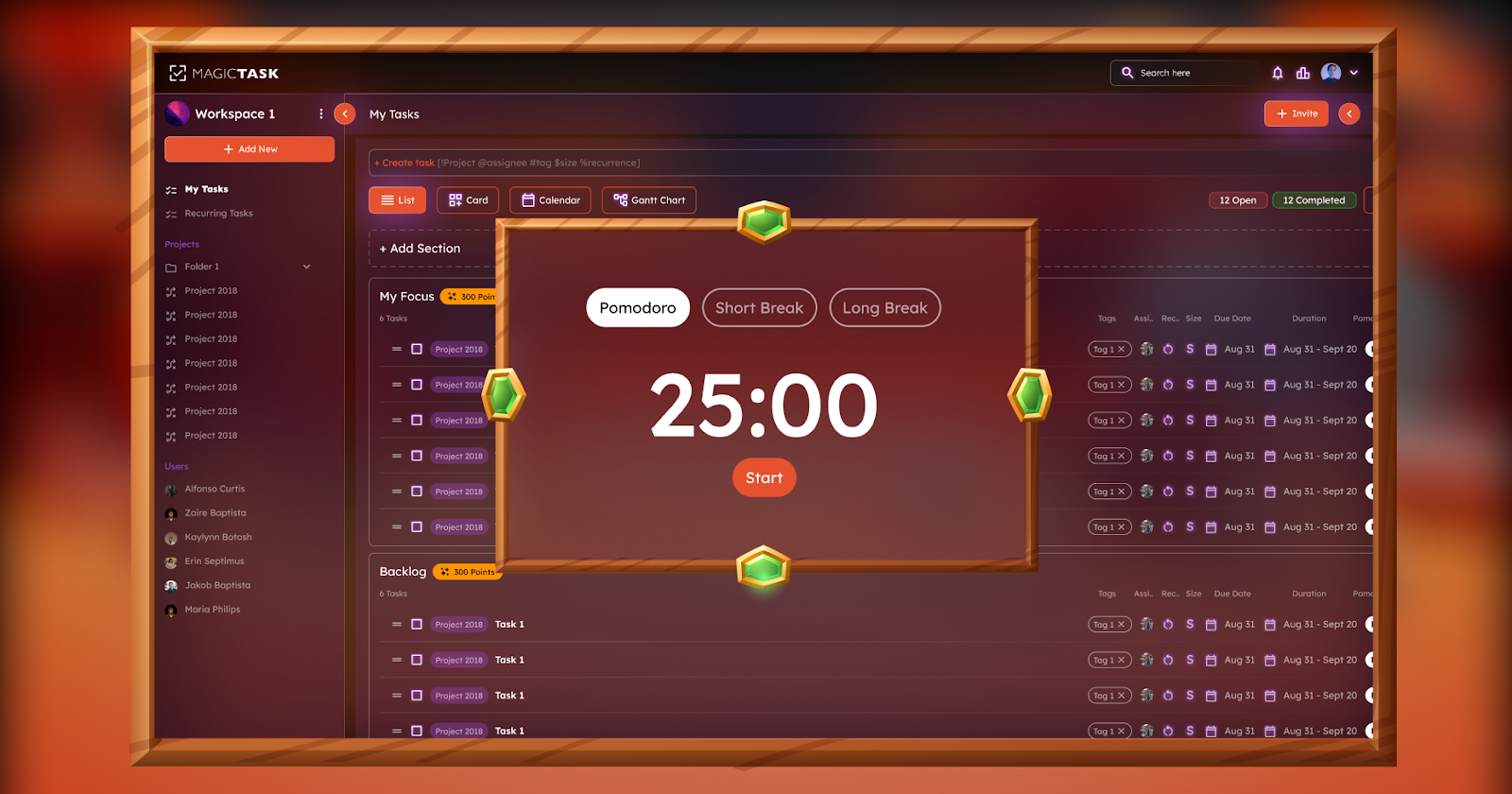
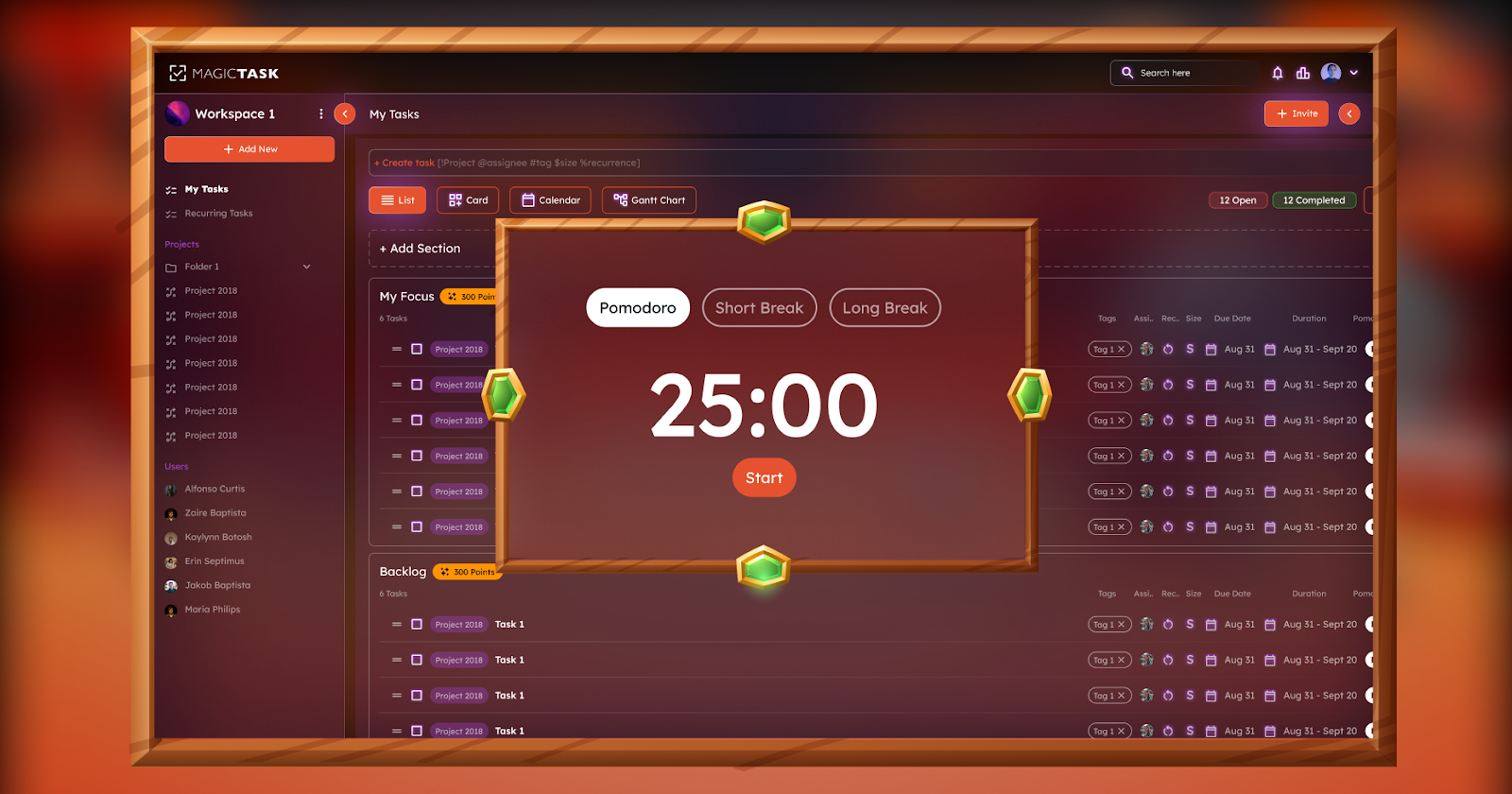
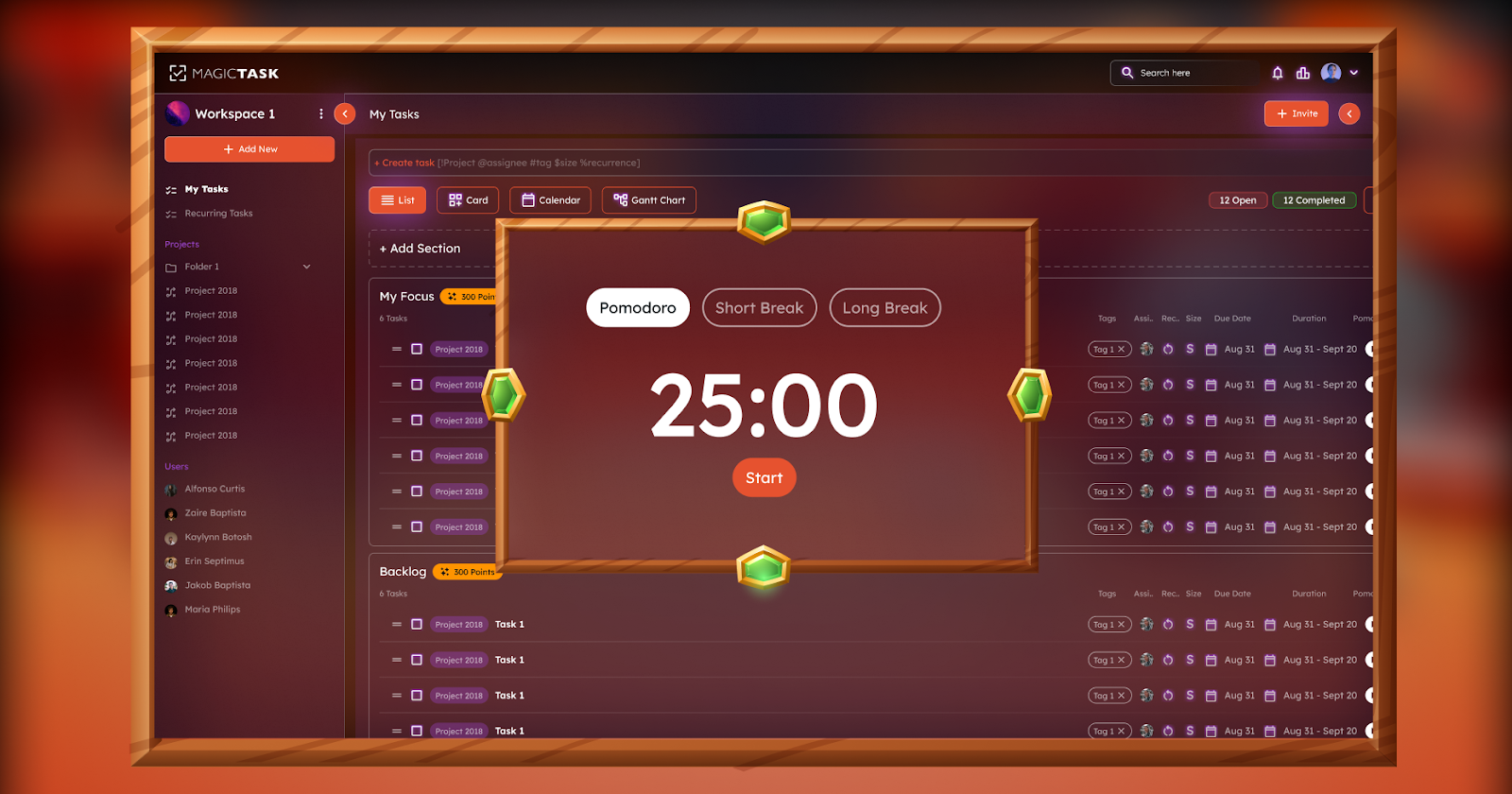
When it comes to increasing efficiency, MagicTask V3's time monitoring tool is revolutionary. This tool gives users important insights into work habits and productivity by letting them keep track of the amount of time spent on various tasks and projects. By using this data, you can make sure that deadlines are met, find areas that need improvement, and allocate resources more wisely. The time tracking features (such as pomodoro) in MagicTask V3 are made to help you achieve your objectives, whether you're looking to bill clients for your services or are just trying to organize your day better.

Intelligent Alerts

It's never been simpler to keep on top of your assignments and deadlines with MagicTask V3's smart notifications. You may customize these alerts to make sure you're always aware of critical updates, approaching due dates, and job modifications. You may customize these notifications to suit your tastes, so you'll only get pertinent alerts without being inundated with information. This feature is essential for maintaining your attention and organization and making sure that nothing gets missed.

Adaptability to Mobile Devices

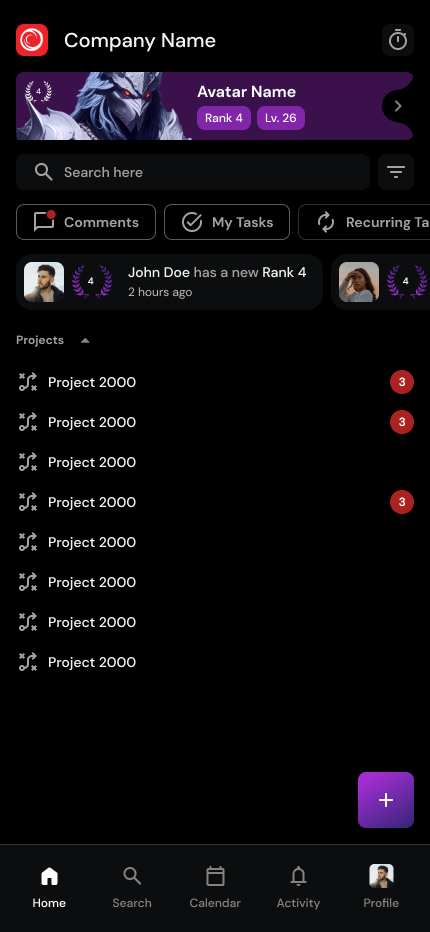
With a feature-rich mobile application that keeps you updated on tasks and projects while on the go, MagicTask V3's mobile compatibility allows you to be more productive than just on your PC. The app ensures a smooth transition between platforms by mirroring the desktop version's features. This implies that you can work with others on a team, oversee tasks, and access crucial data at any time and from any location. With the MagicTask V3 mobile app, your location will never be a hindrance to your productivity—whether you're at your desk, on the go, or commute.

Templates for Projects

The project templates in MagicTask V3 are a time-saving tool that makes setting up new projects easier. These templates let you easily create new projects with consistent formatting and organization by offering a predetermined structure for popular project kinds. Whether you're creating software, organizing an event, or starting a marketing campaign, these editable templates can be tailored to meet your unique requirements. MagicTask V3's project templates free you from having to start from scratch for every project, allowing you to concentrate on execution rather than setup.

Automation of Tasks

MagicTask V3's task automation completely transforms how you handle repetitive jobs. You may greatly minimize human labor and boost efficiency by automating repetitive tasks like creating follow-ups, changing task statuses, and issuing reminders. This feature lowers the possibility of human error while also saving time and guaranteeing that crucial tasks are regularly executed. MagicTask V3 increases overall productivity by allowing you to spend more time on strategic work through task automation.

Safety Procedures

With its strong security features, MagicTask V3 puts security first in an era where data breaches are becoming more frequent. The platform makes use of cutting-edge encryption methods, safe data storage, and frequent backups to guarantee that the project data is protected and recoverable under all circumstances. These security measures are intended to protect your data from unwanted access, giving you peace of mind and making sure your attention stays on productivity rather than possible threats.

Analytics and Reporting

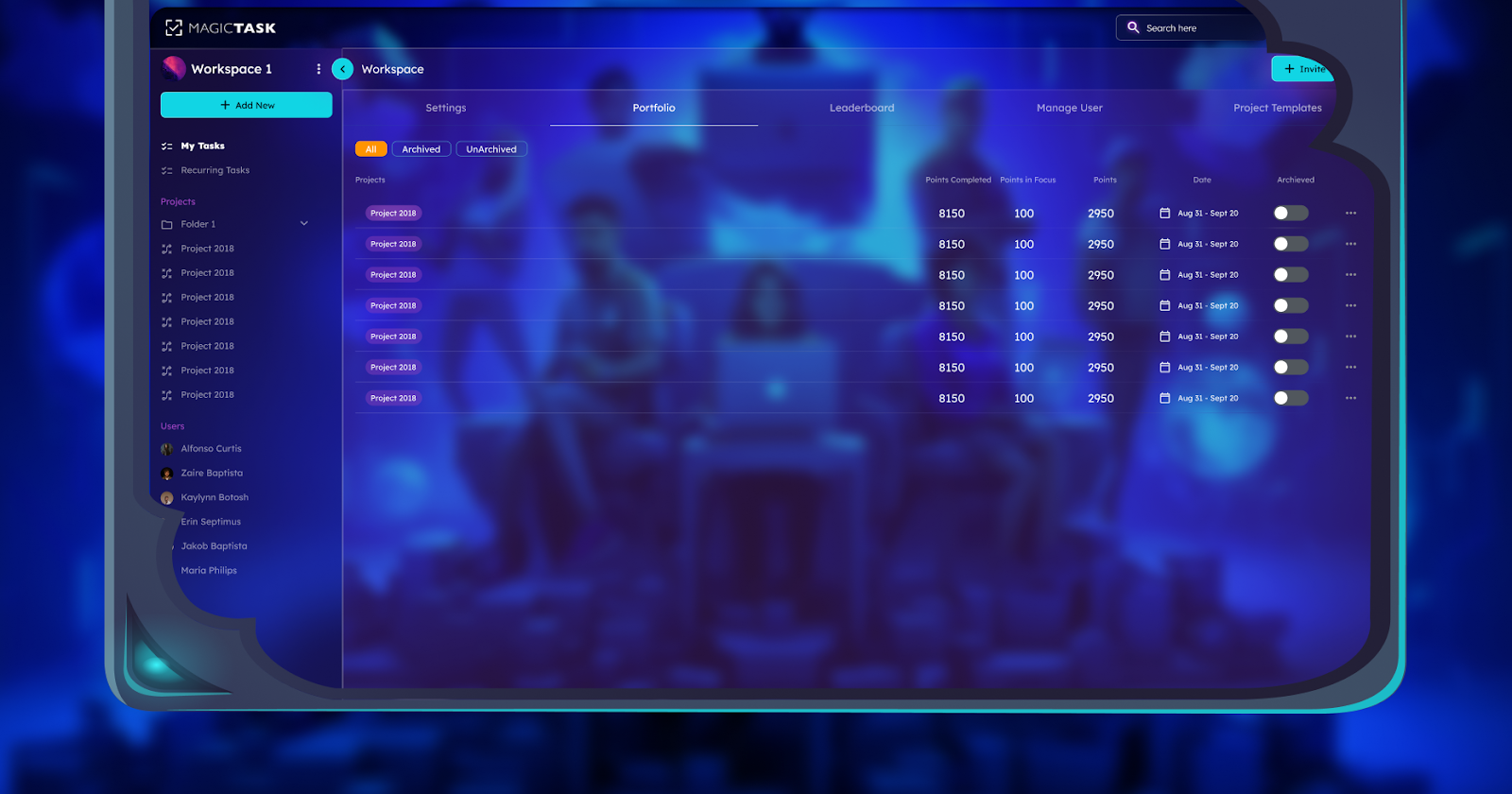
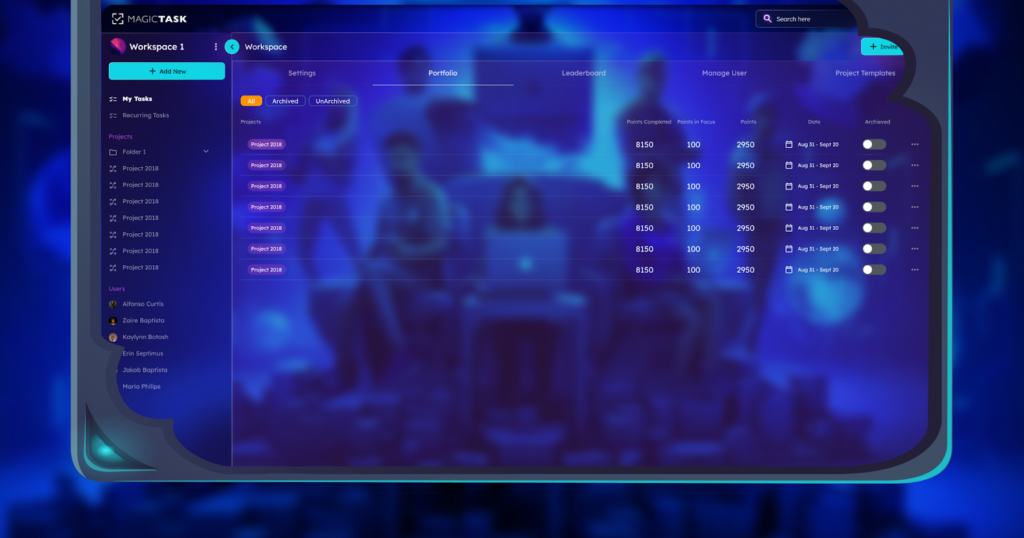
Workspace dashboard

The reporting and analytics features in MagicTask V3 provide comprehensive insights into your work and efficiency. You may analyze work trends, track progress, and keep an eye on team performance with the help of extensive reporting options. You can use these insights to find areas for development, modify strategy as necessary, and make well-informed decisions. MagicTask V3’s analytics give you the information you need to make informed decisions, whether you’re planning future efforts or evaluating the effectiveness of a finished project.

Personalised Data and Screening

MagicTask V3's custom fields and filters give you an unmatched degree of freedom over how you arrange and view your tasks. With the help of this tool, you can customize your task management system to meet your unique requirements and efficiently organize, prioritize, and classify your jobs. Custom fields and filters provide you the flexibility to tailor MagicTask V3 to your workflow, whether you need to track particular metrics, highlight particular task kinds, or develop unique processes.

Tracking Goals

A key component of MagicTask V3 is goal monitoring, which helps to maintain project alignment with goals. Setting and adhering to goals can help you make sure that each job and project advances your main objectives. This tool encourages teams by setting clear expectations for achievement and aids in keeping you focused on your priorities. The goal-tracking feature in MagicTask V3 allows you to manage your tasks with a distinct feeling of purpose and direction.

Disconnected Mode

MagicTask V3's offline mode makes sure you can continue working even when there's no internet connection. With the help of this function, you may access and work on your tasks while offline, and when you come back online, the changes will sync instantly. MagicTask V3's offline mode ensures that your work proceeds without interruption, even while you're working in remote locations or with erratic internet access. This means that connectivity problems won't ever get in the way of your productivity.

Final Words

MagicTask V3 is a gamified task management tool that adjusts to your unique requirements and workflow. MagicTask V3's robust features, which include an improved user interface and cutting-edge security measures, are intended to up your productivity game. It gives you the skills you need to succeed whether you're working with a team, managing complicated projects, or just trying to be more efficient with your everyday duties. Reach new levels of productivity by embracing MagicTask V3's revolutionary potential.

How to Stay Organized and Maximize Your Productivity with MagicTask

Maximize Your Productivity with MagicTask

Are you wondering how to Stay Organized and Maximize Your Productivity? In today's busy world, being able to manage tasks well is super important for both getting things done on your own and working well with others in a team. It's not just something good to know; it's something you really need. If everything is messy, it can make you slower, stressed, and make it tough to do things right. MagicTask tools are made to help make managing tasks easier, which can make you and your team more productive.

This article will explain why it's important to manage tasks well, show how MagicTask can bring organizations together, give some tips on how to fit it into your routine easily, and talk about why using it is so beneficial.

Understanding the Importance of Effective Task Management

Smart task management is crucial to accomplish tasks effectively. When we do not control our tasks this can be a mess. This can result in deadlines, stress, and lack of quality work, as well.

If you don't plan for a major task, you might feel really overloaded after you start the task. It's like trying to get to a place in the dark without a map. This can make you work too much and make you feel unable to concentrate. If you don't have a plan, you'll lose time and energy as you won't know where to begin from. Your stress level can increase even higher since everything is so hectic. Hence, lack of planning doesn't only worsen the situation, but also contributes to your stress levels.

Task management is not effective for businesses and people's happiness at their workplace. Employees who do not feel organized are more stressed and less content with their jobs. Who wants to be stressed out at work, right? The answer is nobody!

We all know the feeling of being lost or overwhelmed when tackling a project. But when we master our tasks, it's like having a roadmap to success. Planning the tasks, prioritizing them, and completing them on time will be a lot easier. This is another advantage that helps us to stay concentrated and reduces stress.

When we are organized, we can also perform better in teams. We can divide tasks, communicate clearly, and follow the progress together. It does so by making each process faster and easier.

Accordingly, in other words, successful task management is very significant. It helps us to always be organized, deal with pressure and work effectively with other people as well. Therefore, let's organize ourselves and put the plan into action!

How to Stay Organized with MagicTask

The MagicTask tool is just one of the ways that staying organized can be simplified. Let's explore some different ways you can use MagicTask to keep your tasks in order. Let's explore some different ways you can use MagicTask to keep your tasks in order:

Accomplish and Organize Tasks

The MagicTask organization starts by creating a list of tasks. Make a list of everything that you have to do, big or small. When you have completed the list, then you should prioritize. Make a priority list of the most important tasks and the ones that should be done now. With MagicTask, you can do that by setting deadlines and assigning the tasks into categories. Hence, you will know what needs urgent attention and what can be done later.

Use Alerts and Reminders

It is so easy to forget things, when you have a lot of other things in your mind. And that's where reminders and notification can help. With MagicTask, you can remind yourself of the important deadlines, so they will not be forgotten. You will receive reminders about due dates, so you won't forget them. In essence, this helps you to maintain a focus on what is essential and to commence the right things at the right time.

Work in Collaboration with Team Members

When you work in a group, you cannot get things done all by yourself, so you have to collaborate with your teammates. MagicTask makes teamwork simple. It becomes so simple to split tasks, leave comments and monitor the progress jointly in real-time. It is so that all of us get updated and we finish the task at hand with efficiency and effectiveness.

Track the Progress and Performance

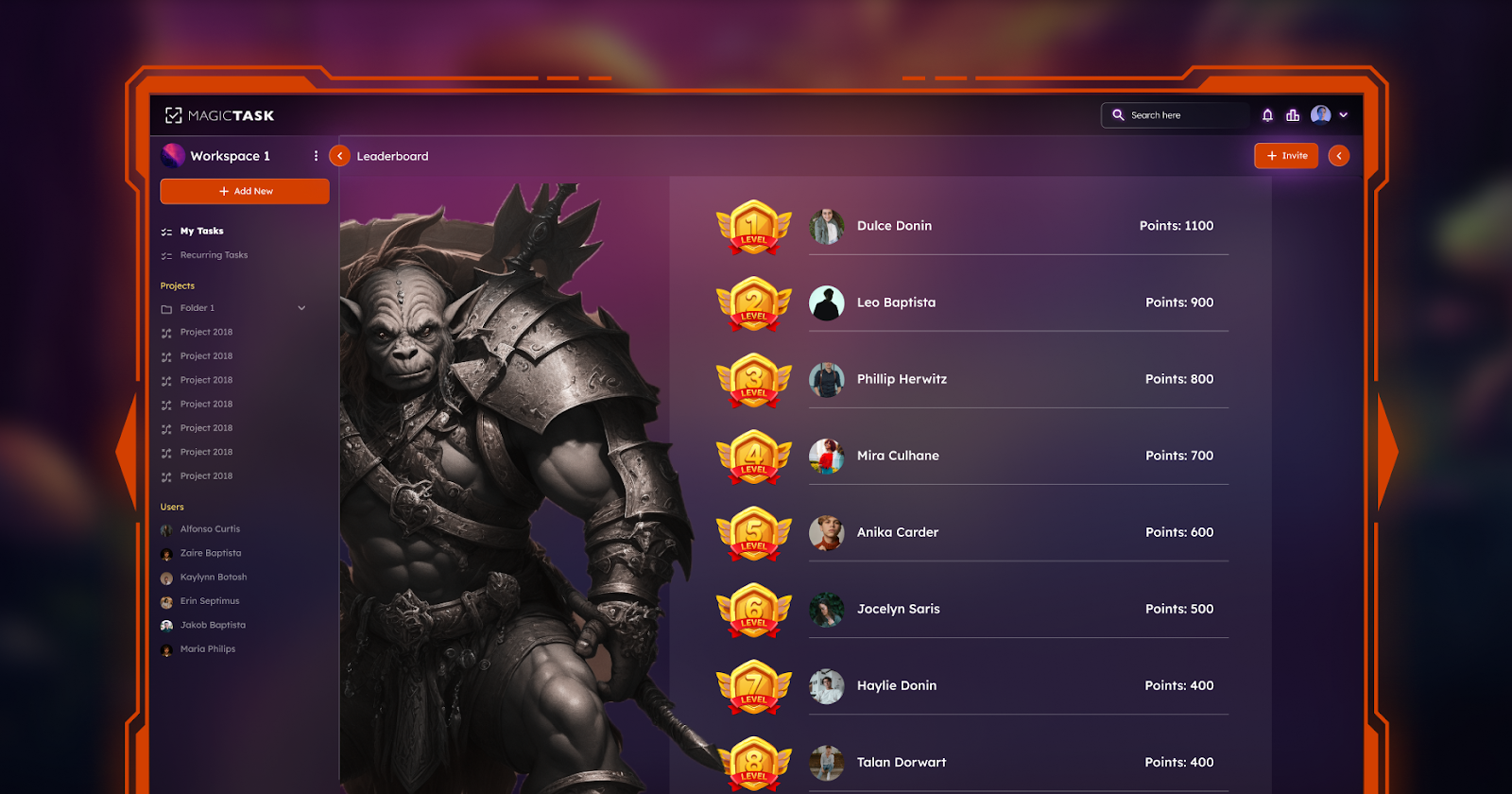
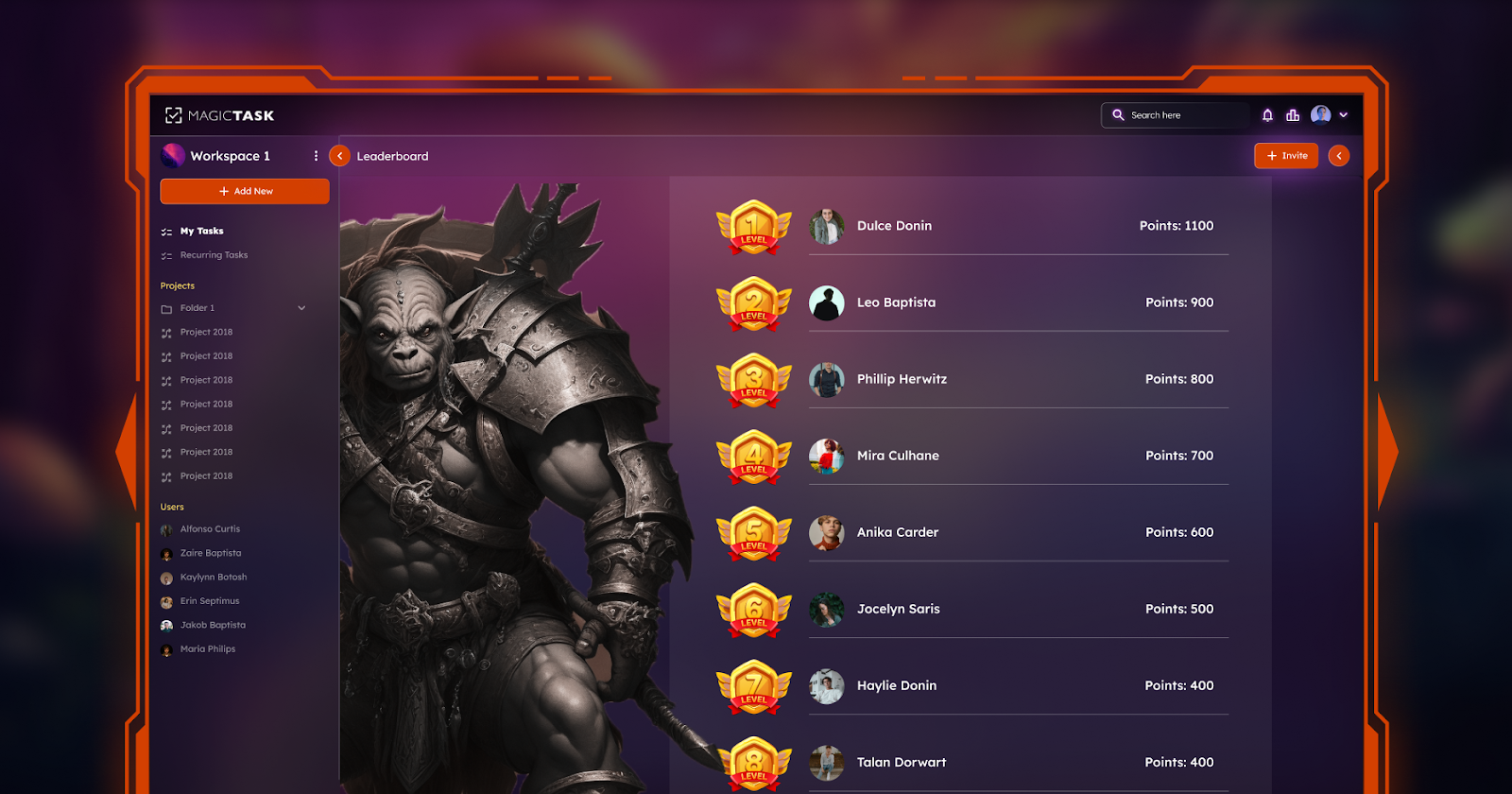
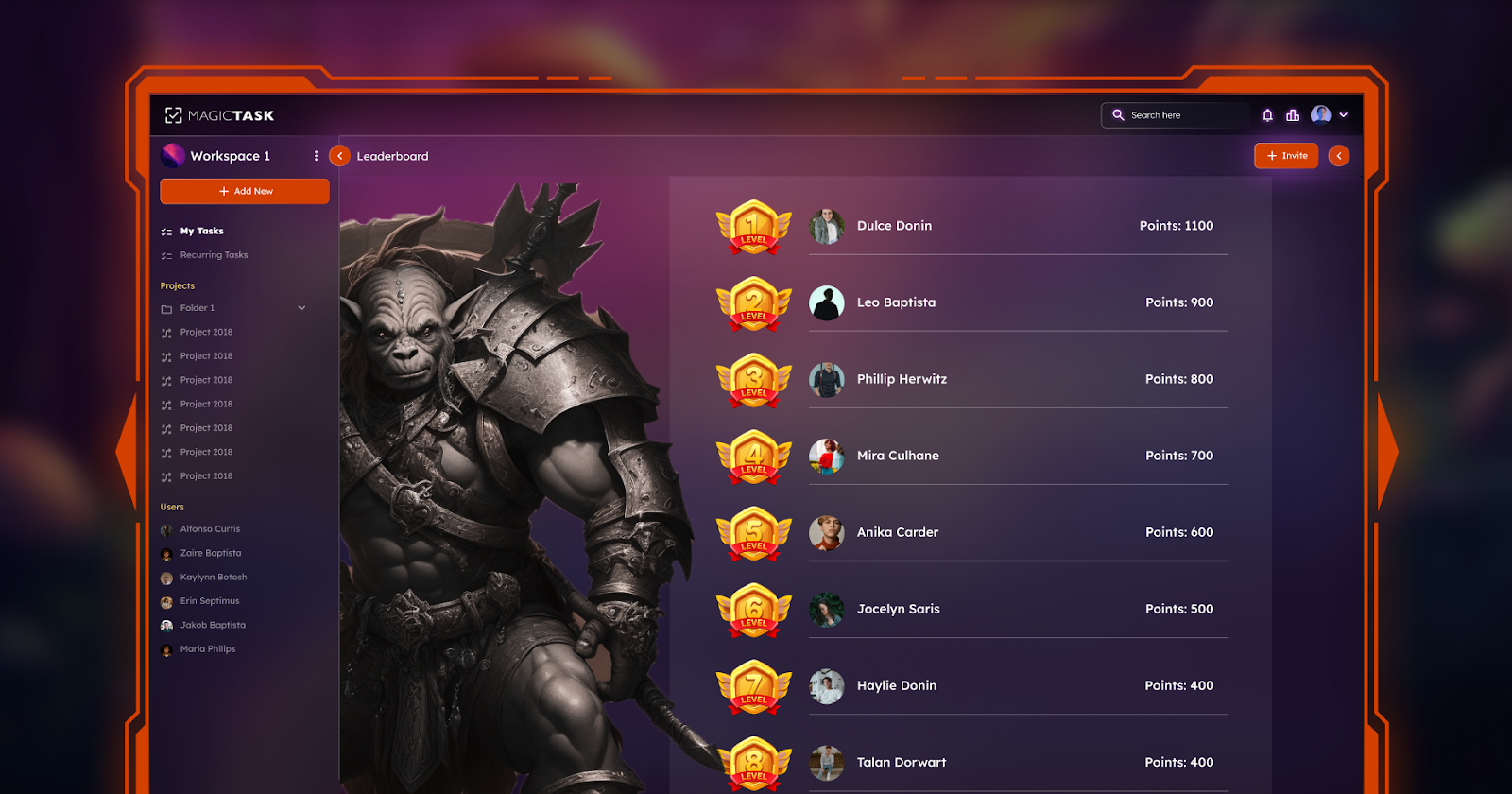
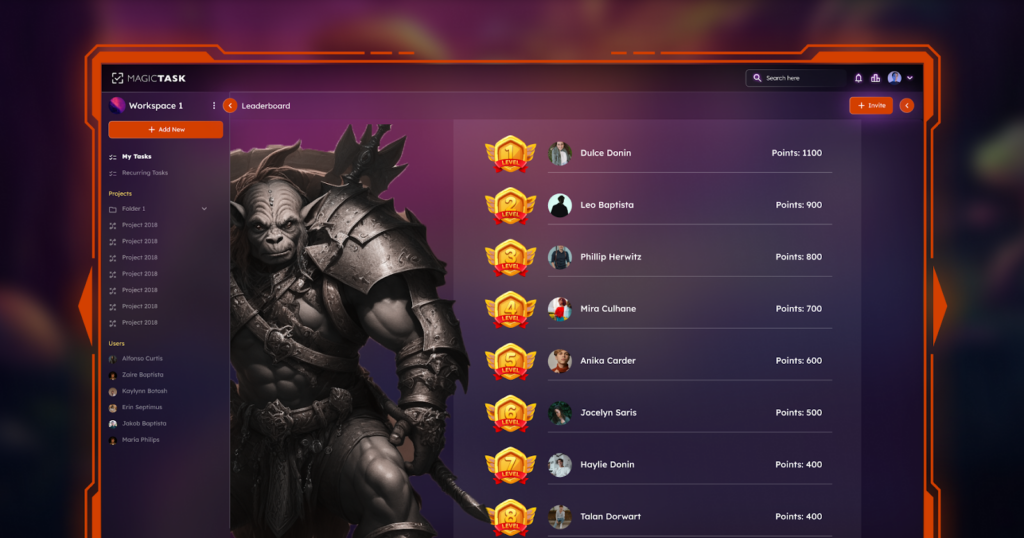
MagicTask V3 Leaderboard

It is useful to know about your performance in the tasks. MagicTask provides you with reporting and analytics tools where you can monitor your progress. Through this tool, you can check which tasks have been completed, which ones are still pending and the amount of time taken to execute them. It allows you to identify bottlenecks and for you to make corrections to effectively increase your productivity.

Use Templates for Common Tasks

Save time with templates for repetitive tasks or projects MagicTask Manager. Templates help you to easily start new tasks that have already defined details like due dates, checklists, and assigned members of your team. This makes the task management consistent and efficient as well as makes it easier to handle recurring or similar tasks.

Integrate with Other Tools

Increase the efficiency of your workflow by integrating your existing tools like MagicTask. Whether it is your email client, calendar, or project management software, integrating MagicTask provides the platform for the sharing of communication and data among other platforms. This makes it easy for the staff to handle tasks and keep all necessary information in one place.

Integrating MagicTask into Your Daily Routine

By introducing MagicTask into your daily routine, you can facilitate organization and get things done. Here are some easy tips to help you incorporate MagicTask into your everyday work life: Here are some easy tips to help you incorporate MagicTask into your everyday work life:

Begin Your Day with MagicTask

At the beginning of your day you should spend several minutes checking MagicTask. Check your to-do list to see what tasks are due today. This allows you to plan your day and determine the most important tasks to focus on. You'll be sure to concentrate on the right things, and this may help you to feel more in control and less anxious.

Use MagicTask Across Platforms

MagicTask is accessible from a variety of devices including your desktop, phone, or tablet. Make sure you have it downloaded on all your devices so you can use it anywhere you want. This way you can check your tasks and updates not only being at your desk, but also when you are outside of your desk. It makes it possible to handle everything, even when you are away from home.

Schedule Regular Check-Ins

Take some time every day to tune into MagicTask. You can do it in the morning, at lunchtime, or early in the evening. Take advantage of this time to go through your tasks again, update the progress, and check if there is any new task or change from your team. Consistent follow ups will keep you on the track and help you avoid missteps.

Reflect and Adapt

The end of the day or the end of the week, give some time for self-reflection and see how things went. Have you finished your work? Were there any problems or delays? Make use of Magic Tasks reporting and analytics tools to monitor your progress and find opportunities for improvement. It will let you change your way of thinking and get even more success the next time.

Establish Specific Goals with Timeline

Break your big tasks into smaller ones and set deadlines for each of them. This will keep you focused and motivated since you will have certain milestones to aim at. Through MagicTask, you will be able to add deadlines for individual tasks while tracking your progress in order to finish on time.

Use MagicTask's Calendar Integration

Incorporating MagicTask with your calendar would make you manage all your tasks and deadlines in one place. This is the integration that lets you see your tasks together with your appointments and meetings. This will give you a complete overview of your calendar. On the one hand, this makes it easier to figure out your day and to decide how to tackle work and life duties respectively.

Final Thoughts

The last part of the article underlines the point that being organized and efficient is the success factor. Tools such as MagicTask can change how people do tasks, becoming more productive. If we find out how crucial task management is, if we know about what MagicTask is, and if we use it, we can do things more efficiently and get more done.

MagicTask helps us stay on target even when we are working independently or in a group, enabling us to concentrate and achieve our targets. Therefore, from now on MagicTask is our golden ticket for productivity and time saving. We can realize that our goals are actually more attainable with its assistance.

What We Can Learn from Video Games to Enhance Team Collaboration and Productivity

Video Games to Enhance Team Collaboration and Productivity

In today's fast-paced digital landscape, video games are no longer just a form of entertainment; they've evolved into powerful tools for personal growth and skill development. Think about it: when you're immersed in a game, you're not just passively consuming content – you're actively strategizing, problem-solving, and collaborating with others. These are the same skills that are highly sought after in the real world, particularly in professional settings where productivity and teamwork reign supreme.

But here's the kicker: the lessons we glean from gaming aren't confined to the virtual realm. They seamlessly translate into our everyday lives, offering valuable insights into how we approach tasks, interact with colleagues, and navigate complex challenges. In a world where success hinges on our ability to collaborate effectively, harnessing the power of video games isn't just a game changer – it's a roadmap to unlocking our full potential.

Join me as we delve deeper into the world of gaming and discover how it's reshaping our understanding of productivity and teamwork, paving the way for success in an increasingly interconnected world. Whether you're a seasoned gamer or someone curious about the potential of this medium, prepare to be amazed by the transformative power of gaming beyond the screen.

Clear Role Distribution

The ability to clearly define roles within a team is often critical to the success of multiplayer online games. This notion parallels the need for individuals to have clearly defined roles in the workplace. In video games, each player may adopt a specialized role that is necessary for the team to win, such as the damage dealer, healer, or tank. Players can concentrate on developing particular skills thanks to this specialization, which makes the team more productive and successful. 

Analogously, in work environments, defined roles guarantee that work is performed by the most qualified individuals, increasing efficiency and decreasing duplication. Teams can function more efficiently and effectively when members recognize and embrace the value of specialized positions.

Strategic Planning

Players of video games, especially those in the strategy genre, have to be strategic, plan their moves carefully, and weigh the long-term effects of their decisions. In the workplace, where strategic planning can be the difference between success and failure, this forward-thinking attitude is vital.

Teams who embrace this mentality are better able to foresee potential roadblocks, create detailed strategies to accomplish their objectives, and have the flexibility to adjust to unforeseen changes. Strategic planning ensures that teams are always one step ahead of difficulties by encouraging a proactive rather than reactive attitude.

Effective Communication

Effective communication is essential for success in both the workplace and in video games. In cooperative video games, players have to stay in continual communication to plan their moves, warn one another of potential threats, and report on their success. In the workplace, where miscommunication can result in mistakes, inefficiency, and conflict, this degree of communication is essential. Teams may guarantee that all members are in line with the goals of the group by creating an atmosphere that values candid, understandable, and efficient communication. This will boost teamwork and output.

Adaptability

Gamers are frequently faced with unforeseen obstacles in video games, which need fast thinking and flexibility to overcome. This is similar to how the modern workplace is dynamic and always changing, requiring teams to be nimble to be productive. Teams that value adaptability are better able to minimize disruptions and continue forward motion by quickly adapting to changes in the project's scope, deadlines, or team dynamics. In addition to providing consistency in the face of change, this resilience enables teams to take advantage of fresh possibilities as they present themselves.

Problem-Solving Skills

In puzzle and adventure games, problem-solving is not just about coming up with a solution; it's also about taking the path of experimentation, analysis, and imagination to get there. To get through challenging situations in these games, players must use critical thinking, pattern detection, and creative problem-solving. 

These kinds of mental acrobatics serve a purpose beyond amusement; they train people to solve problems in the real world, where there are rarely simple answers to problems. In the workplace, a problem-solving mentality pushes groups to see obstacles as chances for creativity and advancement rather than as impediments. It encourages a curious culture that values challenging the status quo and considering alternative alternatives. 

In today's fast-paced commercial contexts, where challenges are complicated and multifaceted, this approach is essential. Organizations may generate innovative and forward-thinking solutions that push the envelope of what is feasible by cultivating a culture that values creative problem-solving. 

This will increase productivity and promote a culture of innovation and continual development. Encouraging teams to use the iterative, resilient, and creative problem-solving approach of gamers may turn obstacles into chances for improvement.

Goal Setting

A key component that propels the story and gameplay of video games is the act of goal-setting and pursuit. Players are given a clear goal right away, whether it be saving a character, taking down the last boss, or developing a civilization. The game experience is compelling and purposeful because of this clarity and direction. Applying this to the workplace, goal-setting skill becomes an essential tactic for team achievement. Teams use clear, well-defined goals as a road map, directing their efforts and concentrating their energies on reaching particular objectives. 

Through this approach, the overarching objectives become more manageable and less intimidating by being broken down into achievable tasks in addition to being set. Setting goals for a team also promotes cooperation and togetherness since everyone is working towards the same objective. It keeps everyone on the team motivated and focused by acting as a continual reminder of the goals the group is working towards. It is possible to greatly enhance morale and promote a sense of accomplishment and achievement by routinely revisiting these goals and celebrating milestones along the way. This will drive productivity and cultivate a pleasant team dynamic.

Learning from Failure

Every setback in video games serves as a springboard for success, providing insightful and instructive knowledge that shapes subsequent tactics. Gamers pick up skills including self-analysis, strategy modification, and perseverance until they conquer obstacles. In work environments, where risk-taking and creativity can be stifled by fear of failure, this iterative process of learning and adjusting is essential. Teams can learn to view failure as an essential component of learning rather than as a setback by adopting a gaming attitude. 

This viewpoint promotes experimentation, which enables the testing and improvement of novel concepts, resulting in ground-breaking discoveries and solutions. Building a culture that sees setbacks as chances for improvement encourages adaptability and a forward-thinking outlook. It enables team members to step outside of their comfort zones, investigate novel ideas, and ultimately support an environment that values adaptation and constant progress. This mentality change has the power to completely change how teams approach problems, transforming possible setbacks into insightful teaching moments that foster both professional and personal development.

Reward Systems

Reward

In the realm of video games, prizes are a potent motivator that pushes players to finish difficult objectives, advance to new levels, and raise their scores. These incentives, which might take the kind of points, unlocked locations, or new skills, verify the player's efforts and accomplishments and give them a sense of satisfaction and success. A comparable system of rewards can greatly improve team morale and motivation in the workplace. No matter how big or small, recognizing and applauding accomplishments promotes positive behavior and keeps people working hard and participating. 

Verbal praise during team meetings is one type of reward; other options include more material advantages like bonuses, promotions, or chances for professional growth. A motivated, involved, and productive team atmosphere can be created by putting in place a systematic reward system that is in line with both individual and team objectives. Recognizing the efforts and accomplishments of team members promotes a culture of gratitude and acknowledgment that encourages people to reach and surpass their performance goals.

Continuous Feedback

One of the main features of video games is continuous feedback, which lets players change their plans in real-time by giving them quick answers to their actions. This feedback loop gives players insights into what works, what doesn't, and how they may improve their gameplay, which is essential for learning and growth. Teams that implement this idea of ongoing feedback might see notable increases in output and performance. Frequent, constructive criticism promotes an environment of transparency, trust, and support by assisting people in understanding their areas of strength and growth. 

It makes it possible for team members to make swift adjustments to their strategy, coordinate their efforts with team goals, and continuously improve their abilities. Continuous feedback also promotes candid discussion and communication among team members, guaranteeing that everyone is on the same page and productively pursuing shared objectives. Organizations can foster a dynamic and encouraging atmosphere that promotes learning, progress, and excellence by implementing a continuous, real-time feedback mechanism.

Team Synergy

In video games, the idea of synergy where a team's total output exceeds the sum of its members' contributions; is eloquently illustrated. Characters with special talents must cooperate to accomplish shared goals, emphasizing the need to utilize a variety of strengths and viewpoints.

This idea is just as relevant in the workplace, where encouraging a team atmosphere that recognizes each individual's contribution can improve creativity, productivity, and problem-solving skills. Comprehending and fostering team synergy guarantees that the group's combined endeavors are maximized for the most favorable results.

Persistence

Gamers acquire the concept of perseverance from video games by repeatedly taking on new difficulties and growing with each try. For any team, this unwavering pursuit of goals in the face of difficulties is an invaluable lesson. A team that fosters persistence among its members is more likely to stick with its objectives in the face of obstacles or disappointments. This motivation can result in inventions and discoveries that would not be feasible without a steadfast effort. Additionally, it fosters the development of a resilient team that can overcome any challenge to accomplish its goals.

Leadership and Followership

Players can take turns being the leader or the follower in a lot of multiplayer games. This dynamic can impart important knowledge regarding the role that good leadership plays in setting direction and preserving team cohesiveness, as well as the value of followership in fostering positive team dynamics and goals.

Knowing when to take the lead and when to offer support is essential in professional settings to keep a cohesive and productive team. Because of this duality, teams can adjust to different circumstances by having members step up or back down as necessary to get the greatest result.

Time Management

Pomodoro timer in MagicTask V3

In many video games, players must frequently manage limited resources over time or accomplish tasks within time limits, making efficient time management a crucial ability. This ability is immediately applicable in the workplace, where managing workloads, setting priorities, and meeting deadlines all depend on efficient time management.

Teams with strong time management skills may increase output, lower stress levels, and guarantee that tasks are carried out successfully and efficiently. Teams can improve productivity and output by implementing time management techniques from the gaming industry.

Conflict Resolution

Both professional settings and video games inevitably involve conflicts. Whether it's choosing a plan of action or allocating resources, players in video games frequently have to compromise and settle disputes for the good of the group. These encounters can teach people important conflict resolution skills, such as how to listen, compromise, and come up with solutions that work for the team as a whole. Using these abilities at work might result in a more peaceful team atmosphere where disagreements are settled amicably and cooperation is enhanced.

Celebrating Diversity

Video game characters and environments that are varied serve as a powerful reminder of the power that arises from accepting people with different abilities, backgrounds, and viewpoints. Because of their diversity, teams are more creative and flexible, able to tackle problems from various perspectives and come up with better answers.

Teams in professional settings can function more creatively, dynamically, and successfully when a culture that embraces diversity is fostered. Organizations may reach their maximum potential and produce better outcomes by appreciating and utilizing the distinctive contributions made by each team member.

Conclusion

Video games may teach us a lot about productivity and teamwork because of their intricate storylines and challenging gameplay. Through the extraction and application of these concepts in the professional setting, teams can improve their overall performance, effectiveness, and dynamics. Video games teach us a variety of valuable and varied lessons, such as the significance of clear role distribution and strategic planning, as well as the value of tenacity, diversity, and successful dispute resolution.

Best Practices for Implementing Gamified Systems in Small to Medium-Sized Enterprises

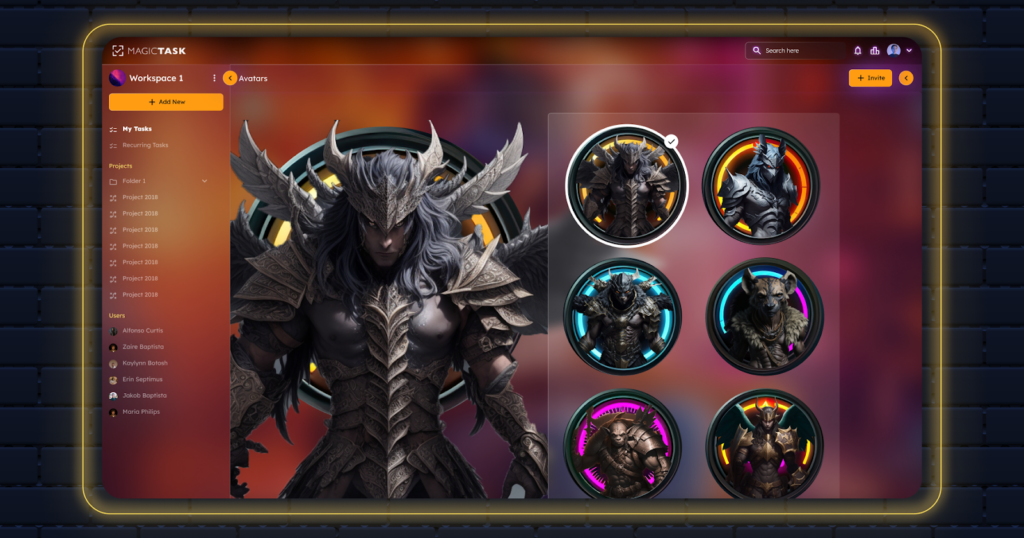
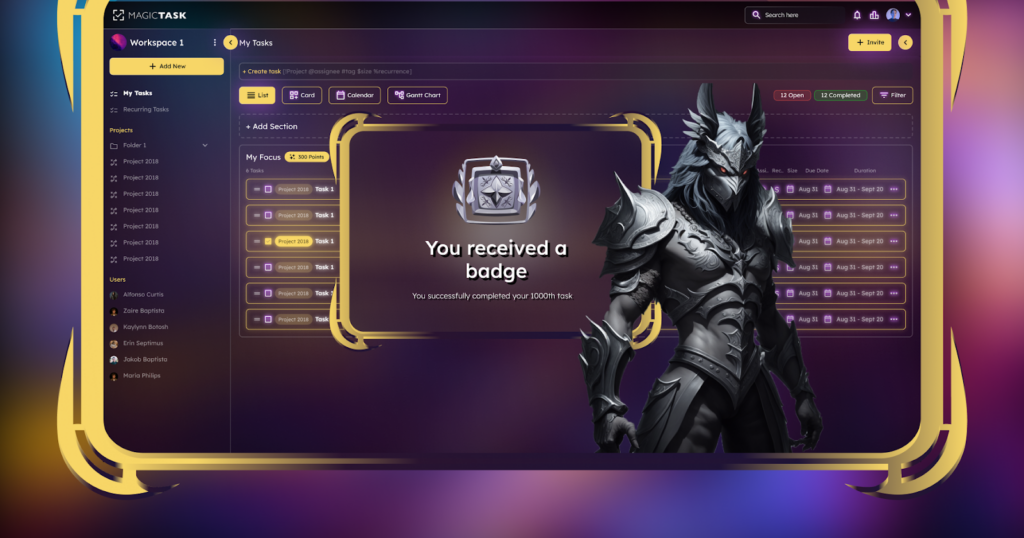
MagicTask Gamified Avatars

In today's rapidly evolving landscape, small and medium-sized enterprises (SMEs) are constantly seeking innovative ways to enhance both customer interactions and employee engagement. Gamification emerges as a promising solution, blending entertainment with business processes to foster participation, loyalty, and efficiency. 

However, successful implementation of gamification requires careful planning and execution, as it is not a one-size-fits-all approach. At the heart of gamification lies its ability to transform mundane tasks into rewarding experiences, thereby boosting commitment and motivation among participants. 

To effectively harness the power of gamification, SMEs must adhere to best practices, ensuring alignment with overarching business objectives and delivering tangible results. By following these guidelines, SMEs can navigate the complexities of gamification and reap the benefits it offers in today's dynamic business environment.

Define Clear Objectives

A well-defined set of goals is the cornerstone of any successful gamification project. SMEs should begin by determining the precise objectives they hope to accomplish with gamification, such as raising sales, boosting consumer engagement, or enhancing worker productivity. This clarity makes it possible to create a gamified system that is directly in line with corporate objectives, guaranteeing that each new game mechanic has a purpose. 

Businesses may monitor their progress and evaluate the success of their gamification tactics by setting quantifiable goals, and they can make required adjustments to maximize outcomes. A clear set of goals also offers SMEs a framework for assessing the return on investment, which aids in their ability to defend the expenditure of funds on gamification initiatives.

Know Your Audience

For a gamified system to be designed effectively, a thorough understanding of the target audience is essential. SMEs should take the time to investigate the age, interests, habits, and preferences of their users, as well as other demographic and psychographic details. With the use of this information, gamification aspects can be tailored to the audience's preferences, which raises the possibility of engagement. 

For example, a gamified system targeted at millennials would emphasize social sharing and competitive challenges, whereas one meant for an older audience might emphasize knowledge acquisition and milestone accomplishments. Not only does audience customization increase engagement, but it also helps the audience feel more connected to the company.

Integrate with Business Processes

Add workplace for your business

It takes a smooth connection with current company procedures for gamification to be successful. This connection makes sure that using the gamified system is seamless and feels like a logical next step for customers interacting with the company. When gamifying customer service, for instance, the system ought to incentivize actions that result in better service results, such as quicker resolution times or more customer satisfaction ratings. 

SMEs can reinforce desired behaviors and processes by gamifying their workflow, which will benefit the business and make the user experience rewarding. Additionally, by minimizing interference with current procedures, this strategy promotes easier adoption and improved uniformity in the user experience.

Choose the Right Game Mechanics

Choosing the right game mechanics is essential to creating a gamified experience that players will like. Quests, leaderboards, points, and badges are typical components that can encourage engagement and incentive. However, depending on the target audience and goals, these mechanics' efficacy varies. The objective is to increase engagement without overwhelming participants, thus SMEs need to carefully analyze which components will drive their consumers the most. 

Achievability and challenge must be balanced; mechanics should promote advancement without being overly complex to discourage involvement. The secret to a successful gamification approach is carefully selecting game mechanics that complement user preferences and organizational objectives.

Provide Immediate Feedback

Gamification relies heavily on immediate feedback to recognize users' activities and point them in the direction of desired behaviors. Feedback can come in a variety of forms, such as achievement unlocking and point accumulation or visual progress markers. Users are motivated by this immediate acknowledgment because it demonstrates to them the importance of their engagement and how it advances the system's broader objectives. 

Giving users regular and pertinent feedback helps SMEs stay engaged and aware of their successes and opportunities for growth. Feedback loops can also be quite helpful in creating a feeling of achievement and motivating users to keep interacting with the gamified system.

Encourage Social Interaction

Gamified systems that incorporate social components have the potential to greatly increase user engagement. Features that capitalize on people's innate desire for social comparison and rivalry include leaderboards, social feeds, and team challenges. SMEs can build a more immersive and engaging experience by enabling users to collaborate, compare progress, and share achievements. 

As users share their accomplishments and experiences with their networks, social interactions offer two benefits to the gamified system: they increase user happiness and operate as an effective marketing tool. Through word-of-mouth marketing and system involvement, this strategy also aids in brand promotion and user acquisition.

Offer Meaningful Rewards to Employees

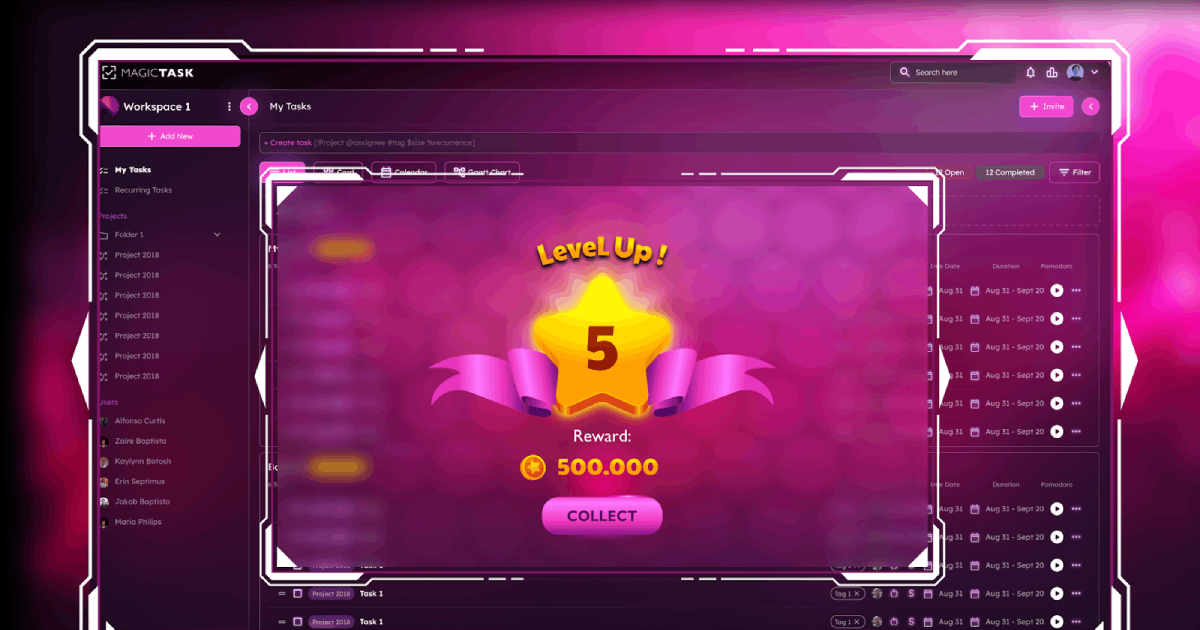
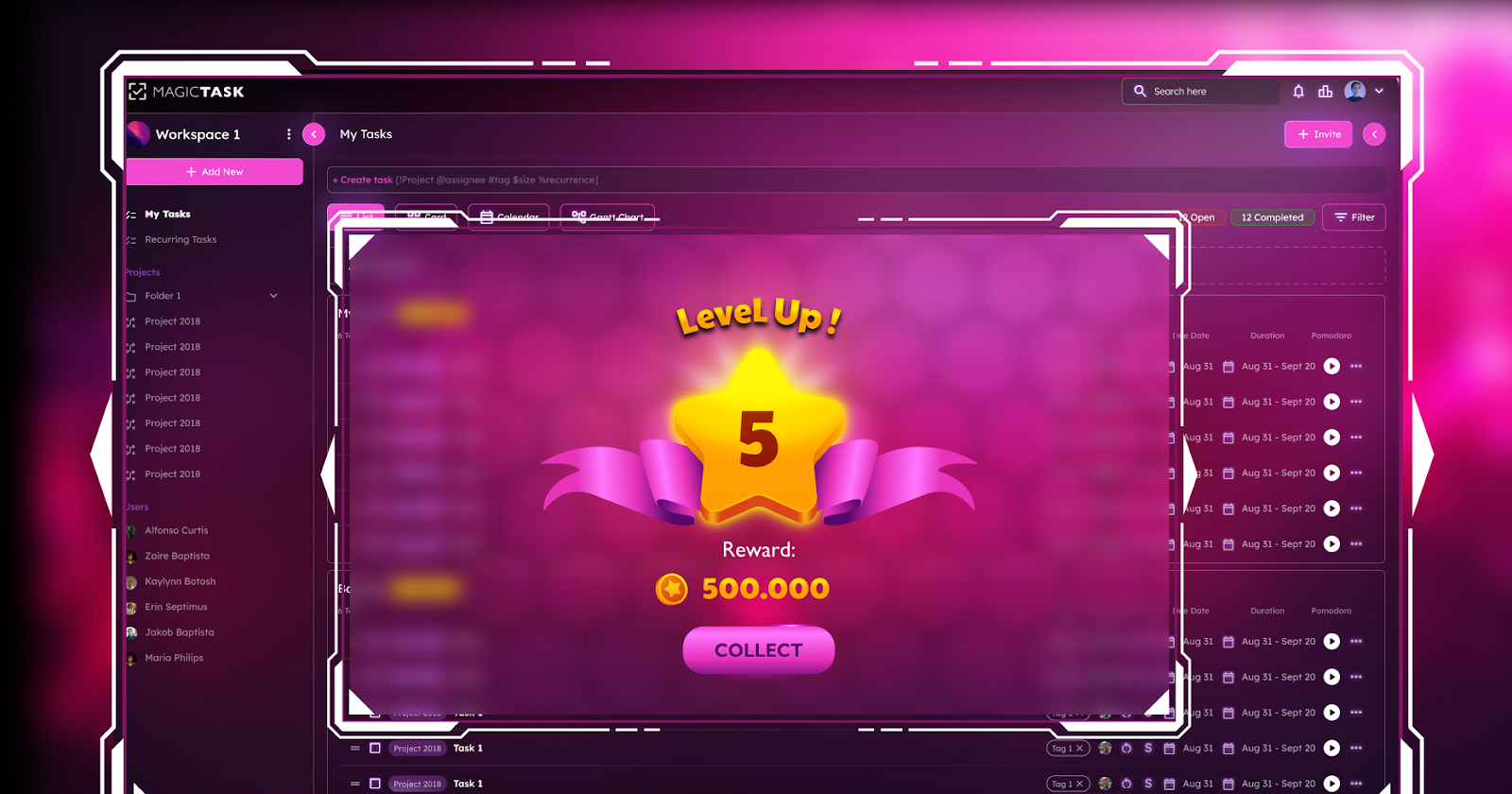
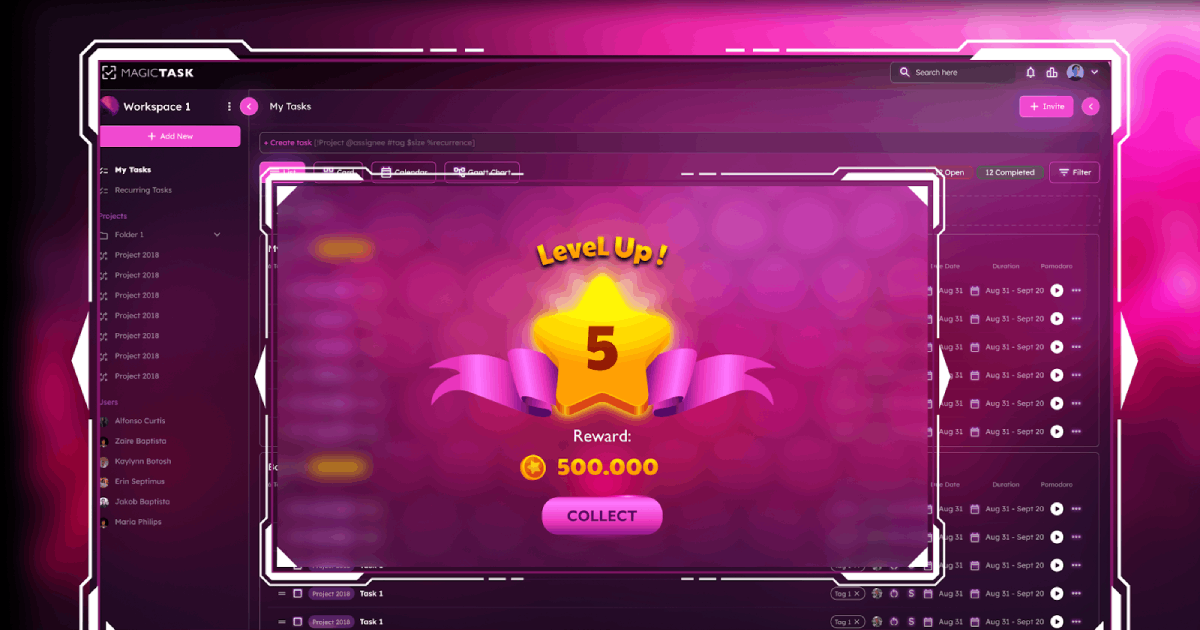
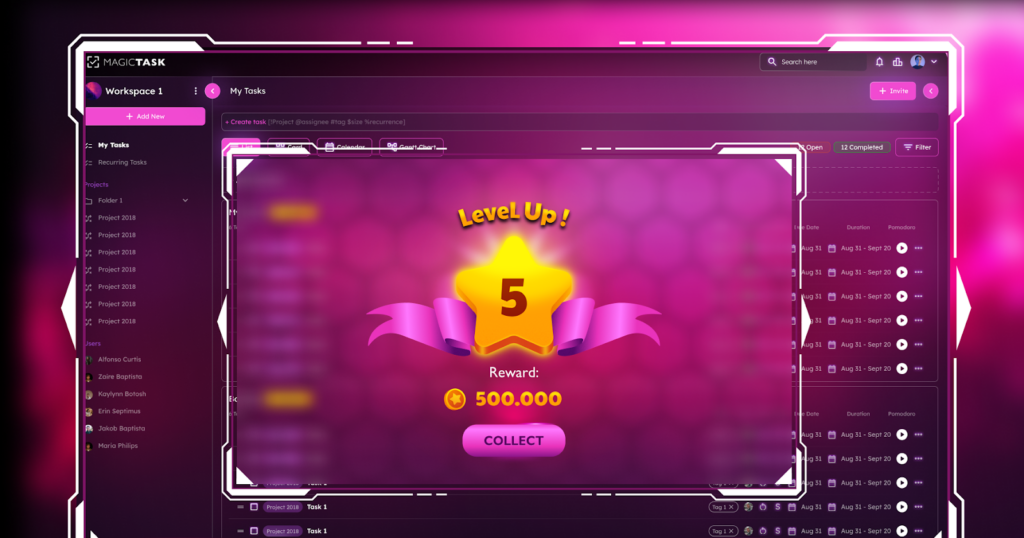
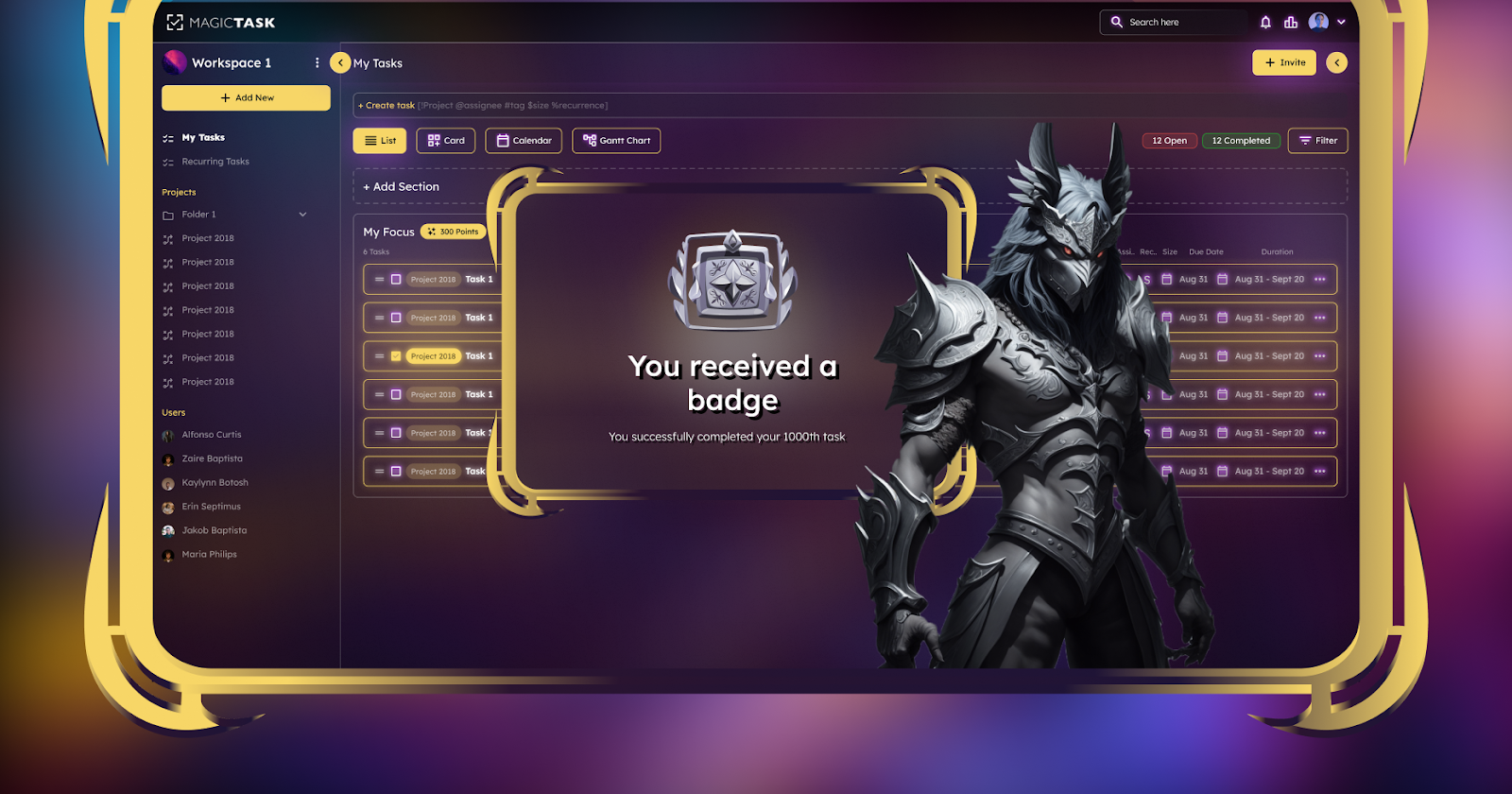
Level Up Rewards

It is impossible to overestimate the value of incentives in a gamified system. But for awards to spur users on, they need to be relevant and consistent with both the gamification initiative's goals and the values of the users. Accomplishment and recognition are examples of intrinsic incentives that have a strong motivating influence and help people feel like they belong. 

Extrinsic incentives like freebies, discounts, or exclusive access can also encourage engagement, but they need to be carefully chosen to make sure the intended audience will find them appealing. To sustain high levels of engagement, SMEs should take into account a combination of extrinsic and intrinsic rewards that are tailored to the tastes and motivations of their audience. 

In addition, incentives should have clear and attainable requirements so that users are inspired by the task rather than deterred from it. In addition to promoting continuous involvement, a well-designed rewards program strengthens the link between user activities and the accomplishment of organizational and personal objectives.

Ensure Accessibility

For any gamified system to be successful, accessibility is essential. SMEs need to make sure that all target consumers, irrespective of their technological proficiency or availability to cutting-edge technology, can readily engage with their gamification activities. This entails making sure that user interfaces are simple to use and intuitive across a range of platforms and devices, including computers and smartphones. 

Ensuring that your gamified system is accessible will increase its reach and guarantee that no portion of your target audience is left out because of technological limitations. Taking accessibility into account from the beginning can show your dedication to diversity and equal opportunity for interaction while also helping you to comply with legal requirements and ethical standards.

Maintain Simplicity

Gamification is the process of incorporating components of games into non-gaming environments; nonetheless, the design and implementation of these systems must remain straightforward. Users who are less tech-savvy or unfamiliar with the concept may become discouraged by too complicated rules or processes. Small and medium-sized businesses (SMEs) should strive for a gamified system that is simple for users to grasp and interact with right away, gradually adding more intricate features as users gain experience and proficiency. 

By ensuring that the system is still usable and entertaining for all users, this strategy lowers the possibility of annoyance and disengagement. Gamification's simplicity encourages broader adoption and ongoing engagement, which helps businesses meet their goals.

Monitor and Adapt

A gamified system's implementation is a continuous process that calls for constant observation and modification rather than a one-time effort. SMEs should routinely evaluate how well their gamification efforts are working in comparison to predetermined KPIs and user input. This makes it possible to pinpoint areas that need to be improved, whether they have to do with user satisfaction, engagement, or hitting particular goals

By modifying the system in light of these discoveries, you can make sure that it will always be applicable and efficient. Consistent participation is encouraged via frequent updates and improvements that are based on user behavior and preferences and keep the experience interesting and lively.

Promote Transparency

To establish and preserve user trust, gamification must be transparent. This calls for open communication regarding the operation of the system, the acquisition of points, and the distribution of incentives. It should be simple for users to view their standings and progress, and they should be aware of the steps needed to move forward. 

Users are empowered to interact with the system more skillfully because of this transparency, which also helps them to fully comprehend the advantages of participating and plan their activities. Being transparent for SMEs also entails answering privacy issues and guaranteeing users that their data is handled ethically and securely.

MagicTask V3 Dashboard

Ensure Privacy and Security

Users in the digital age are most concerned about security and privacy. SMEs must put user data protection first when deploying gamified systems, following all applicable privacy rules and using strong security measures. This entails open and honest communication regarding the use of user information, safe data storage practices, and transparent data-gathering policies. 

To meet legal requirements, maintaining privacy and security fosters user confidence, which is essential for encouraging interaction. When users believe that their personal information is handled with care and respect, they are more inclined to engage actively within a gamified system.

Foster a Culture of Recognition

Within an organization, a gamified system can be a useful instrument for fostering a culture of recognition. Businesses can encourage a positive work environment and motivate their employees by publicly recognizing their accomplishments and efforts. This acknowledgment can come in several formats, such as mentions in corporate communications or digital badges and certifications.

Knowing that their efforts are appreciated and acknowledged motivates staff members to take responsibility for their jobs and pursue greatness. Gamification may help SMEs create a culture of recognition by increasing employee engagement, retention, and productivity.

Leverage Technology

A gamified system's technological foundation is essential to its success. For SMEs to provide a smooth and interesting user experience, they need to make use of the most recent developments in cloud computing, mobile applications, and social media integration. In addition to improving the gamified system's usability and accessibility, the appropriate tech stack enables scalability as the company and user base increase. 

Sophisticated analytics systems can offer insightful data on user behavior and preferences, which can guide upcoming system improvements. Putting money into a strong technological foundation helps gamification tactics be implemented quickly and effectively.

Measure Success

SMEs need to set up and monitor key performance indicators (KPIs) to assess how gamification affects their company goals. These could include commercial outcomes like increased revenue, improved customer happiness, or increased productivity, as well as measures relating to user engagement like time spent on the system, participation levels, and achievement rates.

Through success measurement, SMEs can calculate the return on investment (ROI) from their gamification initiatives. It also points out potential areas for improvement where the gamified system might not be functioning as planned. Iterating on the gamification approach and keeping it in line with user demands and company goals requires constant assessment and analysis. Furthermore, to maintain support for these efforts, success metrics can be shared with stakeholders to illustrate the benefits of gamification.

Conclusion

For SMEs looking to increase consumer and staff engagement, motivation, and productivity, gamification offers a potent tool. But the success of a gamified system depends on careful design, methodical execution, and continuous improvement. SMEs may make sure their gamification initiatives are well-targeted, interesting, and following their business goals by following the above-mentioned best practices. All of these practices from establishing specific objectives and knowing who the target audience is to guaranteeing accessibility, encouraging openness, and tracking progress help to build gamified systems that are not only engaging but also yield real returns.

Best Strategies for Using MagicTask V3 to Overcome Procrastination

Best Strategies to Overcome Procrastination

Effective time management and productivity maintenance are crucial but difficult tasks in today's professional and personal development environment, partly because procrastination is a prevalent hindrance. MagicTask V3 stands out as a shining example of ingenuity, providing a set of instruments designed with this obstacle in mind. 

By going into great detail on a few different MagicTask V3 strategies, this article seeks to provide readers with the tools necessary to improve their productivity, better manage their chores, and eventually conquer the tendency to put things off. 

With the help of MagicTask V3, people may increase their productivity and accomplish their goals with previously unheard-of motivation and accuracy.

Clearly Define Attainable Goals

The first step towards conquering procrastination is to set definite, attainable goals. MagicTask V3 simplifies this process by allowing users to set clear, measurable goals for their tasks along with realistic due dates.

The feeling of overwhelm that frequently results in procrastination can be greatly reduced by the habit of breaking down major jobs into smaller, achievable chores. Users may stay motivated and focused on their jobs by using MagicTask V3 to define organized goals, prioritize tasks based on urgency and importance, and track progress.

Setting strategic goals increases output and gives users a sense of achievement when chores are finished, which encourages them to keep up their productive streak.

Applying the Technique of Pomodoro

Pomodoro Timer

MagicTask V3 skillfully incorporates the well-known Pomodoro Technique, a time management technique that provides a methodical way to improve focus and fight procrastination. 

Through the use of set work intervals, usually lasting 25 minutes, interspersed with brief breaks, this method enables people to work with the clock rather than against it. These intervals can be customized using MagicTask V3 to suit different work habits and preferences. 

With each period completed, this approach not only keeps the mind active and concentrated but also instills a feeling of urgency and accomplishment. With MagicTask V3, you may use the Pomodoro Technique to break down large jobs into smaller, more doable activities. This reduces the temptation to procrastinate and increases the likelihood of productivity.

Making Use of Task Prioritization

Effective prioritization is a prerequisite for efficient work management. When it comes to providing a dynamic system for classifying jobs according to importance and urgency, MagicTask V3 shines.

By concentrating their attention on tasks that are most important or have the most immediate impact, users can ensure that important goals are met on time. The user-friendly interface of the software makes it simple to modify the order of tasks, allowing users to easily respond to evolving project requirements and deadlines.

People can better manage their time and resources by setting priorities, which reduces the propensity to put off important work and concentrate on making significant progress.

Establishing an Reward Scheme

Rewards

To overcome procrastination, intrinsic motivation is essential, and MagicTask V3 facilitates this by allowing the establishment of a personalized incentive system. It is advised for users to set up incentives, such as quick breaks or indulging in a favorite pastime, to be awarded for reaching goals or milestones.

In addition to increasing task satisfaction, this strategy of positive reinforcement also fosters the development of productive habits. As the relationship between completing a task and receiving rewards grows stronger over time, procrastination tendencies naturally decrease, and overall task engagement and enjoyment increase.

Reducing Interruptions

Distractions are a major contributor to procrastination. To overcome this difficulty, MagicTask V3 incorporates tools that assist users in setting up a concentrated workspace. To ensure that users can focus entirely on their duties, the tool can synchronize with other applications to prevent access to distracting websites or messages during work periods.

People can greatly increase their capacity to focus for extended periods by creating a distraction-free workstation. This will increase productivity and decrease the possibility of procrastination traps.

Making Use of Visual Task Management

It is impossible to overestimate the effectiveness of visual task management in increasing output and thwarting procrastination. Using boards, lists, and calendars, users can graphically organize and visualize their work with MagicTask V3's user-friendly platform.

This graphic representation makes it easier to prioritize jobs, comprehend the extent of the work, and quickly assess progress. It also makes it harder to ignore or put off duties because it acts as a continual visible reminder of what has to be done. Users discover that visual task management lessens emotions of overwhelm and makes work seem more manageable, which eventually results in less procrastination.

MagicTask V3

Putting Daily Planning Into Practice

Planning every day is essential to staying focused and preventing procrastination. With its daily planning tool, MagicTask V3 improves this process by allowing users to schedule their chores for each day and generate an understandable, practical plan.

Users can minimize idle time and increase productivity by segmenting their day into discrete tasks and assigning time intervals for each. Planning also creates a feeling of urgency and purpose, which lessens the desire to put things off and guarantees a more efficient use of time.

Monitoring Task Time Spent

Finding patterns in procrastination and increasing productivity requires understanding how time is spent on tasks. The time monitoring function of MagicTask V3 allows users to keep track of how long tasks take, giving them important information about their work habits.

Users can spot potential time wasters and jobs that are taking longer than anticipated because of this transparency. Equipped with this knowledge, people can hone their work methods, concentrate on increasing productivity, and take proactive measures to reduce procrastination, resulting in enhanced time management and output.

Notifications and Reminders

Underestimating the importance of tasks or ignoring them are common causes of procrastination. The powerful reminder and notification system in MagicTask V3 assists users in prioritizing things that need to be done right now and in staying informed of approaching deadlines. By serving as a prompt, these reminders make sure that assignments don't get neglected or put off until the very last minute. By placing jobs in the forefront of the user's attention, the system lessens the possibility of forgetting or misjudging how important a task is, which encourages a more proactive and well-organized approach to task management.

Working Together with Teammates

Working together is another way to combat procrastination. With MagicTask V3's collaboration features, users can work together, delegate tasks, and track project progress as a team. Because team members depend on one another to finish assignments on schedule, this collaborative environment promotes accountability.

The common objective of finishing the job together creates a sense of motivation and camaraderie, which lowers the propensity to put things off and increases group productivity. Individuals may share insights, capitalize on team strengths, and accomplish tasks more quickly when they collaborate effectively.

With the help of extensive analytics and reporting capabilities provided by MagicTask V3, customers can analyze their productivity trends. Users can identify jobs that often cause procrastination, determine precise times of day when procrastination peaks, and comprehend the environment that promotes a productive workflow by examining these data. 

By using this self-reflective analysis, customized procrastination-busting tactics may be developed, allowing individuals to optimize productivity by modifying their work habits and surroundings. 

Equipped with this understanding, people may decide for themselves how best to organize their working day, set priorities, and make adjustments that result in more reliable and efficient output.

Combining Different Tools

MagicTask V3's effectiveness in preventing procrastination is increased by its smooth interaction with other productivity and communication tools. MagicTask V3 makes it easier to manage tasks, communicate, and share resources all on one platform. This eliminates the need to constantly move between apps, which saves time and eliminates distractions.

By facilitating a streamlined workflow with easy access to all required information and tools, this integration helps users stay focused on their jobs and cut down on procrastination. The extensive toolkit that MagicTask V3's compatibility with assures that users have to support their productivity efforts, whether it's email clients, calendar apps, or file storage solutions.

Leveraging Mobile App

MagicTask V3 Mobile App

MagicTask V3's mobile app gives customers unmatched task management flexibility, guaranteeing that productivity is not limited to a typical work environment. Users can access their projects, get notifications, and check in on their progress from anywhere at any time thanks to this mobile capability. 

MagicTask V3 guarantees that customers may utilize their time effectively no matter where they are by offering task management on the fly. This kind of flexibility is especially helpful for people whose schedules change frequently or who find themselves putting off tasks because of rigid work environments. 

The mobile accessibility of MagicTask V3 helps users stay focused and on target, which minimizes the likelihood of procrastination.

Involving the Community

The community features of MagicTask V3 give users a forum to interact with other people who share their goals of increasing productivity and beating procrastination. Users can access a network of like-minded people's inspiration, motivation, and useful advice through forums shared ideas, and success stories.

This feeling of community and purpose can be immensely inspiring, giving users more tools and encouragement to overcome their procrastination issues. Through engaging with the MagicTask V3 community, users can get insights from one another's experiences, uncover novel approaches, and sustain their drive to accomplish their individual and occupational objectives.

Tailoring the Interface

One important factor in increasing user interest and decreasing procrastination is the opportunity to personalize the MagicTask V3 interface. Users can customize the platform's appearance, feel, and functionality to fit their work styles and preferences, making task management more pleasurable and productive.

Users can customize MagicTask V3 to their liking by utilizing customization options like changing notification settings, creating custom views, and selecting themes. This tailored approach reduces procrastination by increasing the possibility that users will actively interact with their activities and maintain productivity. It also makes the application more intuitive and user-friendly.

Conclusion

To sum up, conquering procrastination is a complex task that calls for a blend of calculated methods, drive, and the appropriate resources. Among the many capabilities available, MagicTask V3 is particularly noteworthy as a holistic solution that addresses all the many facets of procrastination. Through the implementation of the tactics delineated in this guide, users can proficiently utilize MagicTask V3 to augment their efficiency, accomplish their objectives, and surmount the obstacles posed by procrastination. By applying these strategies consistently, people can change the way they work, adopt a more productive lifestyle, and succeed more quickly and satisfyingly.

How to Leverage the Psychology of Gamification to Drive Employee Engagement

Psychology of Gamification

Gamification integrates game design principles into non-gaming contexts to boost engagement and achieve specific goals. CEO success relies heavily on employee engagement, impacting productivity, retention, and overall performance. In today's fast-paced work environments, traditional motivation methods often prove insufficient. 

To address this, businesses can tap into gamification's unique concepts, leveraging elements like points, badges, leaderboards, and rewards to make routine tasks more engaging. This fosters behavioral changes and a sense of accomplishment. Employing data analytics further enhances the approach by tracking progress, identifying patterns, and highlighting areas for improvement.

Understanding Inspiration

Understanding inspiration is significant in designing exact gamification guidelines for employee engagement. Inspiration is the driving force for persons' actions and activities, inducing their level of engagement, energy, and determination. 

Inspiration can be categorized into two types

  • Intrinsic inspiration: Intrinsic, stanching from internal needs such as a sense of achievement or mastery.
  • Extrinsic inspiration: Extrinsic, ambitious by external rewards or gratitude.

In the primary psychological factors that inspire employees, such as sovereignty, competency, and affiliation, administrations can modify gamified participation to resonate with their workforce on a more profound level. 

Making out person modifications in inspiration permits the customization of gamification policies to outfit various preferences and personalities. Understanding inspiration empowers administrations to design gamified systems that inspire and strengthen employees, pouring higher levels of engagement, manufacture, and gratification in the workplace.

Setting Perfect Ambitions and Purposes

For employee engagement, setting perfect ambitions and purposes is important to develop gamification by companies. These ambitions play important guiding values that line up employees' actions with the organization's thoughtful purposes. 

In gamified when participations are created it's conclusive to create precise, computable, attainable, applicable, and time-bound (SMART) goals. Perfect ambitions provide employees with a sense of determination and track, helping them recognize what is expected of them and how their energies contribute to broader organizational success.

Furthermore, perfect ambitions and goals make clearness and responsibility within the gamified system and create a culture of clarity and focus. Employees become more loyal when they have a clear understanding of what they are working on and how their development is being measured. By setting clear aims and purposes, management can increase the efficiency of gamification in driving employee engagement and motivation.

Inspiring Struggle and Cooperation

Inspiring struggle and cooperation within gamified systems can meaningfully develop employee engagement and motivation. The struggle creates a sense of challenge, determination, and achievement, driving people to be ambitious at their limits and attempt for excellence. By assimilating leaderboards, positions, or performance metrics, administrations can fuel healthy competition, encouraging employees to outclass themselves and their aristocrats. 

At the same time, collaboration encourages teamwork, communication, and a sense of fitting. By planning gamified experiences that essential cooperation, problem-solving, and collective goal achievement, administrations can adopt a culture of suggestion and companionship among employees. Inspiring collaboration can also restrain the negative aspects of competition, like individuality by highlighting shared goals and collective achievement. 

By striking an equilibrium between competition and collaboration, administrations can attach the motivational power of both dynamics to drive advanced levels of engagement, productivity, and invention in the workplace. Furthermore, the development of a culture that values both competition and collaboration promotes a supportive and dynamic work environment encouraging employee growth and satisfaction.

Integrating Progress Following and Feedback Loops

Integrating progress following and feedback loops in the gamified system is energetic for the betterment of employee engagement. Following steps, such as progress bars, achievement emblems, or level gauges, gives employees an optical demonstration of their progress and activities.

 It gives a sense of achievement and inspiration as employees work towards their aims and objectives. Furthermore, by feedback loops employees can get timely and expressive feedback on their presentation, to understand their properties and areas for their development.

Through aristocrat reviews, presentation reviews, or definite feedback within a gamified system feedback can also be given. In the workplace administrations may construct a culture of learning and growth and also enhance employee engagement, by incorporating feedback loops and progress, companies can drive constant enhancement following gamified experiences.

Exciting Struggle and Cooperation

Leaderboard

Inspiring struggle and cooperation within gamified systems can create employee engagement and motivation. Hard work in employees arouses a sense of challenge, determination, and achievement, also making individuals ambitious at their limits and attempting excellence.

Encouraging employees to outclass themselves and their aristocrats is possible by assimilating leaderboards, positions, or performance metrics, administrations can fuel healthy competition encouraging employees to outclass themselves and their aristocrats.  Collaboration encourages teamwork, communication, and a sense of fitting at the same time. 

In a gamified system it is essential for employees the first one is cooperation then problem-solving, and collective goal achievement, administrations can adopt an environment of suggestion and companionship. The negative aspects of competition, like individuality by highlighting shared goals and collective achievement are controlled by exciting collaboration. Administrations can attach the motivational power of both dynamics to drive advanced levels of engagement, productivity, and invention in the workplace by establishing equilibrium between competition and collaboration.

Individualization

By adapting the experience to every employee's benefits, motivations, and learning style, personalization is significant to exploiting employee engagement through gamification. Through the construction of customized user outlines within the gamified system, companies can obtain important data about their aims, hobbies, and ideal game methods.

With the use of this data, exclusive experiences that can say to every individual normally can be created. By adapting the degree of trouble or gratification in reaction to individual performance or favorites, adaptive gameplay contrivances improve personalization and declaration that staff members are appropriately challenged and involved.  Organizations may gamify experiences for laborers that are applicable, satisfying, and fun by approval personalization. This will finally upsurge worker engagement, motivation, and gratification.

Fostering a Mastery and Accomplishment Sense

In gamified systems, employee engagement must be raised by generating a sense of mastery and accomplishment. Organizations can foster a sensation of direction and determination in their workforce by providing them with the chance to set and meet aims. Motivates staff members to exceed expectations and pursue greatness by establishing demanding yet reachable objectives. To increase their self-esteem and inspire them to keep working hard it is essential to give them feedback and recognize their achievements.

Staff members become enabled by providing chances for skill achievement and mastery to improve their skills and advance in their work. Organizations can create a culture of growth, success, and satisfaction in the workplace, driving higher levels of engagement, efficiency, and satisfaction among employees by designing gamified experiences that highlight the attainment of goals, the progress of skills, and the recognition of attainments.

In the office, companies can foster a culture of growth, success, and fulfillment by creating gamified experiences that place a premium on goal achievement, skill development, and achievement appreciation. 

Encouraging Social Appreciation and Interaction

For the growth of employee engagement in gamified systems, it is important to encourage social communication and appreciation. By implementing first principles that promote communication, collaboration, and noble recognition, administrations can foster a sense of friendship and belonging among their labor force.

In the gamified system, an association of employees by data sharing, and mutual support are raised via social features like chat abilities, opportunities, and social networking. From their peers, staff members should be given the chance to get feedback and gratitude from their aristocrats also helps them to rejoice and recognize everyone’s achievements which promotes a correspondingly supportive and appreciative culture. 

By adopting teamwork, and extending relationships by placing a high importance on social interaction and recognition of exclusive gamified proceedings, administrations can advance overall engagement and gratification in the workplace. Moreover, social linking and acknowledgment support a strong corporate culture in which staff members practice a sense of value, motivation, and relationship with both the company and their nobles.

Making the Most of Challenges and Missions to Engagement

In the gamified system, using missions and challenges is a great method to increase staff engagement. When employees are faced with challenges and quests, which keeps them engaged and driven to meet their objectives they enjoy excitement, adventure, and a sense of advancement. In the life of employees, challenges can come in many different ways, such as missions, short-term projects, or contests where workers must obtain their certain goals within a predetermined amount of time. 

To succeed in these difficulties, employees are inspired to act and push themselves to the limit which creates a sense of excitement and urgency. By providing incentives or acknowledgment for accomplishing challenges companies can increase involvement and engagement.

Making Schemes to Motivate

Making an incentive system to inspire employees through gamification includes cautious consideration of both intrinsic and extrinsic promoters. In Intrinsic rewards employees provided by internal requirements also include elements such as appreciation, a sense of triumph, and opportunities for personal growth.

Employees can be given external motivations like monetary bonuses, prizes, or tangible profits in extrinsic rewards. Both types of rewards and support should be designed to balance with the organization's goals and values to motivate employees. The rewards should be given to employees of various types for diverse preferences and ensure that they are meaningful and desirable for employees. 

For Ideal Engagement Solve Difficulty Levels

In a gamified system solving difficulty levels is critical for enhancing engagement. The tasks and trials are neither too easy nor too difficult but provide a perfect level of challenge to keep workers motivated and immersed in their work. People are most engaged and satisfied when they are fully immersed in an activity that matches their talent level. In the framework of gamification, attaining a state of flow requires carefully balancing the difficulty of tasks with employees' skill levels. To achieve ideal engagement, administrations should implement difficulty scaling mechanisms that adjust the trial level based on individual performance.

Enhancing Engagement Using Game Mechanics

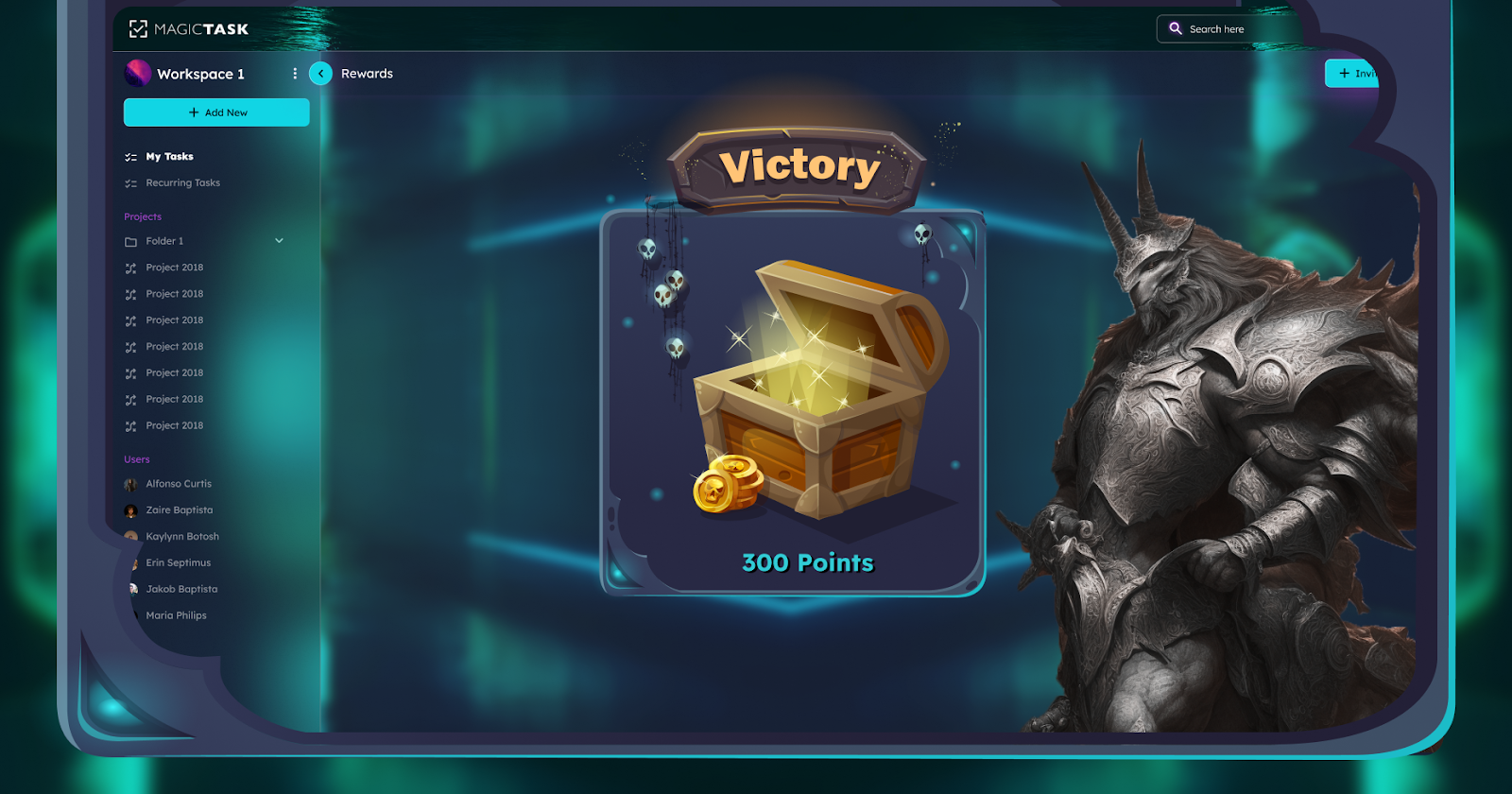
300 Points Earned

In a gamified system to increase user participation game mechanics must be used.
Game mechanics are known as the rules, dynamics, and apparatuses that make a game fun and engaging. Companies can build immersive, engaging, and rewarding atmospheres that capture employees' imagination, and consideration and encourage participation by integrating these mechanics into gamified experiences.

The important components of the game are points and emblems, rewarding staff members for ultimate assignments, hitting targets, or acting in certain ways.

Inspiring employees’ points and emblems plays an important role. Also, points and emblems in workers create a sense of progress and success, inspiring them to keep working hard to get better rewards.

Leaderboard is another useful gaming feature that encourages rivalry and motivates staff to reach for superiority. By assigning employees a ranking based on their performance or activities within the gamified system, leaderboards generate enjoyment and a sense of urgency.

Continuous Revision and Improvement

In a gamified system, getting employee input experiences is one side of continual iteration. The actual means for gathering feedback are reviews, focus groups, and direct contact channels, which give firms valuable visions into their operations and areas for growth. Data analytics displays worker productivity, satisfaction, and advancement in the gamified system, all of which are critical constituents of continual development. Organizations can find leanings, patterns, and areas for development by investigating this data; these insights will help shape the gamified experience in the future. 

Iterative design means adapting the gamified system gradually and finely in response to user feedback and data analysis. To raise motivation and engagement, these adjustments may involve adding new features, changing the complication of the game, or enlightening the game mechanics. Organizations may guarantee the long-term efficiency and engagement of their gamified systems by accepting a continuous iteration and improvement method. The implementation of an iterative policy facilitates continuous optimization through the consumption of employee feedback and performance data, hence leading to increased levels of job satisfaction, production, and engagement.

Also Read: The Science Behind Gamified Productivity: Insights from MagicTask V3’s Design Philosophy

Conclusion

In conclusion, a thorough hold of human motivation, behavior, and reasoning is necessary to effectively use the psychology of gamification to increase employee engagement. Through the incorporation of concepts like objective formulation, incentive schemes, competition, cooperation, and feedback cycles, initiatives can develop gamified encounters that inspire, encourage, and enable staff members to reach their extreme capabilities.

Long-term efficiency and user engagement of gamified systems depend on constant iteration and development. Acceptance gamification as a strategic tool for employee engagement, companies may cultivate a work environment that values excellence, innovation, and production.

MagicTask on Apple Vision Pro: Revolutionizing Productivity with Immersive Experiences

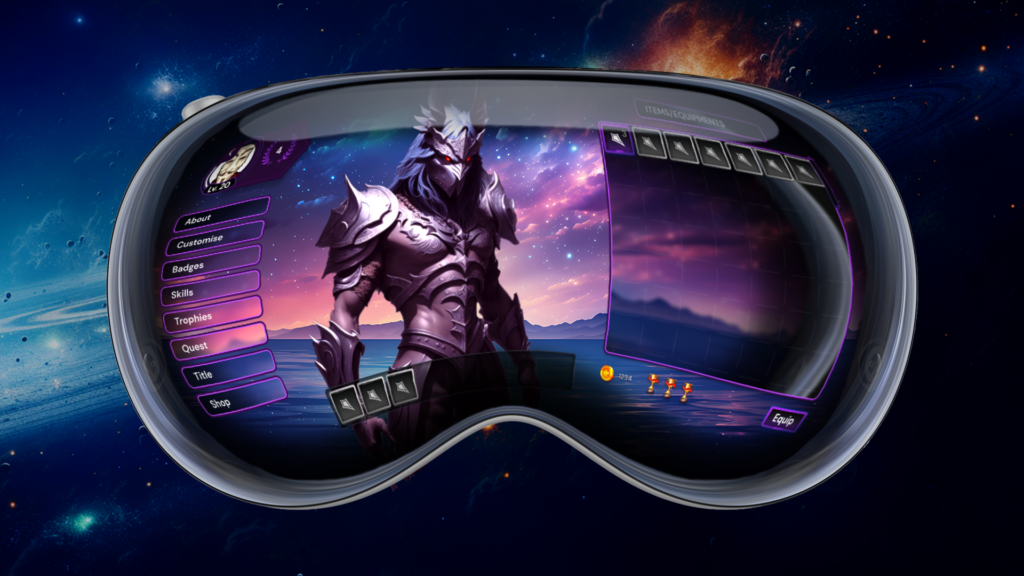
MagicTask on Apple Vision Pro

In the evolving landscape of digital productivity, MagicTask is thrilled to announce the development of our groundbreaking app for the Apple Vision Pro, setting a new benchmark for immersive task management. This revolutionary app will seamlessly integrate with MagicTask, transforming mundane task completion into extraordinary, immersive experiences that inspire and motivate.

Elevating Task Management to New Heights

Our new app leverages the Apple Vision Pro's cutting-edge capabilities, offering a unique blend of shared and immersive modes that react dynamically to your interactions within MagicTask. Imagine a workday redefined, where each task completion is not just progress—it's an adventure.

A Glimpse into the Future: Task Completion on Mars

Visualize this: as you navigate your workday with MagicTask, completing a task catapults you into an otherworldly experience. Your surroundings dim, and suddenly, you're on Mars. A meteor hurtles towards a task labeled "Clean up Garage," obliterating it in a spectacular explosion. This immersive reward system marks the completion of your tasks in a memorable, engaging way, only to smoothly transition you back to your augmented workspace, ready to tackle the next challenge.

Introducing Voice Commands: A Seamless Integration

Amidst these captivating experiences, voice communication stands out as a transformative feature. Our app integrates voice commands, enabling you to create, move, and assign tasks effortlessly, all while visualizing these actions in real-time within your augmented reality workspace. This feature not only enhances the app's interactivity but also significantly boosts productivity, allowing for a hands-free, streamlined workflow that keeps you focused and engaged.

Seamless Mode Transition with Voice Control

With voice commands, switching between shared mode for collaborative efforts and immersive mode for individual tasks becomes more intuitive and efficient. Imagine organizing your day, assigning tasks to team members, or setting priorities with simple voice commands, watching your virtual workspace respond instantly. This level of integration ensures a seamless, cohesive work experience that bridges the gap between digital and physical realms.

Beyond Task Management: A New Era of Productivity

The development of our app for the Apple Vision Pro signifies more than just an advancement in task management; it heralds a new era of productivity where work is not only about what you accomplish but also how you experience each moment. The blend of immersive experiences, augmented workspaces, and voice-controlled interactions promises to transform the everyday into the extraordinary.

Stay tuned as we continue to refine and enhance this pioneering app, pushing the boundaries of productivity and immersive technology. We're on the brink of redefining the future of work with MagicTask on the Apple Vision Pro, and we invite you to join us on this exciting journey.

Embrace the future of productivity with MagicTask for Apple Vision Pro — where tasks meet immersive adventures, powered by your voice.

Mastering Time-Blocking with MagicTask V3: Turning Productivity into a Winning Game

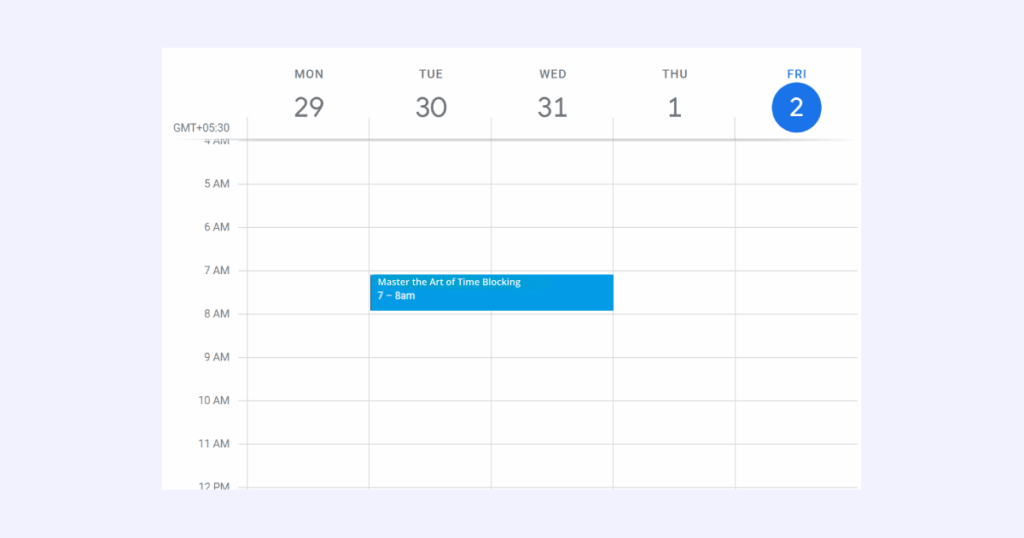
Time Blocking With MagicTask V3

In the relentless pursuit of productivity, we often find ourselves navigating through a labyrinth of strategies, each promising to be the panacea for our burgeoning lists of tasks and commitments. Amid this overwhelming sea of options, one method stands out not merely for its practicality but for its profound philosophy on managing time—time-blocking. This approach has rapidly gained traction among productivity enthusiasts and skeptics alike, celebrated for its straightforward yet profoundly effective methodology.

At its core, time-blocking transcends the conventional, reactive nature of to-do lists. Instead of a never-ending catalogue of tasks, time-blocking encourages us to divide our day into clearly defined segments, dedicating each to a specific task or set of tasks. This method transforms the abstract concept of "having things to do" into a tangible, structured schedule. It's akin to plotting out a roadmap for your day, where each turn and stop is anticipated and planned for.

What sets time-blocking apart is its dual promise: to significantly boost our productivity while simultaneously bestowing a sense of serenity upon our often chaotic daily routines. By allocating a specific time to each task, we eliminate the paralysis of choice—deciding what to do next becomes a relic of the past. This preemptive planning allows us to engage fully in the task at hand, secure in the knowledge that time has been set aside for other tasks as well. The result is not just a more productive day but a more peaceful one, where the tyranny of the urgent is replaced by the tranquility of the planned.

Moreover, time-blocking offers a flexible framework that can be customized to fit the unique rhythms and demands of individual lives. Whether you're a morning person who thrives on tackling the most challenging tasks at dawn or someone who finds their stride in the quiet of the evening, time-blocking can be tailored to harness your peak hours of focus and energy. It accommodates the ebbs and flows of motivation and concentration, allowing for breaks and adjustments, thereby ensuring that the schedule serves you, not the other way around.

The Essence of Time-Blocking

Time-blocking emerges as a revolutionary approach to time management, standing in stark contrast to traditional methods that often leave us reacting to tasks as they come. This technique is not just about making lists; it's about proactively carving out segments of time for dedicated focus on each task before the day even begins. By transforming our calendars into a meticulously organized mosaic of tasks, time-blocking turns the nebulous cloud of "things to do" into a concrete, actionable plan for the day.

At its heart, time-blocking is built upon a simple yet powerful premise: that which is scheduled is more likely to be accomplished. It compels us to commit to tasks by assigning them a specific time slot, much like appointments or meetings. This commitment mechanism significantly reduces the likelihood of procrastination, as each task is transformed from a suggestion to an obligation. It acknowledges the finite nature of time and encourages us to use it with intention and purpose.

One of the most compelling aspects of time-blocking is its ability to make the abstract tangible. Each block of time is allocated to activities that advance personal and professional goals, making it a dynamic tool for both planning and reflection. By visualizing how time is spent, we gain insight into our priorities and can adjust our schedules to align more closely with our long-term objectives. This visualization isn't just practical; it's motivational, providing a clear roadmap to a productive day.

Moreover, time-blocking advocates for a holistic view of time management. It recognizes that productivity is not merely about work tasks but encompasses all aspects of life. From deep work sessions to exercise, leisure, and family time, every facet of one's day is accounted for and valued. This comprehensive approach ensures a well-balanced schedule that nurtures not just professional achievement but personal well-being too.

The methodology also offers unmatched flexibility within its structured framework. While tasks are scheduled, time blocks can be moved and adjusted as needed, accommodating the inevitable uncertainties of daily life. This adaptability is key to the sustainability of time-blocking as a time management technique, allowing it to be a reliable foundation in the ever-changing landscape of our days.

In essence, the essence of time-blocking lies in its ability to transform our relationship with time. By encouraging us to schedule tasks with deliberate intention, it ensures that our most precious resource is not just spent, but invested wisely. Time-blocking doesn't just promise a more organized day; it offers a more intentional and fulfilling life, where every moment is lived with purpose.

Calendar time blocking

Psychological Benefits and Productivity Gains

The psychological landscape of our workday is often a complex interplay of motivation, focus, anxiety, and satisfaction. Time-blocking, by structuring our time with precision, exerts a profound influence on this landscape, offering benefits that ripple through both our mental state and our productivity levels.

Setting Clear Expectations

One of the cornerstone advantages of time-blocking is its ability to set clear, actionable expectations for the day. This clarity is more than just organizational—it's psychologically liberating. By defining what needs to be accomplished and allocating a specific time for each task, time-blocking demystifies the workday, reducing the anxiety that often accompanies the unknown. This preemptive clarity helps to create a mental environment where focus can flourish, unencumbered by the stress of indeterminate obligations.

Enhancing Focus and Minimizing Decision Fatigue

In a world rife with distractions, maintaining focus is increasingly challenging. Time-blocking offers a sanctuary of concentration. By dedicating specific blocks of time to individual tasks, it eliminates the constant barrage of decision-making about what to do next. This minimization of decision fatigue is crucial; every unnecessary decision we make depletes our mental energy, leaving less for the tasks that truly matter. Time-blocking conserves this energy by providing a predetermined path through the day's obligations, allowing us to invest our full cognitive resources into each task.

Motivation Through Completion

The act of completing a task within its allocated time block is a powerful psychological trigger. Each completion delivers a hit of dopamine, the brain's reward neurotransmitter, providing a sense of pleasure and accomplishment. This biochemical reward system creates a continuous loop of positive reinforcement, where the satisfaction of task completion fuels the motivation to tackle the next one. Over time, this cycle builds a robust foundation of self-efficacy, reinforcing the belief in our ability to meet our goals and manage our time effectively.

Moreover, the visibility of progress inherent in time-blocking amplifies this motivational cycle. Seeing a day's schedule transition from a series of planned blocks to a list of completed tasks is visually and emotionally satisfying. It offers tangible proof of productivity, transforming abstract achievements into something concrete and measurable.

The Broader Impact on Productivity and Well-Being

Beyond individual tasks, the cumulative effect of these psychological benefits on overall productivity and well-being is significant. Time-blocking, by providing structure and reducing stress, enhances mental clarity and energy, which are vital for sustained high performance. Furthermore, the technique's emphasis on allocating time for all aspects of life—including breaks, personal projects, and leisure activities—ensures a more balanced, holistic approach to productivity. This balance is crucial not just for preventing burnout but for fostering a sense of fulfillment and happiness in both work and life.

In essence, the psychological benefits of time-blocking extend far beyond mere organization. By setting clear expectations, enhancing focus, reducing decision fatigue, and creating a motivating cycle of completion, time-blocking transforms the way we approach our days. It not only makes us more productive but also more grounded, satisfied, and mentally resilient.

Setting Up Your Time-Blocking System

Implementing a time-blocking system requires a strategic approach, beginning with a comprehensive review of your tasks and goals. This foundational step is about gaining clarity on what needs to be accomplished and recognizing that not all tasks hold equal weight in the grand scheme of your objectives.

Reviewing Tasks and Goals

Review tasks

Start by laying out a visual map of your tasks and goals. This could be on a digital platform or a physical notebook, whichever you find most conducive to clear thinking. List everything you hope to achieve in the short term (daily or weekly) and categorize these tasks based on their alignment with your broader, long-term goals. This exercise not only aids in prioritization but also ensures that your daily efforts are steps towards your bigger picture.

Prioritization

With your tasks laid out, engage in a prioritization exercise. Utilize the Eisenhower Matrix or a similar method to categorize tasks into urgent/important, important/not urgent, urgent/not important, and neither urgent nor important. This classification serves as a guide to allocating your time blocks, ensuring that you're not merely busy but effectively productive.

Estimating Time Requirements

For each task, assign a realistic time estimate. If you're unsure, it's better to overestimate than underestimate to avoid over-packing your day. Remember, the goal of time-blocking is not to fill every minute with work but to create a balanced schedule that includes time for rest and unplanned demands.

Dividing Your Day into Time Blocks

With priorities set and time estimates in hand, begin carving your day into distinct time blocks. These blocks can range from focused work periods to short breaks, lunch, exercise, and even leisure activities. The key is to ensure that each aspect of your day is intentionally planned. Digital calendars or specialized apps can be invaluable tools here, offering visual layouts and reminders to keep you on track.

Including Breaks and Buffer Times

An often-overlooked aspect of time-blocking is the inclusion of breaks and buffer times. Breaks are essential for mental refreshment and maintaining high levels of focus throughout the day. Similarly, buffer times account for life's unpredictability—delays, overruns, or unexpected tasks. Allocating buffer times within your schedule can significantly reduce stress and provide the flexibility to adapt as needed.

Regular Review and Adjustment

Finally, treat your time-blocking system as a living document. At the end of each day or week, review your blocks to assess what worked and what didn't. Were some tasks underestimated in terms of time required? Were there blocks consistently interrupted by unforeseen demands? Use these insights to adjust your future blocks, refining your system for greater efficiency and satisfaction.

Setting up a time-blocking system is a deliberate process that marries intention with flexibility. By thoughtfully reviewing tasks, prioritizing effectively, and accommodating the natural ebb and flow of daily life, you create a structured yet adaptable framework that enhances both productivity and well-being. Remember, the ultimate aim of time-blocking is not rigid adherence to a schedule but the cultivation of a balanced, purposeful approach to managing your time and achieving your goals.

Also Read: The Pomodoro Technique: Time Management Method You Should Try

Strategies for Effective Time-Blocking

Implementing time-blocking as a strategy for managing your day requires more than just assigning tasks to time slots. To truly harness its power and make your days both productive and manageable, consider these refined strategies:

Prioritization: Aligning Tasks with Goals

The essence of effective time management lies in doing the right things, not just doing things right. Start by evaluating your tasks in the context of your long-term objectives. Tasks that directly contribute to these goals should take precedence. This approach ensures that your daily efforts are investments in your future, not just checks on a list. To prioritize effectively, ask yourself which tasks, if completed, would bring you closer to your goals. These tasks deserve the prime slots in your day—typically, when your energy and concentration are at their peak.
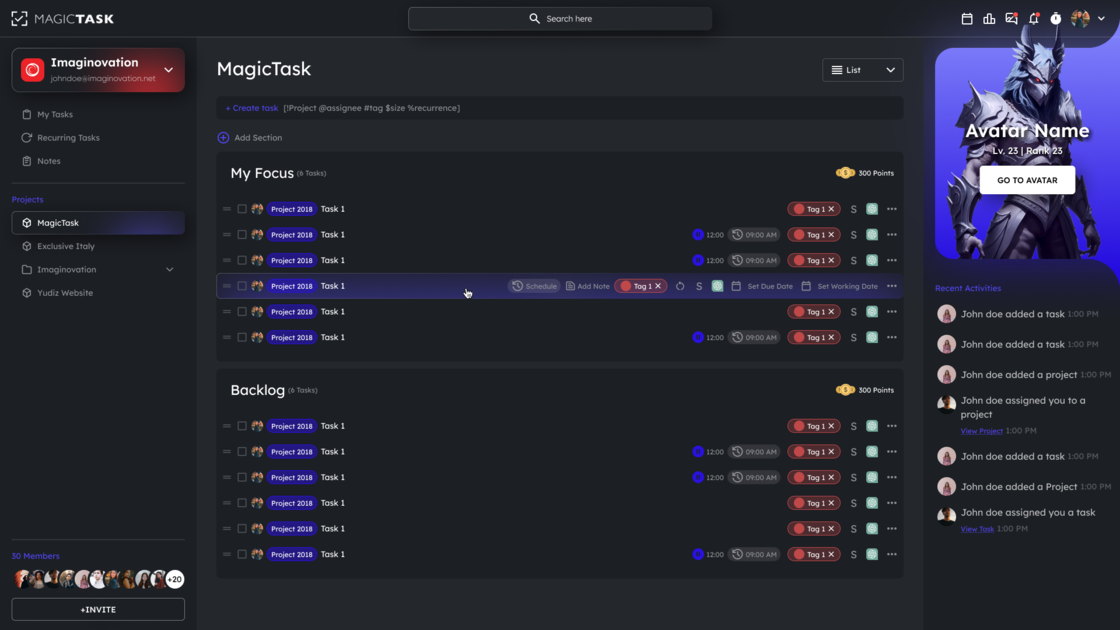
MagicTask v3 dashboard

Task Batching: Maximizing Efficiency

Task batching is a technique that involves grouping similar tasks together and dedicating specific blocks of time to complete them in succession. This strategy leverages the principle of context switching, minimizing the mental load and time lost in shifting between different types of tasks. For instance, batch all your email responses or calls in one time block, and dedicate another to deep, focused work. By organizing your day into thematic blocks, you streamline your workflow, reduce setup and wind-down times, and enhance overall efficiency.

Contingency Time: Planning for the Unpredictable

No matter how meticulously you plan, the unpredictability of life can throw your schedule off course. Integrating contingency time—blocks of unscheduled time reserved for handling unexpected tasks or overflows from previous tasks—into your day is crucial. This buffer ensures that when interruptions occur, they don’t derail your entire schedule. A good rule of thumb is to leave about 10-15% of your day as contingency time, adjusting based on the variability of your typical day. This strategy not only reduces stress but also provides a more realistic and flexible approach to time management.

Regular Review and Reflection: Honing Your Strategy

The final, critical strategy for effective time-blocking is the ongoing process of review and reflection. Set aside regular intervals (weekly or monthly) to evaluate the effectiveness of your time-blocking strategy. Reflect on what tasks consistently take more time than allocated, which time blocks are most productive, and how well your tasks are aligning with your long-term goals. This analysis helps identify patterns, inefficiencies, and opportunities for adjustment. It’s an essential step for continuous improvement, allowing you to refine your approach, reallocate your time more effectively, and ensure your time-blocking strategy evolves with your changing needs and priorities.

Implementing these strategies transforms time-blocking from a simple scheduling exercise into a dynamic framework for achieving both immediate tasks and long-term goals. Prioritization ensures your most important tasks get the attention they deserve, task batching increases your operational efficiency, contingency time adds necessary flexibility, and regular review and reflection keep your strategy aligned with your evolving goals. Together, these strategies form the pillars of an effective time-blocking system, one that not only enhances productivity but also contributes to a more balanced and fulfilling life.

Overcoming Challenges in Time-Blocking

Time-blocking, despite its numerous benefits, is not without its challenges. Common stumbling blocks such as overbooking and underestimating task durations can undermine its effectiveness. However, with strategic adjustments and a mindful approach, these obstacles can be navigated successfully.

Avoiding Overbooking

Overbooking is a frequent issue that arises from an overly optimistic assessment of how much can be accomplished in a day. This optimism, while admirable, often fails to account for the intricacies and unpredictability of real-life tasks. To mitigate this, start by adopting a more conservative approach to scheduling. Allow more time than you think each task will need, acknowledging that interruptions, transitions between tasks, and unexpected complications are part of the workday. This doesn’t mean padding your schedule with excessive downtime but rather being realistic about your capabilities and external demands on your time. As you become more attuned to your working pace and the nature of your tasks, you can gradually refine your time estimates to more accurately reflect reality.

Managing Task Duration Estimates

Underestimating how long tasks will take is another challenge that can disrupt your time-blocking strategy. This often stems from a lack of historical data on your own work habits or the novel nature of a task. Combat this by tracking the time you spend on various tasks over a period, using a simple stopwatch or digital tools designed for time tracking. This data serves as a valuable reference for future planning, enabling you to make more informed estimates. Additionally, employing techniques like the Pomodoro Technique, where work is broken down into intervals (traditionally 25 minutes) followed by short breaks, can help gauge how many intervals a particular task requires, offering a practical framework for estimating task duration.

Learning to Say No

An essential skill in effective time management and a critical strategy in overcoming time-blocking challenges is learning to say no. This involves evaluating new tasks or commitments against your current priorities and schedule. If a task doesn’t align with your goals or if accommodating it would require sacrificing time allocated to higher-priority tasks, it’s important to decline politely. Saying no is not just about guarding your time but also about ensuring that your efforts are concentrated on what truly matters. It’s about making strategic choices that align with your long-term objectives, rather than being swayed by the urgency or demands of others.

Incorporating Flexibility

Finally, while time-blocking encourages a structured approach to managing your day, incorporating flexibility is key to overcoming its challenges. Life is unpredictable, and rigid adherence to a blocked schedule can sometimes be more hindering than helpful. Be prepared to adjust your blocks as necessary, whether it means moving tasks to accommodate unforeseen demands or shortening a block when you complete a task more quickly than expected. This flexibility ensures that time-blocking remains a tool that serves you, facilitating productivity and balance rather than becoming a source of stress.

Overcoming the challenges of time-blocking requires a blend of realistic planning, self-awareness, and strategic refusal. By setting more generous time estimates, becoming adept at gauging task durations, learning to say no, and maintaining a flexible approach to scheduling, you can harness the full potential of time-blocking. These strategies not only enhance the effectiveness of time-blocking but also contribute to a more balanced, productive, and satisfying work life.

Time-Blocking in the Digital Age: MagicTask V3

In the era of digital innovation, time-blocking has transcended traditional paper planners and calendars, embracing the sophistication and versatility of digital tools. MagicTask V3 stands at the forefront of this evolution, revolutionizing the way we approach time management by integrating the principles of gamification. This modern twist not only adheres to the foundational aspects of time-blocking but elevates the experience, making it more engaging and rewarding.
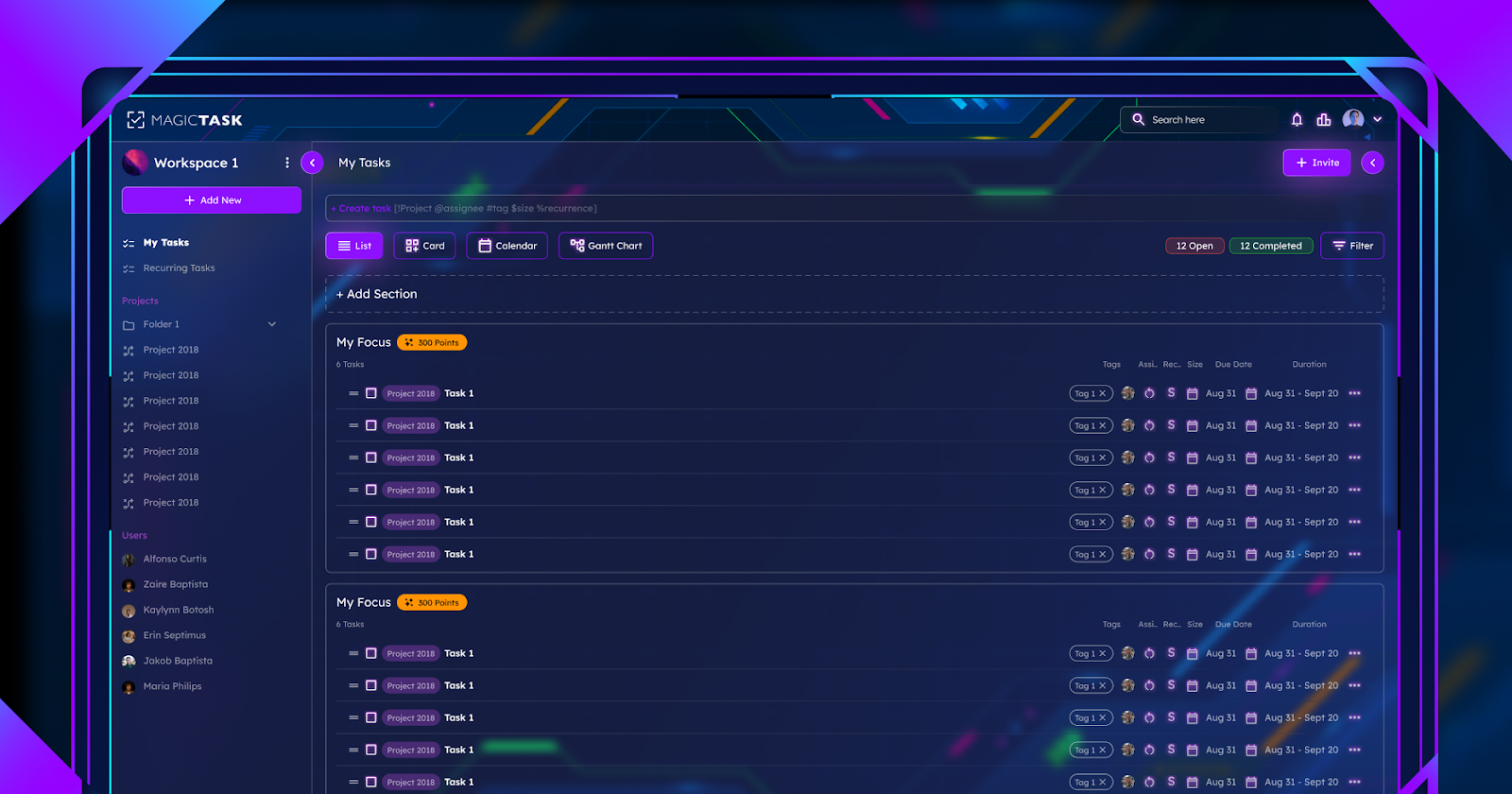
MagicTask V3

Gamification as a Motivational Force

MagicTask V3 harnesses the power of gamification to inject a sense of play and competition into the routine task management process. By rewarding users with points, badges, or levels for completing tasks within their allocated time blocks, it taps into the inherent human desire for achievement and recognition. This approach transforms mundane tasks into challenges to be overcome, providing a continuous stream of motivation and satisfaction. The psychological impact of this gamification cannot be overstated; it leverages the same reward mechanisms triggered by video games, making productivity feel less like a chore and more like an enjoyable pursuit.

Intuitive Scheduling for Dynamic Lives

At the heart of MagicTask V3 is its user-friendly interface, designed with the understanding that flexibility is key to effective time management. The platform allows for seamless scheduling and rescheduling of tasks, accommodating the fluid nature of daily life. Whether it’s a last-minute meeting, an unexpected delay, or a task that requires more time than anticipated, MagicTask V3’s drag-and-drop interface makes it easy to adjust your schedule on the fly. This level of adaptability is essential for maintaining a time-blocking strategy that is realistic, practical, and responsive to your needs.

Integrating with Your Digital Ecosystem

MagicTask V3 doesn’t operate in isolation; it’s designed to integrate smoothly with your existing digital ecosystem. From syncing with your preferred calendar apps to integrating with project management tools, MagicTask V3 ensures that all your time-related data is centralized and accessible. This connectivity enhances the utility of time-blocking by providing a holistic view of your commitments, deadlines, and priorities across all platforms, ensuring that no task falls through the cracks.

Analytics for Continuous Improvement

Beyond scheduling, MagicTask V3 offers analytics and reporting features that provide insights into your productivity patterns. By analyzing your task completion rates, time spent on different types of activities, and your success in adhering to your time blocks, MagicTask V3 helps you identify areas for improvement. This data-driven approach allows you to refine your time-blocking strategy over time, optimizing your schedule for maximum efficiency and effectiveness.

Where Do We Go From Here?

In the digital age, tools like MagicTask V3 are transforming time-blocking from a static scheduling technique into a dynamic, interactive strategy that not only enhances productivity but also makes the process enjoyable. By blending the core principles of time-blocking with elements of gamification, intuitive scheduling, and integrated analytics, MagicTask V3 stands as a testament to the potential of digital tools to revolutionize how we manage our time. For those looking to optimize their time-blocking strategy, MagicTask V3 offers a compelling solution that promises not just better time management, but a more motivated, engaged, and satisfying approach to accomplishing daily tasks.

Conclusion

Time-blocking transcends the realm of simple productivity hacks to embed itself as a fundamental philosophy for managing one's life. It challenges us to reconceptualize our relationship with time, treating it not as an endless stream but as a precious, finite resource that demands careful allocation. This method advocates for a deliberate and intentional approach to our days, ensuring that each hour is spent in a manner that aligns with our deepest values and long-term goals.

By embracing time-blocking, we empower ourselves to take control of our schedules, navigating our tasks with purpose and direction. It liberates us from the tyranny of the urgent and the chaos of disorganization, paving the way for a structured yet flexible routine that accommodates both our ambitions and our well-being. Through this lens, productivity is redefined: it becomes less about the sheer volume of tasks completed and more about the significance of the tasks we choose to undertake.

Moreover, time-blocking has the profound ability to restore the joy and satisfaction that come from engaging in truly productive work. When we complete tasks that are meaningfully connected to our larger objectives, we experience a deeper sense of fulfillment that transcends the temporary high of checking items off a list. This fulfillment is amplified when we witness our progress towards goals that matter to us, reaffirming our agency in shaping our lives.

The integration of digital tools like MagicTask V3 into our time-blocking practice offers an additional layer of sophistication and engagement. By marrying the foundational principles of time-blocking with the dynamic elements of gamification, platforms like MagicTask V3 enhance the user experience, making the process not only more efficient but also more enjoyable. However, the essence of time-blocking remains tool-agnostic, adaptable to both high-tech enthusiasts and proponents of traditional pen-and-paper methods.

The invitation to embark on the journey of time-blocking is open to everyone, regardless of their preferred tools or techniques. The crucial step is to begin—to set aside time to carefully consider and plan how best to utilize your time. Start small if you must, with just a few time blocks in your day, and allow the practice to evolve naturally as you discover what works best for you.

In conclusion, time-blocking stands as a beacon for those seeking to reclaim their time and redefine productivity on their own terms. It offers a path to a more organized, purposeful, and satisfying life, where time is not merely spent but invested in the pursuits that bring us joy and fulfillment. So, why not take the first step today? Carve out a moment to sketch out your time-blocking strategy and embark on the transformative journey towards mastering your schedule and enriching your life.

Leveling Up Workplace Culture: The Small Business Owner’s Guide to Crafting a Game-Changing Environment

level-up workplace culture with magictask

In the digital age, where the boundary between work and play is increasingly blurred, MagicTask V3 stands out as a beacon of innovative productivity. This blog post delves deep into the science of gamified productivity, exploring the fascinating mechanics behind MagicTask V3’s design philosophy and how it revolutionizes task management.

The Essence of Gamification in Productivity:

Gamification, the core of MagicTask V3, melds the excitement and engagement of gaming with the structure and focus of task management. This unique blend taps into several psychological theories:

  • Behavioral Psychology and Positive Reinforcement: MagicTask V3 employs Skinner’s principles of behavioral psychology. The platform utilizes positive reinforcements, like points and achievements, to foster a habit-forming loop of productivity, akin to the rewarding experience of gaming.
  • Goal-Setting Theory and Its Implications: The application of Locke’s Goal-Setting Theory is evident in how MagicTask V3 structures tasks. Setting specific, challenging, yet achievable goals enhances motivation and performance, making the mundane task of managing to-dos an engaging experience.
  • Self-Determination Theory (SDT): MagicTask V3’s design effectively incorporates Deci and Ryan’s SDT by fulfilling the three intrinsic needs of autonomy, competence, and relatedness. Users exercise autonomy in customizing their experience, gain competence by progressing through levels, and achieve relatedness through social features like leaderboards and clans.

Narrative Transportation and Storytelling:

MagicTask V3 leverages the power of storytelling, a strategy rooted in narrative psychology. By creating a story-like context for tasks, users experience narrative transportation, becoming more engaged and motivated. This approach transforms the perception of tasks from routine to an integral part of an unfolding story.

Instant Feedback and Reward Systems:

Drawing from operant conditioning, MagicTask V3’s immediate feedback and rewards system is a powerful motivator. The platform creates an enjoyable loop of task completion and gratification, similar to the rewards system in video games, making productivity both satisfying and addictive.

Social Dynamics in Productivity:

MagicTask V3 understands the importance of social interaction in motivation. The platform's social features, such as collaborative tasks and competitive leaderboards, create a sense of community. This approach taps into the basic human need for social belonging and recognition, significantly enhancing user engagement.

Flow State and the Balance of Challenge and Skill:

MagicTask V3’s task design is influenced by Csikszentmihalyi’s flow theory. The platform maintains an optimal balance between the user's skills and the challenges presented by the tasks, keeping users in a state of flow – a highly focused and productive state where time seems to fly.

Advanced Customization: Personalizing Productivity:

Recognizing the diversity in user preferences, MagicTask V3 offers extensive customization. This feature allows users to tailor their productivity environment to their liking, from choosing themes to setting task priorities. This level of personalization not only enhances the user experience but also makes the productivity journey more effective and enjoyable.

Incorporating Advanced Technology: AI and Machine Learning:

Looking ahead, MagicTask V3 aims to integrate AI and machine learning for personalized task recommendations. This future-forward approach could revolutionize task management, offering strategies tailored to individual work styles and preferences, much like personalized game experiences.

The Role of Competition and Collaboration:

MagicTask V3 uniquely blends competition and collaboration. Users can engage in team-based tasks or compete against others, fostering a sense of camaraderie and rivalry. This dynamic is especially appealing to gamers who thrive on multiplayer and competitive gaming experiences.

Leaderboard

Integrating Real-Life Rewards:

MagicTask V3 plans to integrate real-life rewards, further blurring the lines between gaming and productivity. This feature, much like earning real rewards in games, adds an extra layer of motivation, making task completion more gratifying.

The Future of MagicTask V3: Virtual and Augmented Reality:

As technology evolves, so does MagicTask V3’s vision. The integration of virtual and augmented reality could offer an immersive productivity experience, taking gamified task management to new heights. Imagine tackling your to-do list in a fully immersive 3D environment – a future that MagicTask V3 is poised to explore.

Conclusion:

MagicTask V3 is not just a task management tool; it's a revolution in productivity. By harnessing the principles of gamification, behavioral psychology, and advanced technology, it transforms the mundane into the extraordinary. As we embark on this journey with MagicTask V3, we're not just completing tasks; we're partaking in an adventure, one that redefines our interaction with our daily responsibilities.

In this world, each task is an opportunity for growth, each challenge a step towards mastery, and each achievement a testament to our evolving work ethic. MagicTask V3 cleverly blurs the lines between playing a game and completing work, making us heroes in our quest for productivity. It's a system that understands and leverages our inherent need for achievement, belonging, and fulfillment.

Through its engaging narrative, dynamic feedback loops, social connectivity, and immersive customization, MagicTask V3 does more than just increase productivity; it instills a sense of joy and satisfaction in our daily routines. It teaches us that with the right tools and mindset, the journey towards productivity can be as exhilarating and fulfilling as the most captivating of games.

As we look to the future, the possibilities with MagicTask V3 are endless. With each update and new feature, we step closer to a world where productivity and play are not just parallel worlds, but a harmonious symphony that enriches our professional and personal lives. MagicTask V3 is not merely a tool; it's a companion in our quest to conquer the challenges of work and life, proving that the ultimate victory lies in finding joy and purpose in everything we do.

In the end, MagicTask V3 is more than just a testament to the power of gamification in productivity; it's a symbol of our unyielding pursuit of efficiency, enjoyment, and excellence. It's a reminder that in the game of life and work, we all have the potential to be victorious.

The Science Behind Gamified Productivity: Insights from MagicTask V3’s Design Philosophy

The Science Behind Gamified Productivity

In the digital age, where the boundary between work and play is increasingly blurred, MagicTask V3 stands out as a beacon of innovative productivity. This blog post delves deep into the science of gamified productivity, exploring the fascinating mechanics behind MagicTask V3’s design philosophy and how it revolutionizes task management.

The Essence of Gamification in Productivity:

Gamification, the core of MagicTask V3, melds the excitement and engagement of gaming with the structure and focus of task management. This unique blend taps into several psychological theories:

  • Behavioral Psychology and Positive Reinforcement: MagicTask V3 employs Skinner’s principles of behavioral psychology. The platform utilizes positive reinforcements, like points and achievements, to foster a habit-forming loop of productivity, akin to the rewarding experience of gaming.
  • Goal-Setting Theory and Its Implications: The application of Locke’s Goal-Setting Theory is evident in how MagicTask V3 structures tasks. Setting specific, challenging, yet achievable goals enhances motivation and performance, making the mundane task of managing to-dos an engaging experience.
  • Self-Determination Theory (SDT): MagicTask V3’s design effectively incorporates Deci and Ryan’s SDT by fulfilling the three intrinsic needs of autonomy, competence, and relatedness. Users exercise autonomy in customizing their experience, gain competence by progressing through levels, and achieve relatedness through social features like leaderboards and clans.

Narrative Transportation and Storytelling:

MagicTask V3 leverages the power of storytelling, a strategy rooted in narrative psychology. By creating a story-like context for tasks, users experience narrative transportation, becoming more engaged and motivated. This approach transforms the perception of tasks from routine to an integral part of an unfolding story.

Instant Feedback and Reward Systems:

Drawing from operant conditioning, MagicTask V3’s immediate feedback and rewards system is a powerful motivator. The platform creates an enjoyable loop of task completion and gratification, similar to the rewards system in video games, making productivity both satisfying and addictive.

MagicTask Reward

Social Dynamics in Productivity:

MagicTask V3 understands the importance of social interaction in motivation. The platform's social features, such as collaborative tasks and competitive leaderboards, create a sense of community. This approach taps into the basic human need for social belonging and recognition, significantly enhancing user engagement.

Flow State and the Balance of Challenge and Skill:

MagicTask V3’s task design is influenced by Csikszentmihalyi’s flow theory. The platform maintains an optimal balance between the user's skills and the challenges presented by the tasks, keeping users in a state of flow – a highly focused and productive state where time seems to fly.

Advanced Customization: Personalizing Productivity:

Recognizing the diversity in user preferences, MagicTask V3 offers extensive customization. This feature allows users to tailor their productivity environment to their liking, from choosing themes to setting task priorities. This level of personalization not only enhances the user experience but also makes the productivity journey more effective and enjoyable.

Incorporating Advanced Technology: AI and Machine Learning:

Looking ahead, MagicTask V3 aims to integrate AI and machine learning for personalized task recommendations. This future-forward approach could revolutionize task management, offering strategies tailored to individual work styles and preferences, much like personalized game experiences.

The Role of Competition and Collaboration:

MagicTask V3 uniquely blends competition and collaboration. Users can engage in team-based tasks or compete against others, fostering a sense of camaraderie and rivalry. This dynamic is especially appealing to gamers who thrive on multiplayer and competitive gaming experiences.

Integrating Real-Life Rewards:

MagicTask V3 plans to integrate real-life rewards, further blurring the lines between gaming and productivity. This feature, much like earning real rewards in games, adds an extra layer of motivation, making task completion more gratifying.

The Future of MagicTask V3: Virtual and Augmented Reality:

As technology evolves, so does MagicTask V3’s vision. The integration of virtual and augmented reality could offer an immersive productivity experience, taking gamified task management to new heights. Imagine tackling your to-do list in a fully immersive 3D environment – a future that MagicTask V3 is poised to explore.

Conclusion:

MagicTask V3 is not just a task management tool; it's a revolution in productivity. By harnessing the principles of gamification, behavioral psychology, and advanced technology, it transforms the mundane into the extraordinary. As we embark on this journey with MagicTask V3, we're not just completing tasks; we're partaking in an adventure, one that redefines our interaction with our daily responsibilities.

In this world, each task is an opportunity for growth, each challenge a step towards mastery, and each achievement a testament to our evolving work ethic. MagicTask V3 cleverly blurs the lines between playing a game and completing work, making us heroes in our quest for productivity. It's a system that understands and leverages our inherent need for achievement, belonging, and fulfillment.

Through its engaging narrative, dynamic feedback loops, social connectivity, and immersive customization, MagicTask V3 does more than just increase productivity; it instills a sense of joy and satisfaction in our daily routines. It teaches us that with the right tools and mindset, the journey towards productivity can be as exhilarating and fulfilling as the most captivating of games.

As we look to the future, the possibilities with MagicTask V3 are endless. With each update and new feature, we step closer to a world where productivity and play are not just parallel worlds, but a harmonious symphony that enriches our professional and personal lives. MagicTask V3 is not merely a tool; it's a companion in our quest to conquer the challenges of work and life, proving that the ultimate victory lies in finding joy and purpose in everything we do.

In the end, MagicTask V3 is more than just a testament to the power of gamification in productivity; it's a symbol of our unyielding pursuit of efficiency, enjoyment, and excellence. It's a reminder that in the game of life and work, we all have the potential to be victorious.